Sustained Spiritual Growth: 3 Core Practices for 2026

In an increasingly fast-paced and often chaotic world, the pursuit of inner peace and a deeper connection to something beyond ourselves has never been more vital. As we look towards 2026, the landscape of personal development continues to evolve, yet the fundamental principles of sustained spiritual growth remain timeless. This article delves into three core practices that are not just transient trends but foundational pillars for cultivating a rich, enduring spiritual life. We’ll explore how daily habits can become powerful catalysts for transformation, offering an insider’s look at what it truly takes to nurture your spirit in the coming years.
Many of us embark on spiritual journeys with great enthusiasm, only to find our resolve waning amidst the demands of daily life. The key to lasting change lies not in grand gestures or infrequent retreats, but in the consistent, mindful application of simple yet profound practices. These aren’t just theoretical concepts; they are actionable steps designed to integrate spirituality into the very fabric of your existence. By focusing on these three core areas, you can build a resilient spiritual foundation that supports you through life’s inevitable ups and downs, fostering genuine fulfillment and a profound sense of purpose.
Our exploration will cover the critical aspects of mindful presence, intentional self-reflection, and conscious connection. Each of these practices, when woven together, creates a synergistic effect that accelerates and deepens your spiritual journey. We’ll provide practical strategies, insights, and tips to help you incorporate them seamlessly into your routine, transforming your aspirations for sustained spiritual growth into a living reality. Prepare to discover how small, consistent efforts can lead to monumental shifts in your internal world and, consequently, your external experience.
The Foundation of Mindful Presence: Anchoring Your Spirit Daily
The first and arguably most crucial practice for sustained spiritual growth is cultivating mindful presence. In an age of constant distraction and digital overload, the ability to be fully present in the moment is a superpower. Mindful presence isn’t about emptying your mind or achieving a state of blissful oblivion; it’s about paying attention, on purpose, to the present moment without judgment. It’s about truly experiencing life as it unfolds, rather than constantly replaying the past or rehearsing the future.
For 2026, anchoring your spirit daily through mindful presence means making a conscious effort to integrate moments of awareness throughout your day. This can take many forms, from formal meditation practices to informal moments of mindful breathing or sensory awareness. The goal is to train your attention, much like you would train a muscle, to stay grounded and focused, even amidst external pressures. This practice directly combats the pervasive sense of being overwhelmed and disconnected, which often hinders spiritual development.
Meditation: Your Daily Dose of Stillness
When most people think of mindful presence, meditation is often the first thing that comes to mind, and for good reason. Regular meditation is a powerful tool for developing sustained spiritual growth. It’s not about stopping thoughts, but observing them without getting entangled. Even 5-10 minutes a day can make a significant difference. Start with guided meditations if you’re new to the practice, focusing on your breath or bodily sensations. As you become more comfortable, you can explore silent meditation, allowing your awareness to expand.
The benefits extend far beyond the meditation cushion. Studies have shown that consistent meditation can reduce stress, improve emotional regulation, enhance self-awareness, and even foster compassion. These are all vital components of a thriving spiritual life. By dedicating time each day to stillness, you create a sanctuary within yourself, a place you can always return to for peace and clarity. This daily dose of stillness acts as an anchor, helping you navigate the choppier waters of life with greater equanimity and grace.
Mindful Moments: Integrating Presence into Your Routine
Beyond formal meditation, integrating mindful moments into your daily routine is crucial for sustained spiritual growth. This means bringing conscious awareness to everyday activities that you might usually perform on autopilot. For example, when you’re drinking your morning coffee, truly taste it, feel the warmth of the cup, and notice the aroma. When you’re walking, feel your feet on the ground, observe the sights and sounds around you without judgment.
These micro-moments of mindfulness accumulate, gradually shifting your default state from scattered attention to focused presence. They help you break free from the cycle of living in your head and bring you back to the richness of the present experience. This practice is particularly effective for those who feel they ‘don’t have time’ for spirituality, as it shows that spiritual practice isn’t something separate from life, but rather a way of living it more fully. By consciously choosing to be present, you infuse every moment with meaning and open yourself up to deeper spiritual insights.
Intentional Self-Reflection: Charting Your Inner Landscape
The second core practice for sustained spiritual growth in 2026 is intentional self-reflection. While mindful presence helps you connect with the present moment, self-reflection allows you to understand your inner world, your motivations, your values, and your progress on your spiritual path. It’s about taking the time to honestly assess where you are, where you’ve been, and where you want to go, from a spiritual perspective.
In our outward-focused society, there’s often little encouragement to look inward. However, without regular self-reflection, spiritual growth can become haphazard and superficial. Intentional self-reflection provides the necessary feedback loop for genuine transformation. It allows you to identify patterns of thought and behavior that serve you, and those that don’t, enabling you to make conscious choices that align with your highest self. This practice is about cultivating inner wisdom and becoming your own most insightful guide.
Journaling for Spiritual Insight
One of the most effective methods for intentional self-reflection is journaling. A spiritual journal is not merely a diary of events, but a sacred space for exploring your thoughts, feelings, and experiences in relation to your spiritual journey. It’s a place to ask deep questions, record insights, process emotions, and track your growth over time.
Consider setting aside 15-20 minutes each day or a few times a week for journaling. You can use prompts to guide your reflection, such as: ‘What brought me a sense of peace today?’, ‘Where did I feel disconnected, and why?’, ‘What spiritual lesson am I currently learning?’, or ‘How can I embody my values more fully tomorrow?’ The act of writing helps to clarify thoughts, release emotional blockages, and reveal unconscious patterns. Over time, your journal becomes a powerful record of your spiritual evolution, offering invaluable insights into your unique path to sustained spiritual growth.

Solitude and Contemplation
Beyond active journaling, incorporating moments of solitude and contemplation is vital. In a world that constantly demands our attention, intentionally seeking out quiet time allows for deeper introspection. This doesn’t necessarily mean retreating to a monastery, but finding pockets of silence in your day – perhaps a quiet walk in nature, sitting by a window, or simply turning off all electronic devices for a period.
During these times, allow your mind to wander gently, observing thoughts and feelings without judgment. Contemplation can involve reflecting on a spiritual text, a philosophical question, or simply the beauty of existence. The absence of external stimulation creates space for inner wisdom to emerge, for intuition to speak, and for a deeper connection to your authentic self. This dedicated time for solitude is a powerful antidote to the spiritual superficiality that can arise from constant external engagement, fostering true sustained spiritual growth.
Conscious Connection: Nurturing Your Spiritual Ecosystem
The third core practice essential for sustained spiritual growth is conscious connection. While spirituality often feels like an individual journey, it thrives within a broader ecosystem of relationships – with others, with nature, and with the divine or universal consciousness. Conscious connection is about intentionally fostering these relationships in ways that nourish your spirit and contribute to the well-being of the whole.
In 2026, as society grapples with issues of isolation and fragmentation, actively seeking and nurturing meaningful connections becomes a spiritual act in itself. It reminds us of our interconnectedness, fosters empathy, and provides opportunities for service and shared growth. This practice moves beyond self-improvement to encompass a broader vision of spiritual flourishing that includes the world around us.
Community and Shared Practice
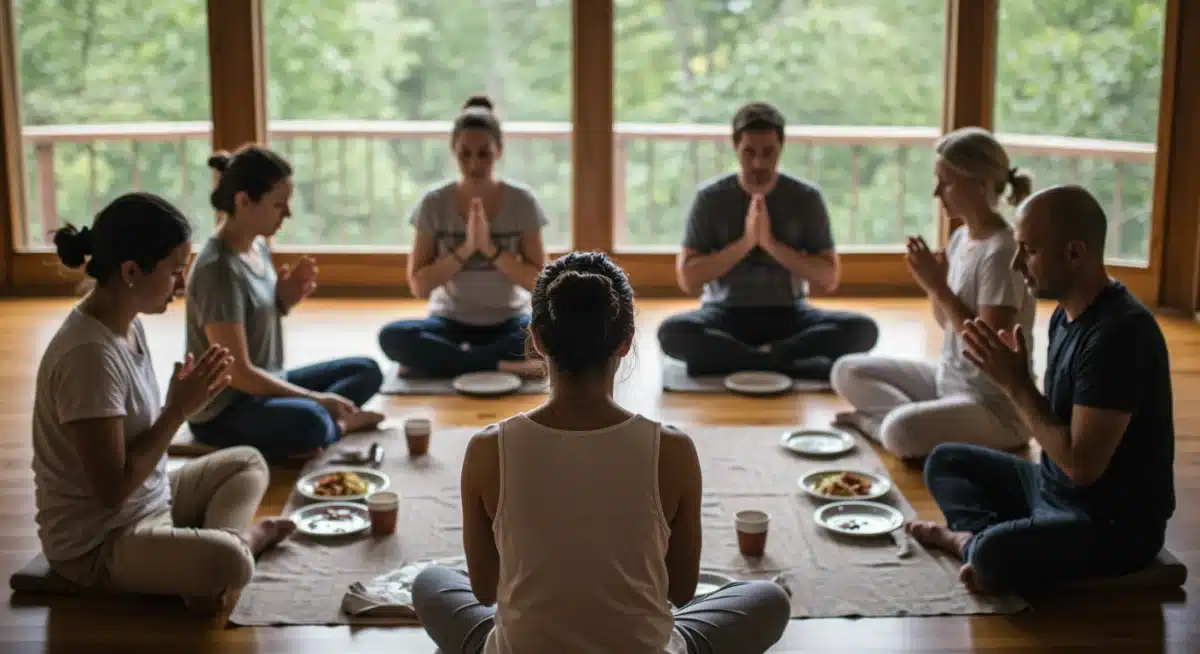
Humans are inherently social beings, and our spiritual paths can be greatly enriched by community. Finding like-minded individuals or groups who share your spiritual values and intentions can provide invaluable support, inspiration, and accountability. This could be a formal spiritual community, a meditation group, a book club focused on spiritual texts, or even a small group of friends who regularly engage in meaningful conversations about life and purpose.
Shared practice, whether it’s group meditation, communal service, or simply discussing spiritual insights, strengthens individual resolve and amplifies collective energy. It provides a mirror for self-reflection and a space for compassionate listening and understanding. These connections remind us that we are not alone on our journey and that mutual support is a powerful catalyst for sustained spiritual growth. Seek out spaces where you feel safe to be vulnerable, to ask questions, and to grow alongside others.
Connection with Nature and the Divine
Beyond human connections, conscious connection extends to the natural world and to whatever you perceive as the divine or universal consciousness. Spending time in nature is a powerful way to ground yourself, expand your perspective, and feel a sense of awe and wonder. Whether it’s a walk in the park, hiking in the mountains, or simply tending to a garden, nature offers profound lessons in cycles, resilience, and interconnectedness.
Similarly, cultivating a conscious connection with the divine, however you define it, is fundamental to sustained spiritual growth. This might involve prayer, chanting, devotional practices, or simply cultivating a sense of gratitude and reverence for the mystery of life. This connection provides a source of guidance, comfort, and unwavering love, reminding you of your inherent worth and your place in the grand tapestry of existence. By nurturing these connections, you expand your spiritual awareness beyond the confines of your individual self, embracing a more expansive and inclusive understanding of spirituality.
Integrating the Three Practices for Holistic Growth
While each of these three core practices – mindful presence, intentional self-reflection, and conscious connection – is powerful on its own, their true potency lies in their integration. They are not isolated activities but interconnected threads that weave together to form a rich tapestry of sustained spiritual growth. Think of them as a holistic system, where each practice supports and enhances the others.
For example, mindful presence allows you to observe your thoughts and feelings more clearly, which then enriches your intentional self-reflection. Deeper self-reflection, in turn, helps you understand your spiritual needs and how best to connect with others and the divine. And meaningful connections can provide the support and inspiration to maintain your mindful practices and continue your journey of self-discovery.
To integrate these practices effectively in 2026, consider creating a daily or weekly spiritual routine that incorporates elements of each. Perhaps you start your day with a short meditation (mindful presence), followed by journaling about your insights (intentional self-reflection). Throughout the day, you practice mindful moments, and in the evening, you connect with a spiritual friend or spend time in nature (conscious connection). The key is consistency and flexibility – find what works best for you and adapt as your needs evolve.
Overcoming Challenges and Maintaining Momentum
The path to sustained spiritual growth is rarely linear. There will be times when motivation wanes, when distractions arise, or when you feel disconnected. This is a normal part of the journey. The strength of these core practices lies in their ability to help you navigate these challenges.
When you feel overwhelmed, return to mindful presence to ground yourself. When you’re unsure of your path, engage in intentional self-reflection to gain clarity. When you feel isolated, seek out conscious connection to remind yourself of your interconnectedness. Building resilience in your spiritual life means viewing setbacks not as failures, but as opportunities for deeper learning and commitment.
Remember that sustained spiritual growth is a lifelong journey, not a destination. It’s about the consistent effort, the gentle returning, and the unwavering commitment to nurturing your inner world. By embracing these three core practices, you equip yourself with the tools to not only survive but to thrive spiritually in 2026 and beyond, cultivating a life of profound meaning, peace, and purpose.
Conclusion: Your Path to Lasting Spiritual Fulfillment
As we’ve explored, the journey toward sustained spiritual growth in 2026 is built upon three fundamental pillars: mindful presence, intentional self-reflection, and conscious connection. These aren’t just abstract concepts; they are daily habits and conscious choices that, when consistently applied, can profoundly transform your spiritual landscape. By anchoring your spirit in the present moment, charting your inner landscape with honest introspection, and nurturing your spiritual ecosystem through meaningful relationships, you lay a solid foundation for a life rich in meaning and purpose.
The beauty of these practices lies in their accessibility and adaptability. You don’t need to embark on a grand pilgrimage or dedicate countless hours to see results. Small, consistent efforts, infused with intention, are far more effective than sporadic, intense bursts of spiritual activity. Begin where you are, with what you have, and trust that the seeds you plant today will blossom into a vibrant spiritual garden over time.
Embrace the challenge and the joy of this journey. Allow these core practices to guide you towards a deeper understanding of yourself, a more profound connection with the world around you, and an unwavering sense of inner peace. The pursuit of sustained spiritual growth is perhaps the most rewarding endeavor a human being can undertake. May 2026 be the year you truly commit to nurturing your spirit, discovering the boundless wisdom and love that resides within and around you.