Spiritual Awakening Index: 3 Approaches for US Residents 2026

The Spiritual Awakening Index provides a crucial lens through which to evaluate and compare three prominent approaches to inner development, offering valuable insights for US residents seeking profound personal growth in 2026.
Embarking on a journey of inner growth can feel overwhelming, yet understanding the spiritual awakening index offers a clear pathway. This guide will delve into three leading approaches to inner development, providing US residents with a comprehensive comparison to navigate their spiritual evolution in 2026.
Understanding the Spiritual Awakening Index
The Spiritual Awakening Index serves as a vital framework for quantifying and comparing different methodologies aimed at fostering inner development. It’s not about assigning a numerical value to spirituality, but rather about providing a structured way to understand the efficacy and impact of various practices on an individual’s journey towards self-realization and heightened consciousness.
In an increasingly complex world, US residents are seeking deeper meaning and purpose beyond material pursuits. This growing introspection has led to a surge in interest in spiritual practices, making a comparative index invaluable for informed decision-making. We’re looking at how different approaches resonate with diverse demographics and their potential for sustainable transformation.
Defining Spiritual Awakening
Spiritual awakening is often described as a profound shift in consciousness, moving beyond ego-centric perspectives to a more expansive, interconnected understanding of self and the universe. It involves:
- Increased self-awareness and introspection.
- A deeper sense of empathy and compassion.
- A shift in values towards purpose and meaning.
- Experiencing a connection to something larger than oneself.
These experiences can manifest in various ways, from subtle internal shifts to dramatic life realignments. The index helps us categorize and understand these diverse manifestations in relation to specific practices.
The core purpose of any spiritual awakening index is to offer clarity in a field often characterized by subjectivity. By examining common themes and measurable outcomes, we can better assess which approaches offer the most significant and lasting benefits for individuals in the United States.
Approach 1: Mindfulness and Meditation Practices
Mindfulness and meditation have become cornerstones of spiritual growth for millions across the US, offering accessible pathways to inner peace and heightened awareness. This approach emphasizes present moment awareness and cultivating a non-judgmental observation of thoughts and feelings. Its popularity stems from its scientific backing and adaptability to modern lifestyles.
The rise of apps, online courses, and community meditation groups has made these practices more pervasive than ever. For many, it’s the entry point into a broader spiritual journey, providing foundational tools for self-regulation and emotional intelligence. The benefits extend beyond spiritual realms, impacting mental and physical health positively.
Types of Meditation for Inner Peace
Within mindfulness and meditation, several distinct practices contribute to inner development:
- Vipassana Meditation: Focuses on self-observation to gain insight into the true nature of reality.
- Transcendental Meditation (TM): Utilizes a mantra to settle the mind into a state of relaxed awareness.
- Zen Meditation (Zazen): Emphasizes proper posture and breath awareness to achieve enlightenment.
- Loving-Kindness Meditation (Metta): Cultivates feelings of compassion and goodwill towards oneself and others.
Each of these variations offers a unique angle for individuals to explore, catering to different temperaments and goals. The common thread is the cultivation of a quiet mind and a deeper connection to one’s internal landscape.
The accessibility of these practices, often requiring minimal resources beyond a quiet space and a willingness to engage, makes them particularly appealing. Their integration into corporate wellness programs, schools, and healthcare settings further solidifies their position as a leading approach to spiritual awakening in 2026. This widespread adoption speaks volumes about their perceived effectiveness and practical application in daily life.
Approach 2: Shamanic and Indigenous Wisdom Traditions
In contrast to the introspective focus of mindfulness, shamanic and indigenous wisdom traditions offer a holistic approach to spiritual awakening, emphasizing connection to nature, community, and ancestral knowledge. This path often involves working with spirit guides, ritual, and altered states of consciousness to heal and gain insights. It represents a deeper dive into ancient practices that have sustained cultures for millennia.
For US residents seeking a more earth-centered and communal spiritual journey, these traditions provide a powerful alternative. They often involve direct experience with the natural world, understanding its cycles, and recognizing the sacred in all living things. This approach encourages a profound respect for the environment and a sense of belonging to a larger, interconnected web of life.
Key Elements of Indigenous Spiritual Paths
Exploring indigenous wisdom traditions involves several core components:
- Ceremony and Ritual: Structured practices designed to connect with spiritual realms and foster community bonds.
- Nature Connection: Deep reverence for the earth, plants, and animals, seeing them as teachers and guides.
- Ancestral Healing: Addressing intergenerational trauma and drawing strength from one’s lineage.
- Storytelling and Mythology: Transmitting wisdom, values, and spiritual understanding through narratives.
These elements combine to create a rich tapestry of spiritual practice that is both deeply personal and profoundly communal. The emphasis on direct experience and connection to the land offers a powerful antidote to the disconnection often felt in modern society.
While often requiring guidance from experienced practitioners, the resurgence of interest in these traditions reflects a yearning for authenticity and a return to fundamental human connections. The spiritual awakening index acknowledges the profound impact these practices can have on individuals seeking a more integrated and meaningful existence, particularly within the context of environmental consciousness.
Approach 3: Transpersonal Psychology and Consciousness Studies
Transpersonal psychology and consciousness studies represent a more academic and experiential approach to inner development, integrating Western psychological frameworks with spiritual and mystical experiences. This field explores states of consciousness beyond the ordinary ego, including peak experiences, spiritual emergencies, and the pursuit of self-transcendence. It appeals to those who seek a blend of intellectual understanding and profound personal experience.
This approach often involves guided self-exploration, breathwork, psychedelic-assisted therapy (in legal contexts), and a deep dive into philosophical and spiritual texts. It provides a structured yet expansive framework for understanding the full spectrum of human experience, including those aspects often dismissed by conventional psychology. The goal is not just healing, but also the realization of one’s highest potential.
Methods for Expanding Consciousness
Within transpersonal psychology, several methods are employed to facilitate spiritual growth:
- Holotropic Breathwork: A powerful technique using accelerated breathing to access non-ordinary states of consciousness.
- Integral Theory: A comprehensive framework developed by Ken Wilber, integrating spiritual traditions with modern science and psychology.
- Dream Analysis: Exploring the symbolic language of dreams to gain insights into the unconscious and spiritual dimensions.
- Meditation and Contemplation: Often combined with psychological processing to integrate spiritual experiences.
These methods are typically facilitated by trained professionals, ensuring a safe and supportive environment for deep work. The emphasis is on integrating expanded states of consciousness into daily life, leading to lasting personal transformation and a more profound sense of purpose.
For US residents who resonate with a more analytical yet deeply experiential path, transpersonal psychology offers a rigorous and comprehensive framework. It combines the scientific rigor of psychology with the profound wisdom of spiritual traditions, making it a compelling approach for those seeking a holistic understanding of their spiritual awakening. The evolving legal landscape around certain therapeutic modalities also positions this approach for significant growth in 2026.
Comparing the Approaches: Strengths and Considerations
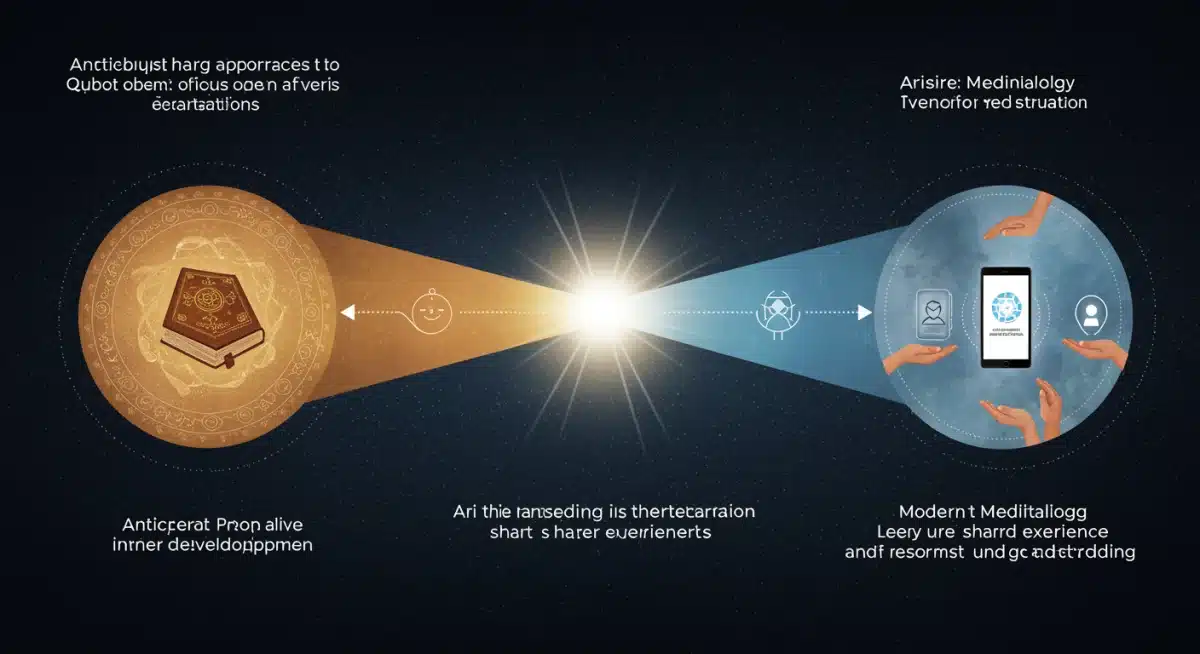
Each of the three leading approaches to inner development—mindfulness, indigenous traditions, and transpersonal psychology—offers distinct strengths and considerations for US residents. Understanding these differences is key to choosing a path that aligns with individual needs and aspirations. The spiritual awakening index helps to highlight where each approach excels and where potential challenges might lie.
Mindfulness and meditation are highly accessible and offer immediate stress reduction and mental clarity. Their scientific validation makes them palatable to a broader audience, and the abundance of resources means entry is relatively easy. However, some may find them lacking in communal support or a deeper, more mystical dimension.
Evaluating Each Path for Personal Fit
When comparing these approaches, consider the following:
- Accessibility: Mindfulness is widely available; indigenous traditions often require finding specific teachers or communities; transpersonal psychology typically involves professional guidance.
- Community vs. Individual: Indigenous traditions are often community-centric; mindfulness can be practiced individually or in groups; transpersonal work is frequently one-on-one or in small facilitated settings.
- Focus: Mindfulness emphasizes present moment awareness; indigenous traditions focus on nature and ancestral connection; transpersonal psychology explores altered states and self-transcendence.
- Cost and Time Commitment: Varies significantly. Mindfulness apps can be free or low cost; indigenous ceremonies or transpersonal retreats can be more substantial investments.
Indigenous wisdom traditions offer a profound connection to nature and community, providing a sense of belonging and ancestral grounding. The challenge can be finding authentic teachers and integrating ancient practices into a modern context without appropriation. This path demands a deep commitment to cultural respect and often a willingness to step outside conventional comfort zones.
Transpersonal psychology offers a comprehensive framework for understanding and integrating profound spiritual experiences, often with therapeutic support. It’s ideal for those seeking deep psychological integration alongside spiritual growth. However, it can be more intellectually demanding and may involve confronting difficult psychological material, requiring a readiness for intense self-exploration. The spiritual awakening index attempts to weigh these factors to provide a balanced view.
The 2026 Landscape for Spiritual Growth in the US
The year 2026 presents a unique landscape for spiritual growth in the United States, shaped by evolving cultural values, technological advancements, and a growing collective consciousness. The demand for authentic and impactful inner development practices continues to rise, pushing both traditional and modern approaches into the spotlight. This dynamic environment influences how US residents engage with the spiritual awakening index and choose their paths.
Digital platforms play an increasingly significant role, democratizing access to teachings and communities that were once geographically limited. While this offers immense opportunities, it also necessitates a discerning approach to ensure authenticity and avoid superficial engagement. The challenge for individuals is to navigate this abundance of information effectively.
Emerging Trends and Influences
Several trends are shaping the spiritual landscape:
- Hybrid Models: Blending online learning with in-person retreats and workshops.
- Science-Spirituality Integration: Growing interest in practices validated by scientific research, bridging ancient wisdom with modern understanding.
- Ecological Spirituality: A deepening connection between spiritual practice and environmental activism, particularly within indigenous and nature-based traditions.
- Personalized Journeys: A move away from one-size-fits-all approaches towards customized spiritual paths.
The increasing awareness of mental health and well-being is also driving individuals towards spiritual practices that offer resilience, emotional regulation, and a sense of purpose. This holistic view recognizes that spiritual health is intrinsically linked to overall well-being.
Furthermore, societal shifts, including a greater emphasis on diversity, equity, and inclusion, are influencing how spiritual communities operate and how ancient traditions are shared. This calls for respectful engagement and a commitment to decolonization within spiritual practices. The spiritual awakening index for 2026 will undoubtedly reflect these broader societal currents, emphasizing approaches that foster both individual and collective flourishing.
Choosing Your Path: A Personal Journey
Selecting the right approach to spiritual awakening is a deeply personal endeavor, one that requires introspection, experimentation, and an open heart. There is no single universal path, and what resonates with one individual may not with another. The spiritual awakening index provides a guide, but ultimately, the journey is yours to define and experience.
Begin by reflecting on your core values, your current life situation, and what kind of support you seek. Are you drawn to quiet contemplation, communal ritual, or intellectual exploration? Your preferences will naturally guide you towards the most suitable approach. Remember that your spiritual journey is not static; it evolves as you grow and change.
Steps for Self-Discovery
Consider these practical steps as you explore your spiritual path:
- Self-Reflection: Journal about your spiritual aspirations, fears, and past experiences.
- Research and Learn: Read books, attend workshops, and listen to podcasts on different traditions.
- Experimentation: Try out various practices—meditation, nature walks, conscious breathing, community events—to see what feels right.
- Seek Guidance: Connect with experienced teachers, mentors, or spiritual communities.
It’s important to approach this journey with patience and self-compassion. There will be moments of clarity and moments of doubt, and both are integral to the process. The goal is not perfection, but continuous growth and a deepening connection to your authentic self.
Ultimately, the most effective approach is the one that you can consistently integrate into your life, bringing you greater peace, purpose, and understanding. The spiritual awakening index serves as a valuable compass, but your inner wisdom is the ultimate guide. Trust your intuition and allow your path to unfold organically, leading you towards profound inner development and a richer, more meaningful existence in 2026 and beyond.
| Approach | Key Benefit for US Residents 2026 |
|---|---|
| Mindfulness & Meditation | Accessible stress reduction, mental clarity, and emotional regulation. |
| Indigenous Wisdom | Deep connection to nature, community, and ancestral healing. |
| Transpersonal Psychology | Integrates spiritual experiences with psychological frameworks for holistic growth. |
Frequently Asked Questions About Spiritual Awakening
Spiritual awakening refers to a profound shift in consciousness, moving beyond an ego-centric view to a more interconnected understanding of self and the universe. It often involves increased self-awareness, empathy, and a search for deeper meaning, leading to personal transformation and a sense of purpose.
Begin by exploring practices like mindfulness meditation, spending time in nature, or reading spiritual texts. Consider joining local community groups or online forums focused on inner development. Self-reflection through journaling can also be a powerful starting point to understand your own needs and inclinations.
While often leading to profound peace, spiritual awakening can also involve challenging periods, sometimes referred to as ‘dark nights of the soul.’ These phases can bring up unresolved issues or existential questions. It’s crucial to seek support from trusted mentors, therapists, or communities during such times for healthy integration.
Community can play a vital role by offering support, shared experiences, and a sense of belonging. Engaging with like-minded individuals can accelerate growth, provide different perspectives, and create a safe space for vulnerability. Traditions like indigenous wisdom often emphasize communal practices as central to spiritual development.
Yes, technology can be a valuable tool. Meditation apps, online courses, and virtual communities make spiritual teachings more accessible. However, it’s essential to balance digital engagement with real-world practice and direct experience to avoid superficiality and ensure genuine, integrated spiritual growth.
Conclusion
The journey of spiritual awakening is a deeply personal and transformative process, and for US residents in 2026, a diverse array of paths awaits. Whether drawn to the tranquility of mindfulness, the ancestral wisdom of indigenous traditions, or the integrative insights of transpersonal psychology, each approach offers unique strengths for inner development. By utilizing frameworks like the spiritual awakening index and engaging in self-reflection, individuals can thoughtfully choose a path that resonates with their deepest aspirations, fostering profound personal growth and contributing to a more conscious society. The key lies in authentic exploration and a commitment to continuous inner work, recognizing that true spiritual growth is an ongoing evolution.