Solar Flare Impacts 2026: Geomagnetic Field Effects Explained
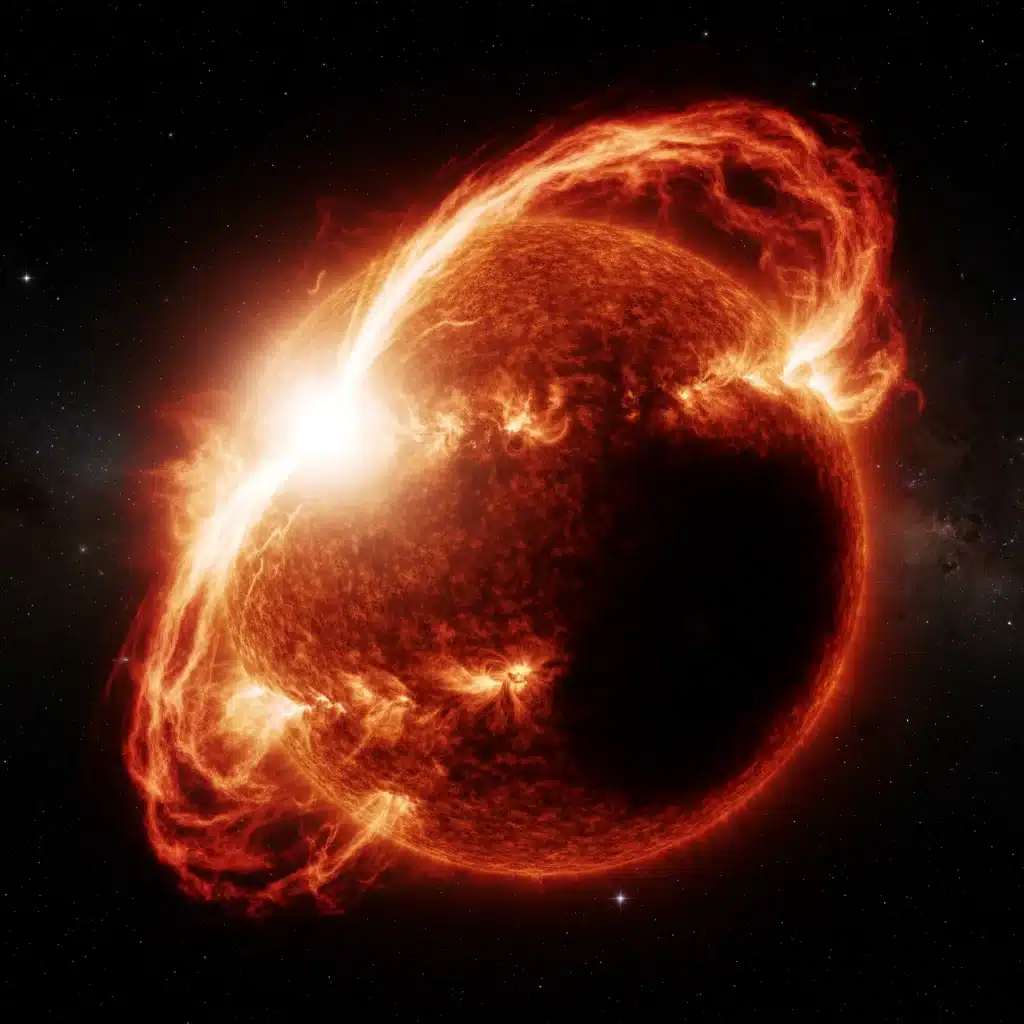
The sun, our life-giving star, is a dynamic and often volatile celestial body. Its activity follows an approximately 11-year cycle, characterized by periods of intense solar flares and coronal mass ejections (CMEs). As we approach and move through 2026, the sun is expected to be near the peak of its current solar cycle (Solar Cycle 25), leading to heightened solar flare impacts on Earth. These events, while awe-inspiring, can have significant consequences for our planet’s geomagnetic field and, by extension, our technology-dependent society.
Understanding these solar flare impacts is not just a matter of scientific curiosity; it’s a crucial aspect of preparedness for potential disruptions. From dazzling auroras to challenges for satellite communications and even power grid stability, the reach of solar activity is far-reaching. This comprehensive guide will delve into the recent solar flare activity and specifically highlight three key impacts on Earth’s geomagnetic field in 2026, offering insights into what these events mean for us.
The Science Behind Solar Flares and Geomagnetic Fields
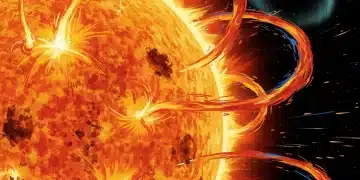
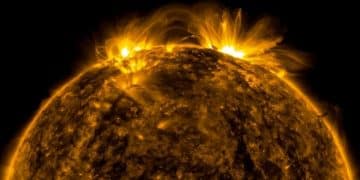
Before we explore the specific solar flare impacts, let’s briefly review the fundamental science. Solar flares are sudden, intense bursts of radiation emanating from the sun’s surface. They are often associated with sunspots, regions of intense magnetic activity. When these magnetic field lines cross, reconnect, and snap, they release enormous amounts of energy in the form of electromagnetic radiation across the entire spectrum, from radio waves to X-rays and gamma rays.
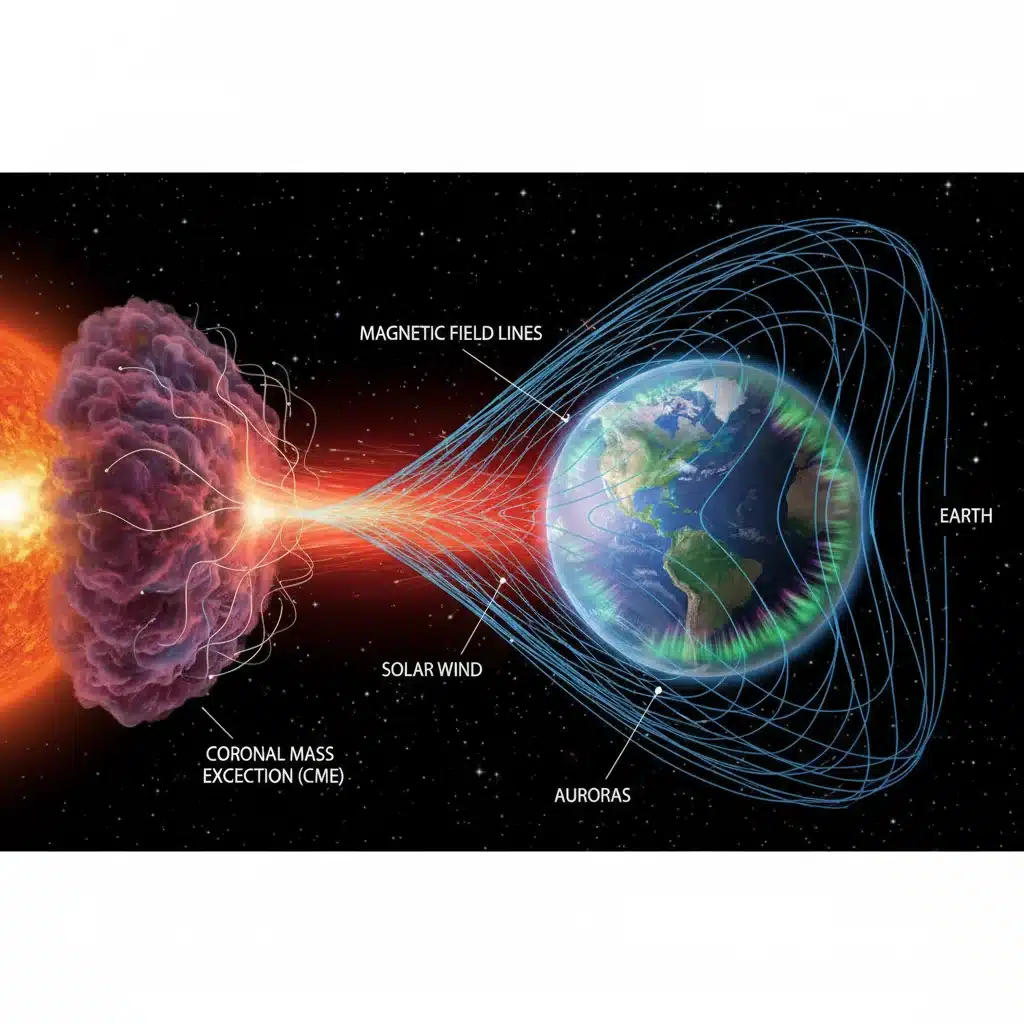
Coronal Mass Ejections (CMEs) are often, though not always, associated with solar flares. CMEs are massive expulsions of plasma and magnetic field from the sun’s corona, travelling through space at millions of miles per hour. When these charged particles reach Earth, they interact with our planet’s protective shield: the geomagnetic field.
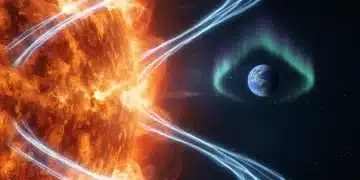
Earth’s geomagnetic field is generated by the motion of molten iron in its outer core. This field extends thousands of kilometers into space, forming the magnetosphere, which deflects most of the charged particles from the solar wind and CMEs. However, during powerful solar events, the magnetosphere can be compressed, distorted, and even breached, allowing these energetic particles to penetrate deeper into our atmosphere, leading to the various solar flare impacts we observe and experience.
The intensity of these interactions is measured by various indices, such as the Kp-index, which quantifies geomagnetic activity. A higher Kp-index indicates a stronger geomagnetic storm, directly correlating with more pronounced solar flare impacts.
Impact 1: Enhanced Auroral Displays and Their Reach
One of the most visually stunning and widely appreciated solar flare impacts is the enhancement of auroral displays. When charged particles from solar flares and CMEs interact with Earth’s magnetic field, they are funneled towards the magnetic poles. As these particles collide with atoms and molecules in the upper atmosphere, they excite them, causing them to emit light. This phenomenon creates the breathtaking auroras – the Aurora Borealis in the Northern Hemisphere and the Aurora Australis in the Southern Hemisphere.
During periods of strong solar activity, such as those anticipated in 2026, the geomagnetic field can be significantly disturbed. This allows the auroral oval, the region where auroras typically occur, to expand to much lower latitudes than usual. Historically, powerful solar storms have produced auroras visible in regions as far south as Florida or as far north as Mexico, a testament to the extensive reach of these solar flare impacts.
For aurora enthusiasts and photographers, this means increased opportunities to witness these natural light shows. However, it’s more than just a beautiful spectacle. The particles causing these auroras carry significant energy, and their interaction with the atmosphere is a direct manifestation of the energy transfer from the sun to Earth’s magnetosphere. While generally harmless to humans on the ground, the processes behind these enhanced displays are the same ones that can lead to more problematic solar flare impacts, as we will discuss.
Predicting the exact intensity and reach of auroras requires real-time monitoring of solar wind conditions and geomagnetic activity. Space weather agencies like NOAA’s Space Weather Prediction Center (SWPC) provide forecasts that help researchers, hobbyists, and critical infrastructure operators prepare for these events and understand the potential solar flare impacts.
Impact 2: Disruptions to Satellite Communications and Navigation Systems
In our increasingly interconnected world, satellites play an indispensable role in communication, navigation, weather forecasting, and countless other services. The second major solar flare impact, particularly in 2026, is the potential for significant disruptions to these vital satellite systems.
When a solar flare or CME hits Earth’s magnetosphere, it can cause a sudden increase in the density and temperature of the ionosphere, the upper layer of Earth’s atmosphere. This altered ionospheric condition can interfere with radio signals that travel through it, including those used by GPS (Global Positioning System) and other GNSS (Global Navigation Satellite System) constellations. The signals can be delayed, refracted, or even absorbed, leading to inaccuracies or complete loss of signal for navigation devices on Earth, in the air, and at sea.
Furthermore, the energetic particles associated with solar events can directly damage satellites. These particles can cause single-event upsets (SEUs) in satellite electronics, leading to temporary malfunctions or memory corruption. In more severe cases, prolonged exposure to high radiation levels can cause permanent damage, reducing a satellite’s lifespan or even rendering it inoperable. This is a significant concern for the growing number of satellites in low Earth orbit (LEO) and geosynchronous orbit (GEO), which are critical for global communications, internet services, and defense applications.
A specific type of solar flare, X-class flares, are the most powerful and can directly impact high-frequency (HF) radio communications on the sunlit side of Earth. These sudden ionospheric disturbances (SIDs) can cause radio blackouts lasting from minutes to hours, affecting aviation, maritime communications, and amateur radio operators. Given the expected peak of Solar Cycle 25 in 2026, the frequency of such events and their associated solar flare impacts on communications are likely to increase.
Mitigation strategies include designing radiation-hardened electronics for satellites, implementing redundant systems, and developing sophisticated space weather forecasting models that allow operators to take protective measures, such as temporarily shutting down non-essential systems or reorienting satellites to minimize exposure. The financial and operational consequences of satellite disruptions underscore the importance of monitoring solar flare impacts closely.
Impact 3: Geomagnetically Induced Currents (GICs) and Power Grid Vulnerability
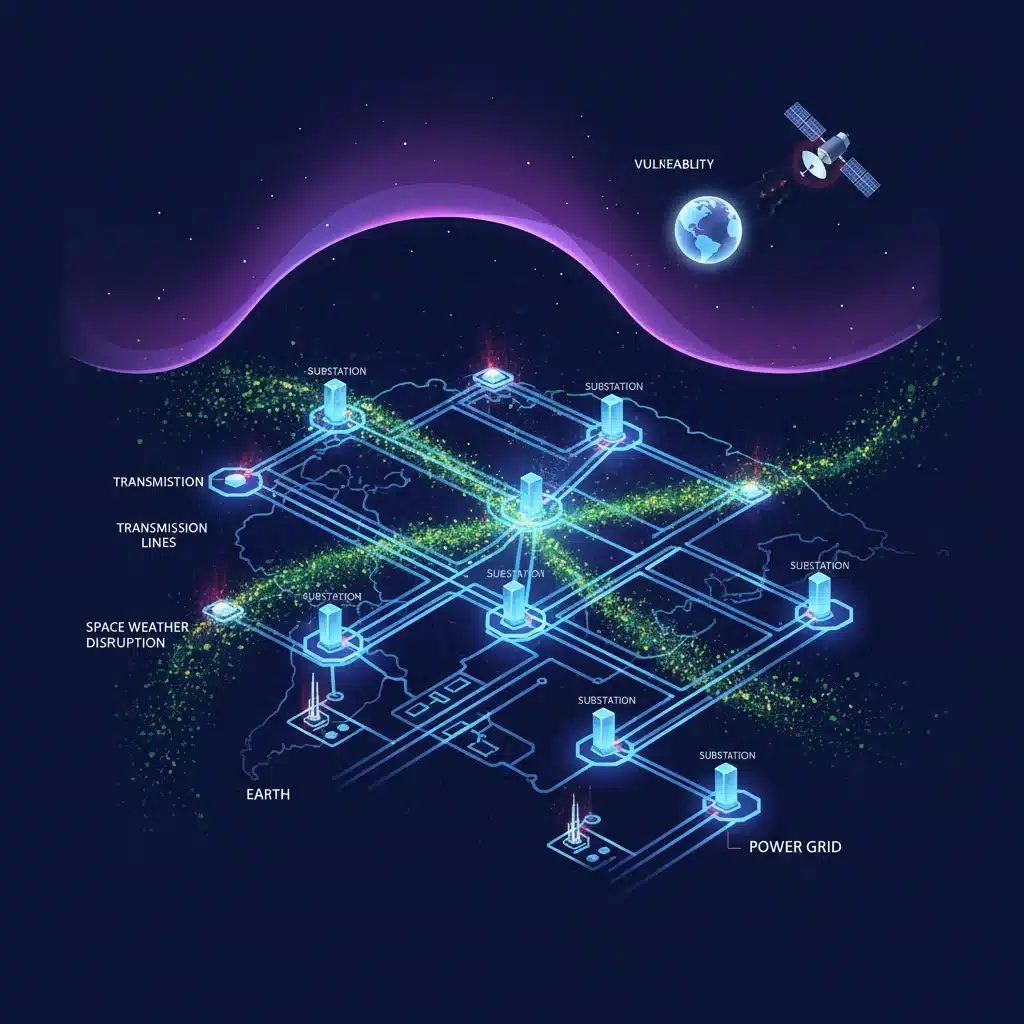
Perhaps the most concerning solar flare impact, due to its potential for widespread societal disruption, is the generation of Geomagnetically Induced Currents (GICs) in long conductors on Earth’s surface, particularly power transmission grids. When a powerful CME strikes Earth, the rapid fluctuations in the geomagnetic field induce electric currents in the ground, which then seek paths of least resistance through conductive structures like pipelines, railway lines, and, most critically, high-voltage power lines.
These GICs are not the alternating currents (AC) that power grids are designed to handle. Instead, they are quasi-direct currents (DC) that can saturate transformers, causing them to overheat, trip circuit breakers, and potentially suffer permanent damage. A widespread failure of multiple transformers can lead to cascading power outages, affecting millions of people over vast geographical areas. The most famous example of this occurred in 1989 when a geomagnetic storm caused a nine-hour blackout across Quebec, Canada.
The vulnerability of power grids to GICs is a significant concern for governments and utility companies worldwide. As our grids become more interconnected and complex, the potential for widespread solar flare impacts increases. The economic costs of such outages, including lost productivity, damaged goods, and emergency response, can be astronomical.
In anticipation of increased solar activity in 2026, utility companies are implementing various mitigation strategies. These include:
- Monitoring and Forecasting: Utilizing real-time space weather data to anticipate geomagnetic storms.
- Operational Procedures: Implementing procedures to reduce load on the grid or temporarily disconnect vulnerable transformers during a storm.
- Hardware Upgrades: Investing in GIC-resistant transformers or installing blocking devices to prevent GICs from entering critical equipment.
- Grid Modernization: Building more resilient and flexible grids that can better withstand external disturbances.
Understanding and addressing the threat of GICs is paramount to ensuring the stability of our modern infrastructure against the inevitable solar flare impacts of solar maximum.
Preparing for 2026: The Solar Maximum and Beyond
As we navigate through 2026 and the anticipated peak of Solar Cycle 25, the increased frequency and intensity of solar flares and CMEs will bring with it a higher probability of experiencing these solar flare impacts. While the sun’s activity is cyclical and predictable in its overall pattern, the exact timing and strength of individual events remain challenging to forecast with high precision.
Global scientific collaboration is key to improving our understanding of space weather. Missions like NASA’s Solar Dynamics Observatory (SDO) and Parker Solar Probe, along with ESA’s Solar Orbiter, continuously monitor the sun, providing invaluable data that helps refine our space weather models and improve early warning systems. These observations allow scientists to track solar flares and CMEs as they erupt, giving Earth-based systems a crucial lead time – typically hours to a few days – before the charged particles arrive.
Public awareness and education also play a vital role. While most people are unlikely to be directly harmed by a solar flare, understanding the potential for disruptions to everyday technologies can foster better preparedness and resilience. Knowing that a strong geomagnetic storm might affect GPS accuracy or cause temporary power fluctuations can help individuals and communities make informed decisions.
Furthermore, industries reliant on space-based assets and sensitive ground infrastructure are continually investing in research and development to harden their systems against space weather. This includes not only the power and telecommunications sectors but also aviation, defense, and oil and gas industries, all of which can be affected by significant solar flare impacts.
The lessons learned from past solar events, coupled with ongoing scientific advancements and technological innovations, are critical in building a more resilient society capable of withstanding the challenges posed by an active sun. The year 2026 serves as a timely reminder of our planet’s intimate connection to its star and the continuous need for vigilance and adaptation.
Conclusion: Navigating the Solar Landscape of 2026
The recent and anticipated solar flare activity leading up to and through 2026 underscores the profound influence of space weather on our planet. We’ve explored three key solar flare impacts on Earth’s geomagnetic field: the enhancement and broader reach of auroral displays, significant disruptions to satellite communications and navigation systems, and the generation of Geomagnetically Induced Currents (GICs) posing a threat to power grids.
While the beauty of the aurora is a welcome byproduct of solar activity, the potential for technological interruptions requires serious attention. From ensuring the reliability of our GPS-dependent transportation and logistics to safeguarding the integrity of our electrical infrastructure, the challenges presented by these celestial events are complex and multifaceted.
As we move deeper into Solar Cycle 25, continuous monitoring, advanced forecasting, and robust mitigation strategies will be essential. The scientific community, governments, and industries must work collaboratively to enhance our resilience against these natural phenomena. By understanding the science behind solar flare impacts and proactively preparing for their consequences, we can better protect our technological assets and ensure the continued functioning of the services that underpin modern life. The sun’s activity in 2026 will undoubtedly offer both spectacular displays and crucial tests of our planet’s preparedness.