Solar Flares 2026: Impact on Earth’s Technology and Preparedness
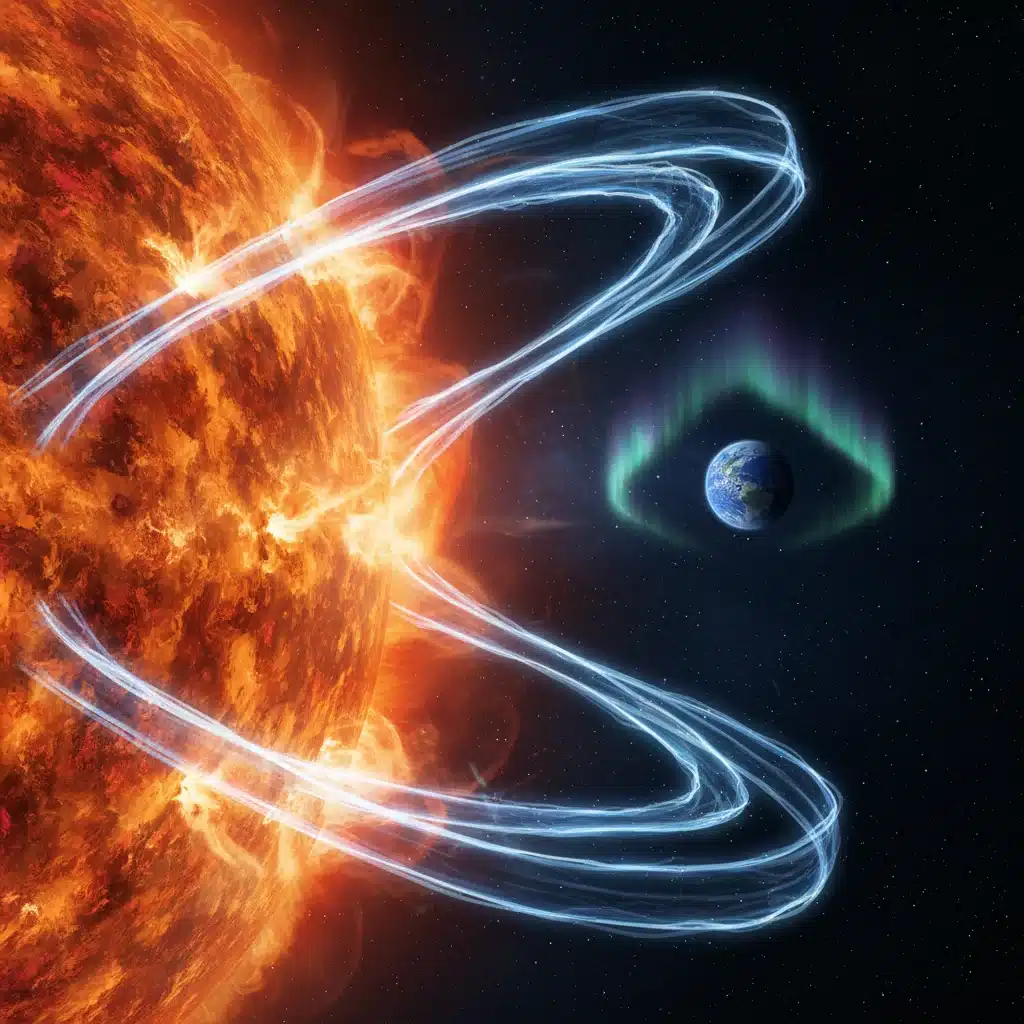
The sun, our life-giving star, is a dynamic and often tempestuous entity. Its surface constantly boils with activity, releasing immense bursts of energy in the form of solar flares and coronal mass ejections (CMEs). While these phenomena are natural occurrences, their increasing frequency and intensity, particularly as we approach the predicted solar maximum around 2025-2026, raise significant concerns for our increasingly technology-dependent world. The prospect of significant Solar Flares 2026 and their potential impact on Earth’s technology is a topic that demands our attention and understanding.
For centuries, humanity has observed the sun, marveling at its power and mystery. Today, our understanding has advanced, allowing us to predict periods of heightened solar activity with greater accuracy. The current solar cycle, Solar Cycle 25, is projected to reach its peak in the coming years, making Solar Flares 2026 a crucial period for potential geomagnetic storms and their consequences. This article delves into what solar flares are, why 2026 is a significant year, the potential impacts on our daily lives and critical infrastructure, and, most importantly, how we can prepare and mitigate these risks.
Understanding Solar Flares: The Sun’s Fiery Fury
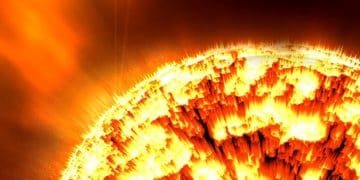
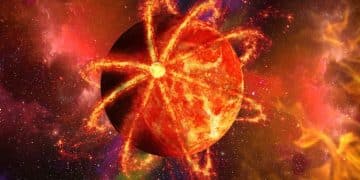
Before we explore the implications of Solar Flares 2026, it’s essential to understand the science behind these cosmic events. Solar flares are sudden, intense bursts of radiation emanating from the sun’s surface. They are often associated with sunspots, which are cooler, darker regions on the sun where magnetic fields are particularly strong and tangled. When these magnetic field lines snap and reconnect, they release enormous amounts of energy, manifesting as a solar flare.
What are Coronal Mass Ejections (CMEs)?
Closely related to solar flares, and often occurring in conjunction with them, are Coronal Mass Ejections (CMEs). While a solar flare is a burst of radiation, a CME is a massive expulsion of plasma and magnetic field from the sun’s corona (its outermost atmosphere). These CMEs travel through space at incredible speeds, sometimes reaching millions of miles per hour. If a CME is directed towards Earth, it can interact with our planet’s magnetic field, leading to a geomagnetic storm.
The Solar Cycle and Solar Maximum
The sun’s activity follows an approximately 11-year cycle, characterized by periods of increased and decreased sunspot activity. This cycle is known as the solar cycle. The peak of this cycle, when sunspot numbers and solar flare occurrences are most frequent and intense, is called the solar maximum. Conversely, the period of least activity is the solar minimum. Scientists predict that Solar Cycle 25 will reach its solar maximum around 2025-2026, making the potential for significant Solar Flares 2026 a key concern for space weather forecasters and policymakers worldwide.
During a solar maximum, the likelihood of powerful X-class flares (the strongest category of solar flares) and Earth-directed CMEs increases significantly. While not every flare or CME will cause a major disturbance on Earth, the sheer volume of activity during this period raises the statistical probability of a significant event.
Historical Precedents: Lessons from the Past
While the prospect of Solar Flares 2026 might sound like science fiction, history provides us with concrete examples of their disruptive power.
The Carrington Event (1859)
In September 1859, a massive solar flare and subsequent CME struck Earth. The geomagnetic storm that ensued was so powerful that telegraph systems around the world failed, with operators reporting electric shocks and telegraph papers catching fire. Auroras, usually confined to polar regions, were seen as far south as the Caribbean. Had such an event occurred today, its impact on our interconnected modern society would be catastrophic.
Other Notable Events
- March 1989 Quebec Blackout: A relatively moderate geomagnetic storm caused the Hydro-Québec power grid to collapse, leaving six million people without electricity for nine hours.
- October 2003 “Halloween Storms”: A series of intense solar flares and CMEs caused widespread disruptions to satellites, radio communications, and airline operations.
- July 2012 Near Miss: A CME comparable in strength to the Carrington Event narrowly missed Earth. Had it hit, experts estimate the economic damage could have been trillions of dollars and taken years to recover from.
These historical events serve as stark reminders of the vulnerability of our technological infrastructure to solar activity. As we look towards Solar Flares 2026, understanding these past incidents is crucial for effective planning and mitigation.
The Impact of Solar Flares 2026 on Earth’s Technology
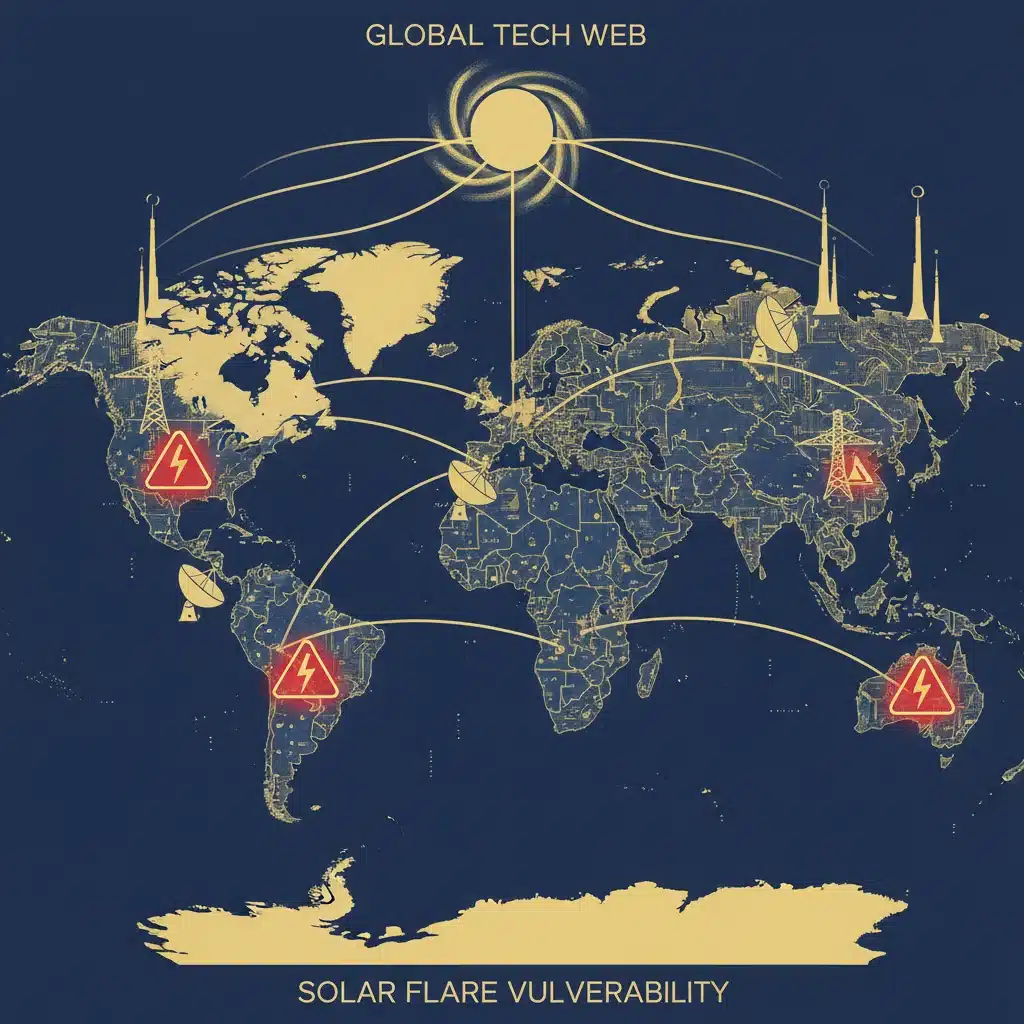
The potential impact of geomagnetic storms generated by Solar Flares 2026 extends across a wide array of technological systems that underpin modern society. From the invisible signals that guide our GPS to the massive grids that power our homes, nearly every aspect of our lives is susceptible.
Power Grids: The Achilles’ Heel
One of the most significant vulnerabilities is our electrical power grids. Geomagnetic storms induce geomagnetically induced currents (GICs) in long conductors like power lines. These GICs can overload transformers, leading to widespread power outages. A major event could cause transformers to burn out, and replacing them is a time-consuming and expensive process, potentially leading to blackouts lasting weeks or even months over large regions.
Satellites and GPS: Navigational Nightmares
Satellites are particularly exposed to solar radiation. Intense solar flares can directly damage satellite electronics, leading to malfunctions or complete failure. CMEs can also cause significant drag on low-Earth orbit satellites due to atmospheric expansion, shortening their lifespan. Furthermore, the GPS systems we rely on for navigation, timing, and communication are highly susceptible. Disruptions to GPS signals could affect everything from air travel and precision agriculture to financial transactions and emergency services.
Radio Communications and Aviation
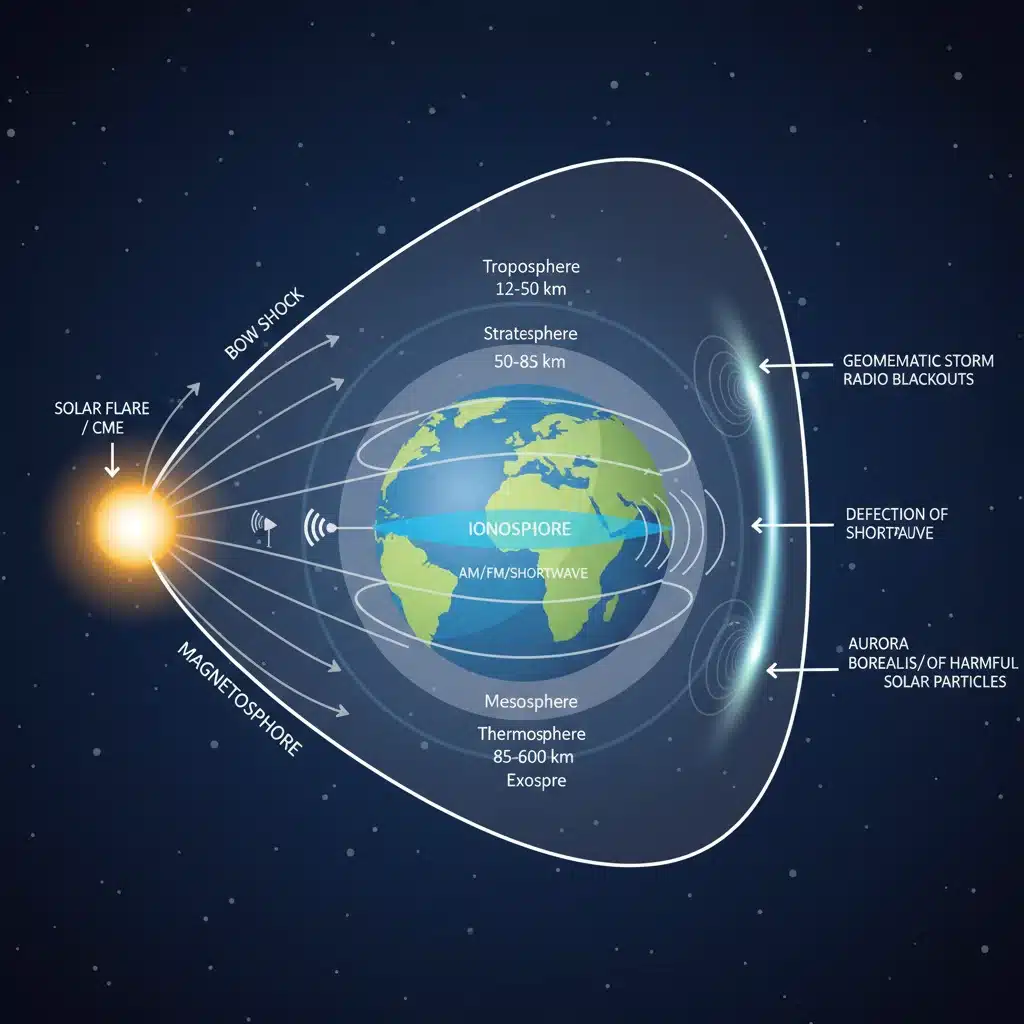
Shortwave radio communication, used by airlines, amateur radio operators, and military organizations, relies on the reflection of radio waves off the ionosphere. Solar flares and CMEs can disturb the ionosphere, causing radio blackouts and making long-distance communication impossible. For aviation, this means disruptions to communication with air traffic control, navigation systems, and even passenger Wi-Fi.
Internet and Data Infrastructure
While the internet itself is largely insulated from direct solar flare damage due to underground fiber optic cables, the infrastructure that supports it is not. Power outages, satellite disruptions, and damage to submarine communication cables (which rely on repeaters powered by electricity) could severely impact internet connectivity. A widespread, long-duration power outage would effectively cripple the internet for affected regions.
Pipelines and Railways
Long metal structures like oil and gas pipelines and railway tracks can also act as conductors for GICs, similar to power lines. While less dramatic than power grid failures, these induced currents can interfere with pipeline monitoring systems, cause corrosion, and disrupt railway signaling, leading to operational hazards and economic losses.
Preparing for Solar Flares 2026: Mitigation and Resilience
Given the potential for significant disruption from Solar Flares 2026, preparedness is paramount. This involves a multi-faceted approach, from international collaboration to individual readiness.
International Collaboration and Space Weather Monitoring
Agencies like NASA, NOAA, and the European Space Agency (ESA) continuously monitor the sun with a fleet of spacecraft, providing vital early warnings of solar events. International cooperation is crucial for sharing data, developing predictive models, and coordinating responses. Investing in next-generation space weather satellites and ground-based observatories is key to improving our forecasting capabilities.
Strengthening Critical Infrastructure
- Power Grids: Utilities are implementing measures such as installing surge arresters, improving grounding, and developing operational procedures to isolate vulnerable transformers during geomagnetic storms. ‘Hardening’ the grid by investing in robust, resilient components is a long-term goal.
- Satellites: Satellite operators can implement shielding, redundant systems, and ‘safe mode’ protocols to protect sensitive electronics during intense solar events. Developing more resilient satellite designs is also an ongoing effort.
- Communication Systems: Developing alternative communication methods that are less susceptible to ionospheric disturbances, such as optical fiber networks and mesh networks, can enhance resilience.
Government and Emergency Services Preparedness
Governments need to develop comprehensive national and regional space weather emergency plans. This includes:
- Establishing clear communication protocols for warnings and response.
- Stockpiling essential spare parts for critical infrastructure (e.g., transformers).
- Training emergency responders for scenarios involving widespread power outages and communication failures.
- Educating the public about the risks and how to prepare.
Individual and Community Preparedness
While governments and industries work on large-scale mitigation, individuals and communities also have a role to play in preparing for Solar Flares 2026. Many of the preparedness steps for a major power outage are similar to those for other natural disasters:
- Emergency Kits: Assemble a kit with at least three days’ supply of water, non-perishable food, a battery-powered or hand-crank radio, flashlights, extra batteries, a first-aid kit, and any necessary medications.
- Communication Plan: Develop a family communication plan in case cell phone networks are down. Know where to meet and have out-of-state contacts.
- Cash: ATMs and electronic transactions may not work during widespread power outages, so have some cash on hand.
- Fuel: Keep your vehicle’s fuel tank at least half full, as gas pumps rely on electricity.
- Backup Power: Consider backup power solutions like generators or solar chargers for essential devices, if feasible.
- Information: Stay informed about space weather forecasts from reliable sources like NOAA’s Space Weather Prediction Center (SWPC).
The Future of Space Weather Forecasting and Mitigation
The lessons learned from past events and the ongoing research into solar physics are continually refining our understanding and capabilities. As we approach the peak of Solar Cycle 25, the focus on Solar Flares 2026 is driving innovation in several areas:
Advanced Modeling and Prediction
Scientists are developing more sophisticated models to predict the trajectory and intensity of CMEs with greater accuracy. This involves leveraging artificial intelligence and machine learning to analyze vast amounts of solar observation data, providing earlier and more precise warnings. Improved lead time is critical for implementing mitigation strategies, such as powering down sensitive equipment or rerouting flights.
Technological Resilience and Redundancy
Engineers are actively working on designing future technologies with inherent resilience to space weather. This includes developing radiation-hardened electronics for satellites, designing power grid components that can better withstand GICs, and creating self-healing or adaptive network architectures for communications. Redundancy in critical systems ensures that if one component fails, another can take its place, minimizing downtime.
Policy and Regulatory Frameworks
Governments worldwide are increasingly recognizing space weather as a national security and economic threat. This has led to the development of national space weather strategies and action plans. These frameworks aim to coordinate efforts across government agencies, private industry, and academic institutions to enhance monitoring, forecasting, and mitigation capabilities. International cooperation on these policies is also growing, acknowledging that space weather impacts know no borders.
Public Awareness and Education
A well-informed public is a resilient public. Campaigns to raise awareness about space weather risks and promote individual preparedness are vital. Understanding the potential impacts of events like Solar Flares 2026 empowers citizens to take proactive steps, reducing panic and facilitating a more organized response should a significant event occur.
Conclusion: Navigating the Solar Maximum of 2026
The sun, while essential for life, also poses significant risks to our modern technological civilization. As we head towards the solar maximum around 2025-2026, the potential for powerful Solar Flares 2026 and their associated geomagnetic storms becomes a tangible concern. The interconnectedness of our global infrastructure means that disruptions in one area can have cascading effects across multiple sectors, impacting everything from communication and navigation to power and finance.
However, the future is not one of helplessness. Through continuous scientific research, international collaboration, technological innovation, and proactive preparedness at all levels – from governments and industries to individual households – we can significantly reduce our vulnerability. By understanding the science, learning from history, and implementing robust mitigation strategies, we can navigate the challenges posed by Solar Flares 2026 and ensure the resilience of our technological world against the sun’s powerful, yet predictable, cycles.
Staying informed and taking proactive steps today will be crucial in safeguarding our future against the fiery breath of our star. The sun’s activity is a reminder that even in our advanced technological age, we remain intimately connected to the powerful forces of the cosmos.