Planetary Transits 2026: Mercury & Venus Across the Sun
The universe is a grand theater, constantly presenting us with breathtaking celestial spectacles. Among the most anticipated and scientifically significant are planetary transits. These rare events occur when a planet passes directly between a star and an observer, appearing as a small silhouette moving across the star’s face. For us on Earth, this means witnessing Mercury or Venus traverse the Sun’s fiery disk. While lunar and solar eclipses are relatively common, planetary transits are far less frequent, making them extraordinary opportunities for both professional astronomers and amateur skygazers.
As we look ahead to 2026, the astronomical community is buzzing with anticipation for potential planetary transits. These events offer invaluable insights into planetary atmospheres, orbital mechanics, and even the search for exoplanets. Understanding the mechanics behind these transits, their historical impact, and how to safely observe them is crucial for anyone hoping to experience these cosmic dances. This comprehensive guide will delve into the intricacies of planetary transits 2026, focusing specifically on Mercury’s and Venus’s potential movements across our star.
The concept of a transit might seem straightforward, but its implications are profound. From calculating the astronomical unit – the fundamental distance between Earth and the Sun – to validating exoplanet detection methods, transits have played a pivotal role in shaping our understanding of the cosmos. As technology advances, so does our ability to observe and analyze these events, pushing the boundaries of astronomical research.
Understanding Planetary Transits: A Celestial Alignment
A planetary transit is a specific type of syzygy, an alignment of three celestial bodies in a gravitational system. In the context of our solar system, a transit occurs when an inferior planet (Mercury or Venus, whose orbits lie within Earth’s orbit) passes directly between the Sun and Earth. From our vantage point, the planet appears as a tiny, dark dot moving across the Sun’s bright face. This is distinct from an occultation, where a larger body blocks the view of a smaller one, or an eclipse, where one body passes into the shadow of another.
The rarity of these events stems from the fact that the orbital planes of Mercury and Venus are slightly inclined relative to Earth’s orbital plane (the ecliptic). For a transit to occur, the planet must cross the ecliptic at the same time it passes between the Sun and Earth. This precise alignment doesn’t happen every time a planet passes inferior conjunction (when it is between the Sun and Earth). For Mercury, transits occur approximately 13 to 14 times per century, while Venus transits are much rarer, occurring in pairs separated by eight years, with over a century between pairs.
The scientific significance of observing planetary transits 2026 cannot be overstated. Historically, transits were crucial for determining the precise distance between Earth and the Sun, a measurement that was foundational for understanding the scale of our solar system. Expeditions were launched across the globe to observe Venus transits in the 18th and 19th centuries, leading to significant advancements in geodesy and cartography. Today, while we have more accurate methods for measuring astronomical distances, transits remain vital for other areas of research.
One of the most exciting applications of transit observations is in the field of exoplanet research. The transit method is a primary way we detect planets orbiting other stars. When an exoplanet transits its host star, it causes a slight, periodic dip in the star’s brightness. By studying this dip, astronomers can determine the exoplanet’s size and orbital period. Observing transits within our own solar system helps calibrate and refine these techniques, improving our ability to find and characterize exoplanets, including those that might be habitable.
Mercury Transits in 2026: A Closer Look
Mercury, the innermost planet, transits the Sun more frequently than Venus due to its faster orbital period and more frequent alignments with Earth and the Sun. However, ‘frequently’ is a relative term in astronomy; Mercury transits still only happen about 13 to 14 times per century. The last Mercury transit occurred in November 2019, and the next one is anticipated for November 2032. Therefore, there is no Mercury transit scheduled for planetary transits 2026.
Despite no Mercury transit in 2026, understanding its transits is essential for appreciating the broader context of planetary alignments. Mercury’s transits are notoriously difficult to observe without magnification because of its small size. Even with a telescope, it appears as a tiny black dot against the vast solar disk. This small angular diameter, combined with its relatively rapid movement, makes it a challenging but rewarding target for observers.
When a Mercury transit does occur, astronomers can study its tenuous exosphere. Unlike Earth or Venus, Mercury has a very thin, unstable atmosphere, or exosphere, composed of atoms blasted off its surface by solar wind and micrometeorite impacts. During a transit, scientists can analyze the light passing through this exosphere to understand its composition and dynamics. This provides valuable data for understanding how planetary atmospheres interact with solar radiation and how they evolve over time, especially for planets close to their host stars.
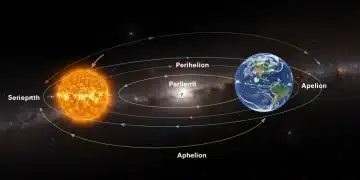
Furthermore, Mercury’s transits have historically been used to refine our understanding of orbital mechanics and the gravitational effects within the solar system. The precise timing of Mercury’s transits helped confirm aspects of Einstein’s theory of general relativity, specifically the precession of Mercury’s perihelion, which could not be fully explained by Newtonian mechanics alone. While 2026 won’t feature a Mercury transit, its historical and scientific significance continues to resonate in modern astronomy.
Venus Transits in 2026: A Century Away
Venus transits are among the rarest predictable astronomical phenomena. They occur in pairs separated by eight years, with each pair separated by more than a century. The last pair of Venus transits occurred in 2004 and 2012. This means that the next Venus transit will not occur until December 2117, followed by another in December 2125. Consequently, there will be no Venus transit to observe during planetary transits 2026.
The extreme rarity of Venus transits has imbued them with a unique historical and scientific allure. The transits of Venus in the 18th and 19th centuries were pivotal events in scientific history. As mentioned earlier, they were used to accurately determine the astronomical unit (AU), a fundamental constant in astronomy. Scientists like Captain James Cook embarked on perilous voyages to distant lands, such as Tahiti, to observe these transits from different longitudes, employing the parallax method to calculate the Earth-Sun distance.
These expeditions were not just about astronomy; they were feats of exploration, navigation, and international scientific collaboration. The data collected, though challenging to process due to atmospheric distortions and the ‘black drop effect’ (an optical phenomenon that makes the planet appear to stretch and connect to the limb of the Sun), ultimately led to a much more precise understanding of the solar system’s scale than ever before.
Even without a Venus transit in 2026, the legacy of these events continues to influence modern astronomy. The meticulous planning, international cooperation, and dedication required for historical transit observations laid the groundwork for large-scale scientific endeavors like space missions and global observatories. Moreover, the study of Venus’s thick, hot atmosphere, though not directly observable during a transit, benefits from the continued interest these rare events generate. Understanding Venus’s past and present climate offers crucial insights into the potential habitability of exoplanets with similar characteristics.
Other Celestial Events in 2026: Beyond Transits
While planetary transits 2026 might not feature Mercury or Venus traversing the Sun, the year promises other captivating celestial events for skywatchers. The night sky is always active, offering a continuous display of meteors, comets, conjunctions, and eclipses. Keeping an eye on astronomical calendars is always a good idea to catch these phenomena.
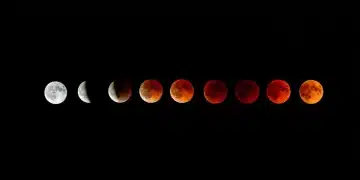
Lunar eclipses, where the Earth passes directly between the Sun and the Moon, casting a shadow on our natural satellite, are relatively common and visible from wide geographical areas. Solar eclipses, though more localized, are spectacular events where the Moon passes between the Sun and Earth, blocking out the Sun’s light. While total solar eclipses are rare in any given location, partial solar eclipses occur more frequently.
Conjunctions, where two or more celestial bodies appear close together in the sky, are also frequent occurrences. These can involve planets, the Moon, and bright stars, creating beautiful visual alignments. Meteor showers, caused by Earth passing through streams of cosmic debris, offer annual opportunities to see shooting stars illuminate the night. Major showers like the Perseids in August and the Geminids in December are particularly prolific and worth planning for.
For those interested in deep-sky objects, 2026 will continue to offer stunning views of galaxies, nebulae, and star clusters through telescopes. The ongoing missions of space telescopes like the James Webb Space Telescope will undoubtedly continue to deliver groundbreaking images and data, pushing the frontiers of our knowledge about the universe. Even without a major planetary transit, 2026 will be a rich year for astronomical discovery and observation.
Observing Transits Safely: Essential Guidelines
Observing any solar event, including planetary transits, requires extreme caution. Looking directly at the Sun, even for a short period, can cause severe and permanent eye damage, including blindness. Safe observation is paramount.
The most common and safest method for observing the Sun is through projection. This involves using a telescope or binoculars to project an image of the Sun onto a white screen. Never look through the eyepiece of a telescope or binoculars without a certified solar filter. Another safe method is to use certified solar viewing glasses or handheld solar viewers. These are specifically designed to block out harmful ultraviolet, infrared, and intense visible light. Do not use regular sunglasses, smoked glass, or uncertified filters, as these do not offer adequate protection.
For those using telescopes, only use solar filters designed to fit over the front (objective) lens of the telescope. Eyepiece filters, often cheaply made and prone to cracking from concentrated solar heat, are extremely dangerous. Always ensure your solar filter is securely attached and free from any damage before use.
Public observatories and astronomy clubs often host viewing events for significant celestial phenomena. These events are an excellent way to safely observe with expert guidance and specialized equipment. They also provide an opportunity to learn more about the event and connect with fellow astronomy enthusiasts. Even though there are no major planetary transits 2026, these guidelines apply to any future solar observation, including partial solar eclipses or sunspot viewing.
The Historical and Cultural Significance of Transits
Beyond their scientific utility, planetary transits have held profound cultural and historical significance. For ancient civilizations, celestial alignments were often interpreted as omens or divine messages. While our understanding has evolved, the sense of wonder and awe inspired by these events remains.
The historical Venus transits, in particular, symbolize a turning point in scientific exploration. They spurred global expeditions and fostered international scientific cooperation during a time when such endeavors were logistically challenging and politically complex. The race to observe these transits pushed the boundaries of navigation, cartography, and precise timekeeping. The stories of astronomers like Jeremiah Horrocks, who made the first predicted observation of a Venus transit in 1639, or the numerous scientists who risked their lives to travel to remote corners of the Earth, highlight the human drive for discovery.
These events also underscore the iterative nature of scientific progress. Early observations were fraught with difficulties, and initial calculations of the AU varied. However, successive transits, combined with improved instruments and analytical techniques, led to increasingly accurate results. This process of refinement and correction is a hallmark of the scientific method, demonstrating how science builds upon previous knowledge to achieve greater understanding.
Today, while the direct scientific goals of observing Mercury and Venus transits have shifted from measuring the AU, their cultural impact endures. They serve as reminders of humanity’s enduring fascination with the cosmos, our capacity for collective endeavor, and the continuous quest to understand our place in the universe. They inspire new generations of scientists and spark curiosity in the general public, fostering a deeper appreciation for astronomy.
The Role of Technology in Modern Transit Observations
Modern technology has revolutionized the way we observe and study planetary transits. While historical observations relied on manual measurements and visual estimation, today’s astronomers employ sophisticated instruments and digital analysis. High-resolution cameras, automated telescopes, and advanced data processing techniques allow for unprecedented precision in timing transit events and analyzing the light curves.
Space-based telescopes, such as the Hubble Space Telescope and the Transiting Exoplanet Survey Satellite (TESS), have further enhanced our capabilities. These observatories operate above Earth’s atmosphere, providing clearer, uninterrupted views of celestial objects without atmospheric distortion. While TESS is primarily designed to find exoplanets using the transit method, its success relies on the foundational understanding gained from observing transits within our own solar system.
For future planetary transits 2026 (or beyond), citizen scientists also play a vital role. With accessible high-quality amateur telescopes, digital cameras, and online communities, enthusiasts can contribute valuable data to scientific projects. Precise timing of transit ingress (when the planet first touches the Sun’s limb) and egress (when it leaves) can still be useful, especially for refining orbital parameters and studying atmospheric effects.
Furthermore, the internet and global communication networks ensure that transit events can be shared and experienced by millions worldwide, even if they are not in the direct path of visibility. Live streams from observatories, educational resources, and interactive simulations make these rare phenomena accessible to a global audience, fostering a widespread appreciation for astronomy and scientific discovery.
Looking Ahead: Future Transits and Exoplanet Hunting
While planetary transits 2026 may not bring a Mercury or Venus transit, the future holds many more such events. The next Mercury transit is in 2032, and the next pair of Venus transits are in 2117 and 2125. These future events will continue to be subjects of intense scientific interest and public fascination.
The study of transits has profound implications for the search for life beyond Earth. The transit method is our most successful technique for discovering exoplanets, and as we find more, we can use spectroscopy during transits to analyze the chemical composition of their atmospheres. Detecting biosignatures – chemical indicators of life – in exoplanet atmospheres is one of the holy grails of astrobiology.
Every transit, whether it’s Mercury across our Sun or an exoplanet across a distant star, offers a unique opportunity to learn more about the universe. It reinforces the interconnectedness of celestial mechanics and the delicate alignments that make such phenomena possible. The continued observation and study of these events will undoubtedly lead to new discoveries, deepening our understanding of planetary systems, star formation, and the potential for life elsewhere in the cosmos.
In conclusion, while the year 2026 will not feature the highly anticipated transits of Mercury or Venus across the Sun, the rich history, scientific importance, and future potential of these events remain a cornerstone of astronomical study. From historical expeditions that measured our solar system to modern techniques that seek out distant worlds, planetary transits continue to captivate and enlighten us. Remember to always prioritize safety when observing the Sun, and keep an eye on the skies for the many other wonders the universe has in store.