Meteor Showers 2026: Maximize Your Viewing Experience
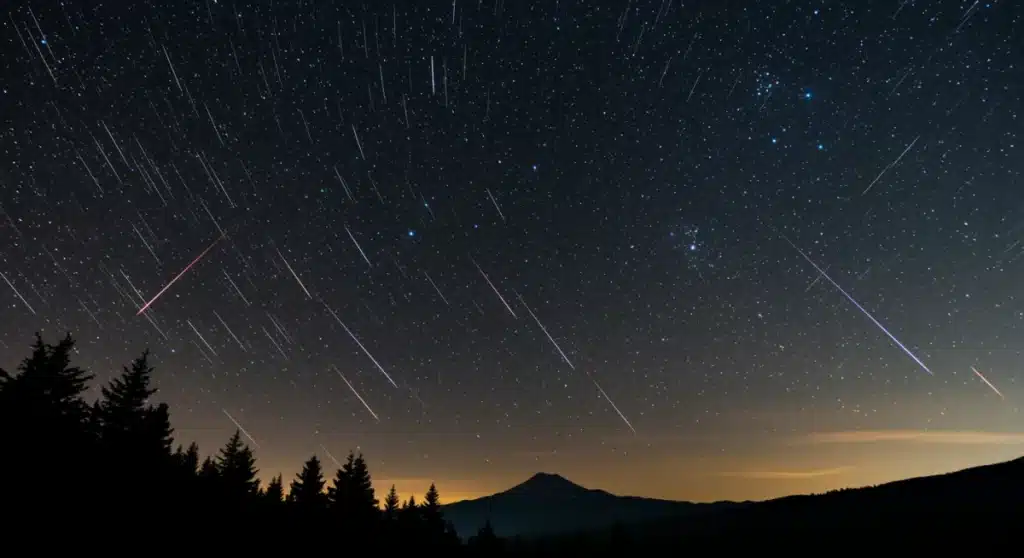
To fully appreciate the 2026 meteor showers, understanding key viewing strategies and pinpointing the most prominent celestial events will significantly enhance your stargazing endeavors.
Prepare to witness some of nature’s most breathtaking displays as we delve into the world of 2026 meteor showers. This guide offers practical solutions for maximizing your viewing experience and highlights five key events you won’t want to miss, ensuring you’re ready to embrace the cosmic spectacle from the best possible vantage points.
Understanding meteor showers: what to expect in 2026
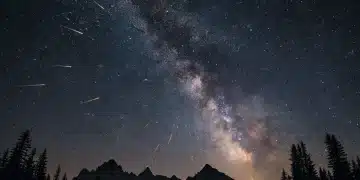
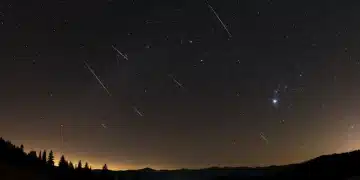
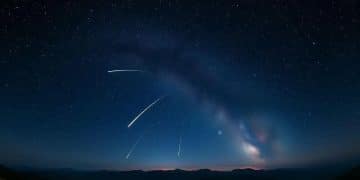
Meteor showers are celestial events where numerous meteors are observed to radiate, or originate, from one point in the night sky. These dazzling displays occur when Earth passes through debris trails left by comets or asteroids. As tiny particles, often no larger than a grain of sand, enter our atmosphere, they burn up, creating streaks of light we call meteors or ‘shooting stars’.
For 2026, astronomers anticipate a series of spectacular events, some offering higher Zenithal Hourly Rates (ZHR) than others. The ZHR is a crucial metric, indicating the maximum number of meteors a single observer might see in an hour under perfect dark-sky conditions, with the radiant directly overhead. However, real-world viewing conditions, including light pollution and the moon’s phase, will always influence the actual number of meteors observed.
The science behind the spectacle
Every meteor shower is associated with a specific parent body, usually a comet. As a comet orbits the Sun, it sheds dust and rock particles. When Earth’s orbit intersects with this trail of debris, these particles collide with our atmosphere at incredible speeds, igniting due to air friction. This phenomenon is why meteor showers are predictable; we know where and when Earth will encounter these trails.
- Cometary debris: The primary source of meteor shower material.
- Atmospheric entry: Particles burn up due to friction, creating light.
- Radiant point: The apparent origin of meteors in the sky.
Understanding these fundamental principles helps in appreciating the grandeur of each shower. It also aids in predicting the best times to observe, as the radiant’s position relative to the observer and the local time of night are critical factors.
In summary, meteor showers in 2026 promise several opportunities for celestial observation. Knowing their origins and what influences their visibility is the first step toward a successful viewing experience.
Essential gear and preparation for optimal viewing
Maximizing your meteor shower viewing experience in 2026 hinges significantly on proper preparation and having the right equipment. While meteor showers can often be seen with the naked eye, a few simple tools and strategies can elevate your experience from good to unforgettable.
First and foremost, comfort is key. Stargazing often involves long periods outdoors in the dark, sometimes in cooler temperatures. Dressing in layers, bringing a comfortable reclining chair or blanket, and having warm beverages can make a significant difference. Your eyes will need time to adjust to the darkness, so avoid looking at bright screens or lights for at least 20-30 minutes before and during your viewing session.
Choosing the right location
Location is paramount. The darker the sky, the more meteors you’ll see. Seek out areas away from city lights, such as national parks, rural areas, or designated dark-sky preserves. These locations minimize light pollution, which is the biggest hindrance to meteor shower observation.
- Dark skies: Essential for seeing fainter meteors.
- Open views: Avoid tall buildings or trees that obstruct the horizon.
- Safety: Choose a safe, accessible location.
Apps and websites that show light pollution maps can be invaluable resources for finding the best spots near you. Additionally, checking local weather forecasts for clear skies is non-negotiable. Clouds can completely obscure the view, rendering all other preparations moot.
Beyond location, consider bringing a red-light flashlight. Red light preserves your night vision far better than white light, allowing you to move around without losing your dark adaptation. Binoculars are also a great addition, not necessarily for spotting meteors, but for exploring other celestial objects while you wait for the next shooting star.
In conclusion, a comfortable setup, a dark and clear location, and minimal light interference are the cornerstones of an optimal meteor shower viewing experience. These preparations ensure you can fully immerse yourself in the cosmic display.
Top 5 2026 meteor showers: dates and peak times
For enthusiasts eager to witness the wonders of 2026 meteor showers, knowing the key dates and peak times is crucial. While many minor showers occur throughout the year, five events stand out for their potential to deliver truly spectacular displays, offering high meteor rates and favorable viewing conditions.
These top showers are chosen for their predicted intensity, the size of their parent body’s debris trail, and generally good visibility from the Northern Hemisphere, where most of the United States is located. Keep in mind that peak times are usually brief, often lasting only a few hours around the predicted maximum activity.
Quadrantids (Early January)
Kicking off the year, the Quadrantids are known for their bright, fast meteors. Although their peak is very narrow, lasting only a few hours, they can produce up to 120 meteors per hour under ideal conditions. In 2026, the peak is expected around January 3-4, making it an excellent opportunity for early risers to catch a glimpse before dawn.
The Quadrantids originate from asteroid 2003 EH1, an unusual parent body for a meteor shower. This shower is best viewed from the Northern Hemisphere. Ensure you’re bundled up, as January nights can be quite cold.
Perseids (Mid-August)
Arguably the most popular and reliable meteor shower, the Perseids offer consistently high rates of bright meteors, often leaving persistent trails. Associated with Comet Swift-Tuttle, the Perseids peak around August 12-13. For 2026, the moon phase is expected to be favorable, meaning less moonlight interference, potentially allowing for rates of 60-100 meteors per hour.
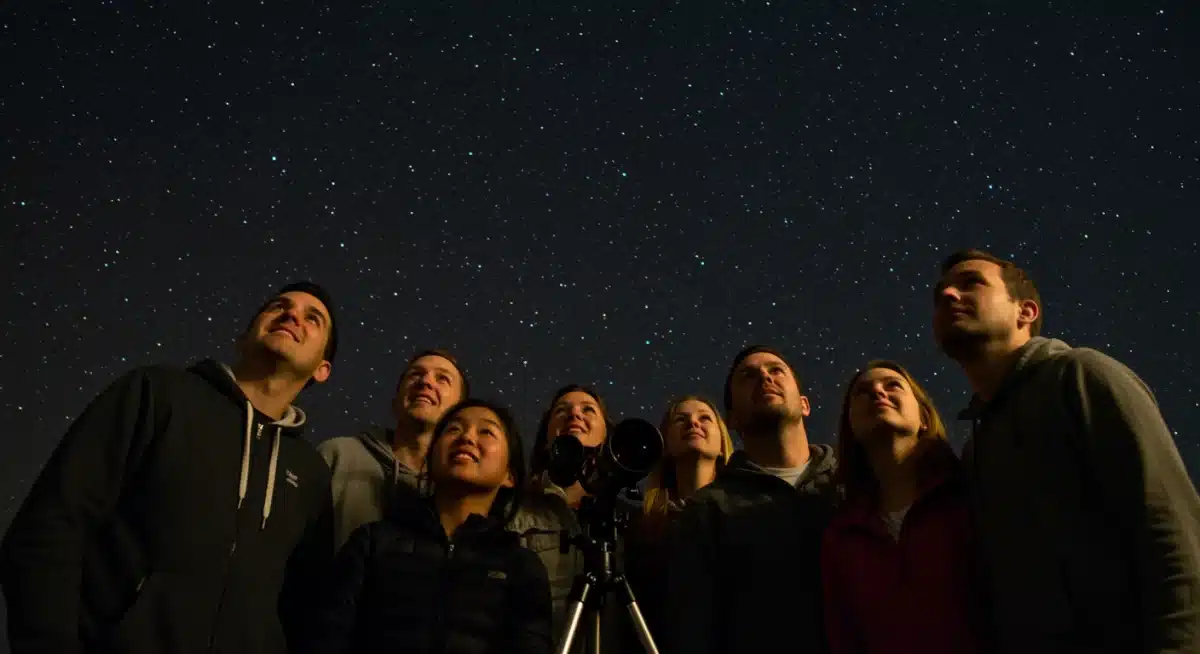
The warm August nights make the Perseids a comfortable and enjoyable viewing experience for many. Look towards the constellation Perseus in the northeastern sky after midnight.
Orionids (Late October)
The Orionids, fragments of Halley’s Comet, are known for their swift and bright meteors, sometimes producing fireballs. While not as prolific as the Perseids, they can still offer rates of 15-20 meteors per hour. The peak for the Orionids in 2026 is anticipated around October 21-22.
These meteors get their name because their radiant appears to be in the constellation Orion. Viewing conditions will depend on the moon phase, but they are generally a good autumnal shower to observe.
Leonids (Mid-November)
The Leonids are famous for their periodic meteor storms, though 2026 is not expected to be a storm year. Nevertheless, they remain a respectable shower, peaking around November 17-18 with rates of 10-15 meteors per hour. These meteors originate from Comet Tempel-Tuttle and are known for their speed.
- Speed: Leonids are among the fastest meteors.
- Parent comet: Tempel-Tuttle.
- Historical storms: Known for occasional intense outbursts.
While a storm is unlikely, the Leonids are still worth watching for their bright, fast-moving streaks. Look towards the constellation Leo after midnight.
Geminids (Mid-December)
Closing out the year, the Geminids are often considered one of the best and most consistent meteor showers, rivaling the Perseids. They are unique in that their parent body is an asteroid, 3200 Phaethon, not a comet. The Geminids can produce up to 120-150 colorful meteors per hour and peak around December 13-14 in 2026.
Their radiant is in the constellation Gemini, and they are visible from most parts of the world. The Geminids are known for their slow, graceful movement and often display a yellowish hue. Dress warmly, as December nights can be very cold.
In conclusion, these five meteor showers offer the best opportunities for stargazers in 2026. Mark your calendars and prepare for some truly spectacular celestial displays.
Enhancing your meteor shower photography
Capturing the ephemeral beauty of 2026 meteor showers with your camera can be a rewarding challenge. While it requires patience and specific techniques, with the right approach, you can create stunning images that immortalize these cosmic events. Don’t be intimidated if you’re a beginner; even basic equipment can yield impressive results.
The key to successful meteor shower photography lies in long-exposure shots. This technique allows your camera’s sensor to gather light for an extended period, increasing the chances of capturing faint meteors as they streak across the sky. A sturdy tripod is absolutely essential to prevent camera shake during these long exposures.
Camera settings for meteors
When setting up your camera, a wide-angle lens is usually preferred as it captures a larger portion of the sky, increasing the likelihood of a meteor appearing in your frame. Manual mode is crucial, giving you full control over aperture, ISO, and shutter speed.
- Aperture: Set to the widest possible (lowest f-number) to let in maximum light.
- ISO: Start with ISO 1600 or 3200, adjusting higher if needed for darker skies, but be mindful of noise.
- Shutter speed: Begin with 15-30 seconds. Experiment to find the balance between capturing meteors and avoiding star trails.
- Focus: Manually focus to infinity.
Remote shutter releases or intervalometers are highly recommended. These devices allow you to trigger the shutter without touching the camera, further reducing shake. An intervalometer can also automate continuous shooting, letting your camera take multiple long-exposure shots sequentially, increasing your chances of catching a meteor.
Post-processing is also a critical step in meteor photography. Software like Adobe Lightroom or Photoshop can help enhance the contrast, reduce noise, and bring out the details in your meteor shots. Stacking multiple images can also help create impressive composite shots with multiple meteors.
In summary, mastering long-exposure techniques, utilizing a wide-angle lens, and understanding optimal camera settings are fundamental to successfully photographing the 2026 meteor showers. Patience and practice will undoubtedly lead to captivating results.
Community and citizen science in meteor observation
Beyond personal enjoyment, engaging with the wider astronomical community and participating in citizen science projects can significantly enrich your experience of 2026 meteor showers. These avenues offer opportunities to learn from experts, share your observations, and even contribute valuable data to scientific research, making your stargazing efforts more impactful.
Many astronomical societies and clubs organize public viewing events for major meteor showers. Attending these gatherings not only provides access to shared knowledge and equipment but also fosters a sense of camaraderie among fellow sky-watchers. It’s an excellent way to connect with experienced observers who can offer real-time tips and answer questions.
Contributing to scientific research
Citizen science projects often invite the public to report their meteor observations. Organizations like the American Meteor Society (AMS) collect data from amateur observers worldwide. By providing details such as the date, time, location, direction, and brightness of observed meteors, you contribute to a larger dataset that helps scientists better understand meteoroid streams and their parent bodies.
- Data collection: Report observations to organizations like AMS.
- Scientific understanding: Aid in studying meteoroid streams.
- Global collaboration: Join a network of amateur astronomers.
These contributions are vital because professional observatories cannot continuously monitor the entire sky. Amateur observers, spread across various locations, fill crucial observational gaps, providing a comprehensive picture of meteor shower activity. Your backyard observations, when combined with thousands of others, become a powerful scientific tool.
Furthermore, some projects involve specialized equipment, such as all-sky cameras, which continuously record meteor activity. Participating in setting up and maintaining such equipment, or analyzing its data, offers a deeper dive into scientific methodology and technological application in astronomy.
In conclusion, connecting with the astronomical community and participating in citizen science initiatives transforms meteor shower viewing into a collaborative and scientifically meaningful endeavor. Your observations, no matter how small, can play a part in advancing our understanding of the cosmos.
Safety and etiquette for night sky viewing
While the allure of 2026 meteor showers is undeniable, ensuring your safety and adhering to proper etiquette are crucial for a positive viewing experience, both for yourself and for others. Respect for the environment and fellow stargazers contributes to a harmonious and enjoyable night under the stars.
When selecting a viewing location, prioritize safety. Inform someone of your plans, especially if you’re venturing to a remote area. Carry a fully charged cell phone, a first-aid kit, and sufficient water and snacks. Be aware of your surroundings, as wildlife can be active at night, particularly in rural settings.
Respecting dark sky environments
One of the most important aspects of night sky etiquette is minimizing light pollution. Bright white lights, whether from flashlights, car headlights, or phone screens, can instantly ruin the night vision of others, which takes up to 30 minutes to fully adapt. Always use a red-light flashlight when moving around, and dim your phone screen or use a red-light filter app.
- Red-light only: Preserve night vision for everyone.
- Minimize noise: Keep conversations low, especially in quiet areas.
- Leave no trace: Pack out everything you pack in.
If you’re at a public viewing event, be mindful of others’ space and their viewing angles. Avoid setting up equipment that obstructs someone else’s view. If you must use your car, try to park facing away from the viewing area and turn off your headlights well in advance.
Lastly, always practice ‘Leave No Trace’ principles. Pack out all your trash, and avoid disturbing any natural flora or fauna. The goal is to leave the viewing site exactly as you found it, preserving its beauty for future stargazers.
In conclusion, responsible behavior, including prioritizing personal safety and respecting dark sky environments and fellow observers, is paramount for a truly enjoyable and sustainable meteor shower viewing experience.
| Key Aspect | Brief Description |
|---|---|
| Optimal Viewing | Seek dark skies away from light pollution; allow eyes to adapt for 20-30 minutes. |
| Top 5 Showers | Quadrantids, Perseids, Orionids, Leonids, Geminids offer best 2026 views. |
| Photography Tips | Use wide-angle lens, tripod, manual settings (wide aperture, high ISO, 15-30s shutter). |
| Safety & Etiquette | Prioritize personal safety; use red-light only; practice Leave No Trace principles. |
Frequently asked questions about 2026 meteor showers
Utilize light pollution maps available online, such as those provided by DarkSiteFinder or the International Dark-Sky Association. These resources help identify areas with minimal artificial light, often in rural regions, national parks, or designated dark-sky preserves, significantly enhancing meteor visibility.
No, meteor showers are best viewed with the naked eye. This allows you to observe a wider field of view and catch meteors streaking across different parts of the sky. Telescopes and binoculars are typically used for observing planets, moons, or deep-sky objects, not wide-field meteor events.
It generally takes about 20 to 30 minutes for your eyes to fully adapt to dark conditions. During this period, avoid looking at any bright lights, including phone screens or white flashlights, as even a brief exposure can reset your night vision adaptation process.
Yes, the moon’s phase significantly impacts meteor shower visibility. A bright, full moon can wash out fainter meteors, reducing the number you can see. Aim to view meteor showers during a new moon phase or when the moon is below the horizon for the best possible experience.
ZHR stands for Zenithal Hourly Rate, which is the theoretical maximum number of meteors an observer would see per hour under perfect dark-sky conditions with the radiant directly overhead. While useful for comparison, actual observed rates are almost always lower due to real-world factors like light pollution and atmospheric conditions.
Embrace the cosmic spectacle of 2026
As we’ve explored, the 2026 meteor showers offer incredible opportunities for both seasoned stargazers and curious newcomers to connect with the cosmos. From understanding the science behind these dazzling displays to meticulously planning your viewing sessions, every step enhances the wonder. By prioritizing dark skies, preparing adequately, and respecting our shared viewing environments, you are set to experience the full grandeur of nature’s fireworks.
Remember that each meteor shower, with its unique characteristics and parent body, tells a story of our solar system’s vastness. Whether it’s the fast streaks of the Quadrantids or the consistent brilliance of the Geminids, these events serve as powerful reminders of our place in the universe. So, mark your calendars, gather your gear, and prepare to be captivated by the celestial dance of 2026.