Lunar Eclipse 2026: A Comprehensive Guide to All Four Types and Optimal Observation
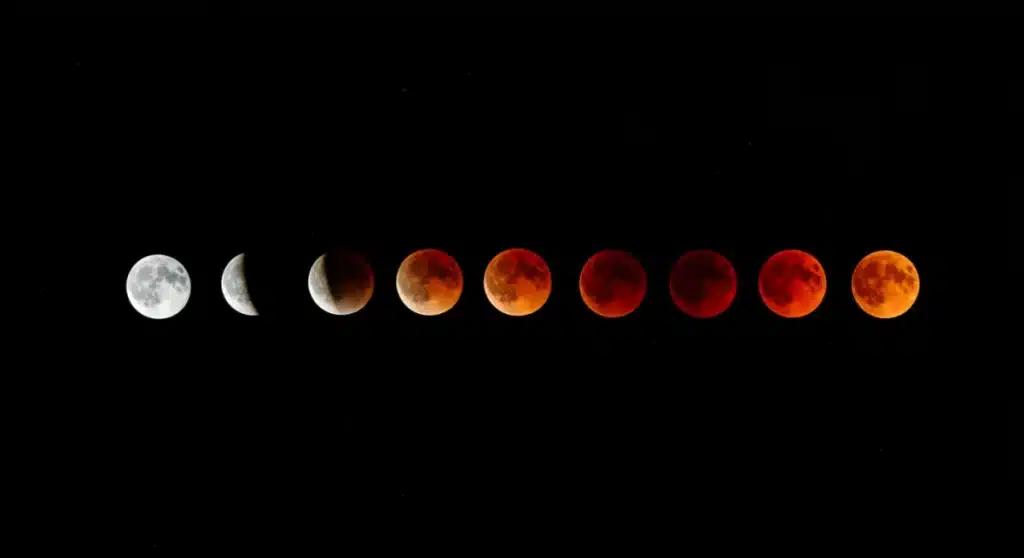
The year 2026 promises to be a spectacular one for skywatchers, with a series of captivating celestial events on the horizon. Among these, the Lunar Eclipse 2026 stands out as a particular highlight, offering multiple opportunities to witness the Earth’s shadow gracefully dance across the face of our natural satellite. For both seasoned astronomers and casual observers, understanding the different types of lunar eclipses and how to best observe them is key to maximizing the experience. This comprehensive guide will delve into the four primary types of lunar eclipses, provide a detailed comparison, and offer invaluable tips for optimal observation of the Lunar Eclipse 2026 events.
A lunar eclipse occurs when the Earth passes directly between the Moon and the Sun, casting a shadow on the Moon. This alignment can only happen during a full moon. However, not every full moon results in a lunar eclipse because the Moon’s orbit is slightly tilted relative to the Earth’s orbit around the Sun. When the alignment is just right, the magic unfolds, revealing the subtle to dramatic changes in the Moon’s appearance.
The beauty of a lunar eclipse lies in its accessibility. Unlike solar eclipses, which require special eye protection and are visible only from a narrow path, lunar eclipses are safe to view with the naked eye and can be seen from anywhere on the night side of Earth. This makes the Lunar Eclipse 2026 events particularly exciting for a global audience.
Understanding the Basics: What is a Lunar Eclipse?
Before we dive into the specifics of the Lunar Eclipse 2026, let’s establish a foundational understanding of what a lunar eclipse entails. A lunar eclipse is an astronomical event that occurs when the Moon passes directly behind Earth and into its shadow. This can happen only when the Sun, Earth, and Moon are aligned exactly or very closely, with Earth in Earth in the middle. Consequently, a lunar eclipse can only occur on the night of a full moon.
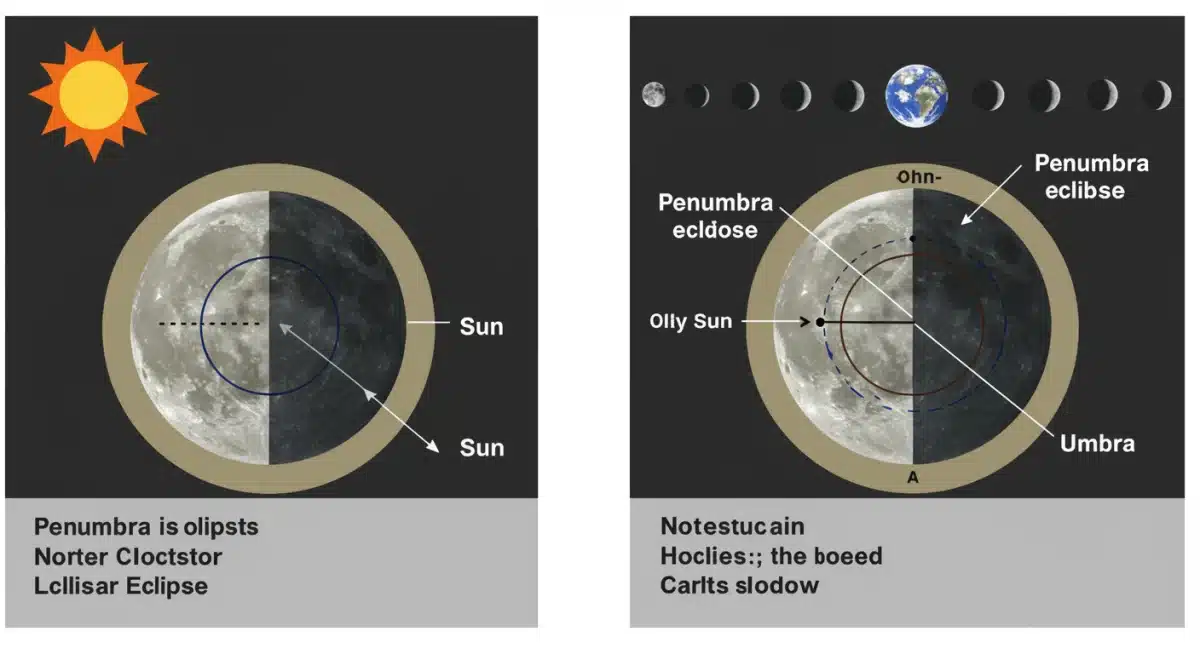
The Earth casts two parts to its shadow: the umbra and the penumbra. The umbra is the darkest, central part of the shadow, where direct sunlight is completely blocked. The penumbra is the lighter, outer part of the shadow, where the Earth blocks only a portion of the Sun’s light. The type of lunar eclipse observed depends on which part of the Earth’s shadow the Moon passes through.
The phenomenon of a lunar eclipse has fascinated humanity for millennia. Ancient civilizations often viewed these events with a mix of awe and trepidation, attributing them to mythical beasts or divine interventions. Today, armed with scientific understanding, we appreciate lunar eclipses as predictable and beautiful demonstrations of celestial mechanics. The Lunar Eclipse 2026 will continue this long tradition of celestial observation and wonder.
The Four Types of Lunar Eclipses: A Detailed Comparison for Lunar Eclipse 2026
While the basic premise of a lunar eclipse remains the same, there are four distinct types, each offering a unique visual experience. For the Lunar Eclipse 2026, we will likely witness a combination of these types, making it essential to understand their differences. These types are: Penumbral, Partial, Total, and Central Total.
1. Penumbral Lunar Eclipse
A penumbral lunar eclipse occurs when the Moon passes through only the Earth’s penumbra (the faint outer part of the shadow). This is the least dramatic of the lunar eclipse types and can sometimes be difficult to distinguish from a regular full moon, especially to the untrained eye. The Moon’s brightness will dim subtly, appearing slightly dusky or smudged. Observers might notice a slight shading on one side of the Moon, but the change is often so subtle that it can go unnoticed if one isn’t specifically looking for it.
During a penumbral eclipse, the Moon never enters the darkest part of Earth’s shadow, the umbra. This means that some direct sunlight still reaches the Moon’s surface, albeit diffused and weakened by passing through the Earth’s atmosphere. For the Lunar Eclipse 2026, if a penumbral event is scheduled, it’s an excellent opportunity to practice keen observation skills and appreciate the subtle interplay of light and shadow.
2. Partial Lunar Eclipse
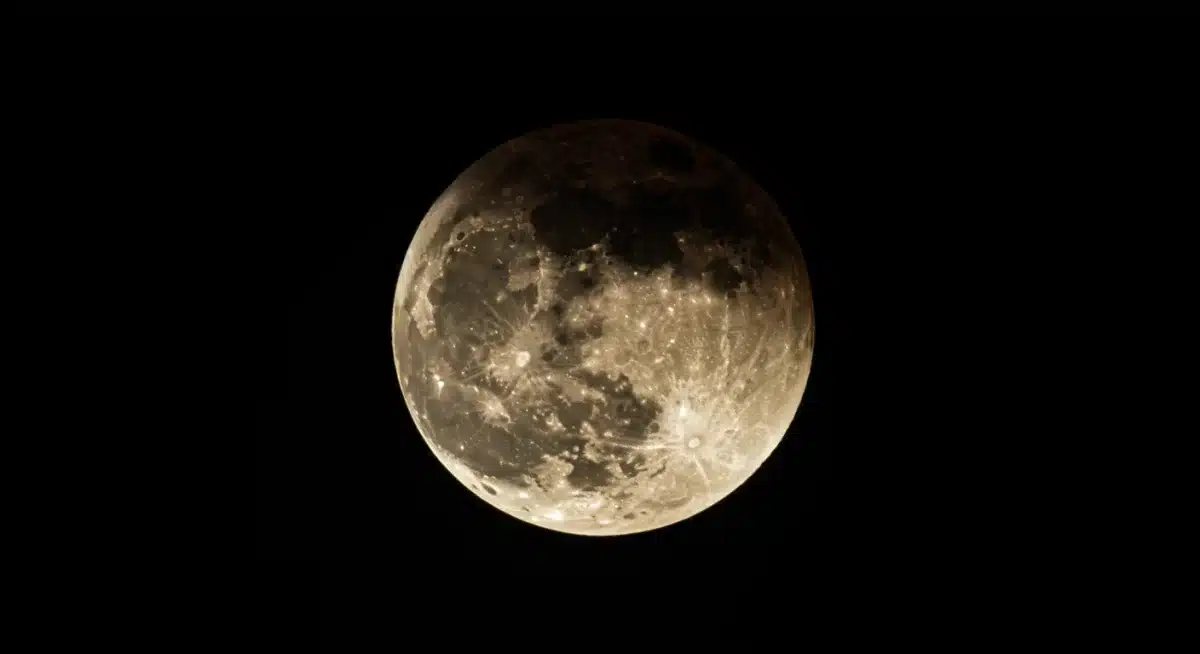
A partial lunar eclipse is more noticeable than a penumbral one. In this scenario, a portion of the Moon passes into the Earth’s umbra (the dark, central part of the shadow), while the rest of the Moon remains in the penumbra. As the Moon moves into the umbra, a dark, curved bite appears on its edge, gradually growing larger. The part of the Moon inside the umbra will appear significantly darker, often taking on a reddish or brownish hue, while the part still in the penumbra will be subtly dimmed.
The extent of the partiality depends on how much of the Moon enters the umbra. For the Lunar Eclipse 2026, if a partial eclipse occurs, it will be a clear visual event, showcasing the Earth’s shadow in a more pronounced manner. Binoculars or a small telescope can enhance the view, revealing details on the shadowed portion of the Moon.
3. Total Lunar Eclipse
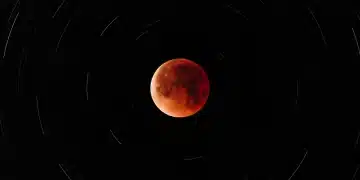
The most spectacular of the lunar eclipse types is the total lunar eclipse. This occurs when the entire Moon passes through the Earth’s umbra. During totality, the Moon doesn’t disappear completely; instead, it often takes on a dramatic reddish or coppery hue. This phenomenon is often referred to as a ‘Blood Moon.’
The reddish color is due to Rayleigh scattering, the same effect that makes Earth’s sunsets and sunrises red. As sunlight passes through Earth’s atmosphere, blue light is scattered away, while red and orange light penetrates and is refracted (bent) onto the Moon’s surface. The exact shade of red can vary significantly from one total eclipse to another, depending on the amount of dust and clouds in Earth’s atmosphere at the time of the eclipse.
A total lunar eclipse progresses through several stages: penumbral, partial (as the Moon enters the umbra), total (when fully in the umbra), then partial again (as it leaves the umbra), and finally penumbral again. Each stage offers a unique visual treat. The Lunar Eclipse 2026 events could include a total eclipse, providing an unforgettable experience for observers.
4. Central Total Lunar Eclipse
A central total lunar eclipse is a rare and particularly impressive type of total lunar eclipse. It occurs when the Moon passes very close to the center of the Earth’s umbra. This results in a longer period of totality and often a deeper, more uniform reddish coloration across the entire lunar surface. Because the Moon travels through the densest part of Earth’s shadow, the scattering and refraction of sunlight are maximized, leading to more vibrant and intense colors.
While all total lunar eclipses are beautiful, a central total lunar eclipse offers an enhanced spectacle. The duration of totality can be significantly longer, allowing for extended observation and appreciation of the ‘Blood Moon’ phenomenon. Keep an eye out for announcements regarding any potential central total Lunar Eclipse 2026 events, as these are truly special.
Predicting the Lunar Eclipse 2026: What to Expect
While specific dates and visibility maps for all Lunar Eclipse 2026 events will be published closer to the year by astronomical organizations, it’s important to understand how these predictions are made. Astronomers use precise orbital mechanics to calculate the exact alignment of the Sun, Earth, and Moon for years in advance. These calculations determine not only the date and time but also the type of eclipse and the regions of the world from which it will be visible.
Typically, there are between two and four lunar eclipses each year, with total eclipses being less frequent. The mix of penumbral, partial, and total eclipses varies annually. For the Lunar Eclipse 2026, it’s highly probable we will experience at least one, if not more, significant events. Monitoring reputable astronomical sources like NASA’s eclipse predictions or local astronomical societies will provide the most accurate and up-to-date information on upcoming eclipses, including detailed timings and visibility charts specific to your location.
Understanding the local time of maximum eclipse and the duration of each phase is crucial for planning your observation session. For instance, if a total lunar eclipse is scheduled for the Lunar Eclipse 2026, knowing when totality begins and ends will allow you to focus your observation during the most dramatic period.
Optimal Observation Tips for Lunar Eclipse 2026
Observing a lunar eclipse is a rewarding experience that requires very little specialized equipment. Here are some tips to help you make the most of the Lunar Eclipse 2026 events:
1. Check Local Times and Visibility
The first and most critical step is to consult reliable astronomical calendars or websites for the exact dates, times, and visibility zones for any Lunar Eclipse 2026 events. Times are often given in Universal Time (UT), so remember to convert them to your local time zone. Confirm whether the eclipse will be visible from your location and at what phase (penumbral, partial, or total) and when each phase begins and ends.
2. Find a Dark Location
While lunar eclipses are bright enough to be seen from urban areas, finding a location away from city lights will significantly enhance your viewing experience, especially for penumbral and partial eclipses. Darker skies will allow you to better appreciate the subtle dimming during penumbral events and the finer details and colors during partial and total eclipses. If possible, choose a spot with an unobstructed view of the moon’s path across the sky.
3. No Special Eye Protection Needed
Unlike solar eclipses, it is perfectly safe to look directly at a lunar eclipse with the naked eye. The Moon’s light, even during a full moon, is reflected sunlight and is not harmful. During an eclipse, the Moon’s brightness actually decreases, making it even safer to observe.
4. Enhance Your View with Binoculars or a Telescope
While not strictly necessary, binoculars or a small telescope can greatly enhance your viewing pleasure. They will allow you to see the subtle color variations, crater details, and the sharpness of the Earth’s shadow as it creeps across the lunar surface. Even a modest pair of binoculars can reveal stunning details during a total Lunar Eclipse 2026 event, making the ‘Blood Moon’ effect even more vibrant.
5. Dress Appropriately and Bring Supplies
Lunar eclipses often occur late at night or in the early morning hours. Even on a warm day, temperatures can drop significantly after sunset. Dress in layers to stay comfortable. Consider bringing a comfortable chair, a blanket, and a thermos with a warm beverage. If you plan to be out for an extended period, snacks can also be a good idea.
6. Photography Tips
Capturing a lunar eclipse can be a rewarding challenge. For penumbral eclipses, a tripod and long exposure times will be essential to capture the subtle dimming. For partial and total eclipses, a camera with manual settings, a telephoto lens, and a sturdy tripod are recommended. Experiment with different ISO settings and shutter speeds to achieve the best results. Remember that during totality, the Moon is significantly dimmer than during a full moon, requiring longer exposures.
7. Observe the ‘Blood Moon’ Color
During a total lunar eclipse, pay close attention to the color of the Moon. The exact shade of red or orange can tell you something about the state of Earth’s atmosphere. A deep, dark red might indicate more dust or clouds, while a brighter orange could suggest a clearer atmosphere. This variability makes each total Lunar Eclipse 2026 unique and adds another layer of scientific interest to your observation.
8. Share the Experience
Lunar eclipses are wonderful events to share with friends, family, and fellow skywatchers. Organize a viewing party, invite neighbors, or join a local astronomy club’s event. Sharing the awe and wonder of these celestial phenomena can make the experience even more memorable.
The Scientific Significance of Lunar Eclipses
Beyond their aesthetic appeal, lunar eclipses hold significant scientific value. Historically, observations of lunar eclipses provided early astronomers with crucial evidence about the Earth’s spherical shape. The curved edge of the Earth’s shadow cast upon the Moon was a clear indicator that our planet is not flat.
Today, scientists continue to study lunar eclipses for various reasons. The specific color and brightness of the Moon during totality can provide insights into the composition of Earth’s atmosphere, including the presence of volcanic ash, dust, and clouds. By analyzing the light refracted through our atmosphere onto the Moon, researchers can glean information about atmospheric conditions that might be difficult to measure directly on a global scale.
Furthermore, lunar eclipses offer opportunities to study the Moon’s surface under different lighting conditions. The dramatic change in illumination during an eclipse can reveal features that are less prominent under direct sunlight. For the Lunar Eclipse 2026, amateur and professional astronomers alike will contribute to this ongoing scientific exploration simply by observing and documenting what they see.
Looking Ahead: The Future of Lunar Observation
The fascination with the Moon and its eclipses is far from waning. With renewed interest in lunar exploration, including missions to return humans to the Moon and establish permanent bases, our understanding and appreciation of Earth’s closest celestial neighbor are only set to grow. Observing events like the Lunar Eclipse 2026 connects us directly to these grander scientific endeavors, reminding us of our place in the cosmos.
As technology advances, so too do the tools available for observation and photography. High-resolution cameras, sophisticated telescopes, and advanced image processing techniques allow us to capture and analyze lunar eclipses with unprecedented detail. This continuous evolution means that each Lunar Eclipse 2026 event will not only be a beautiful spectacle but also a potential source of new data and insights.
Whether you are a seasoned astrophotographer planning to capture every phase of the Lunar Eclipse 2026 or a curious individual simply looking up at the night sky, these events offer a profound connection to the universe. They serve as a reminder of the elegant mechanics governing our solar system and the endless wonders that await our gaze.
Conclusion: Embrace the Lunar Eclipse 2026
The Lunar Eclipse 2026 promises to be a memorable year for astronomy enthusiasts, with multiple opportunities to witness the mesmerizing dance of light and shadow between the Sun, Earth, and Moon. From the subtle dimming of a penumbral eclipse to the dramatic ‘Blood Moon’ of a total eclipse, each event offers a unique and captivating experience.
By understanding the different types of lunar eclipses, knowing what to expect, and following optimal observation tips, you can ensure that you make the most of every celestial spectacle. Remember to check local timings, find a dark viewing spot, and consider using binoculars or a telescope to enhance your view. Most importantly, take the time to simply look up and appreciate the natural beauty and scientific marvel of the universe unfolding above us.
Prepare your calendars, gather your viewing essentials, and get ready to be enthralled by the celestial ballet of the Lunar Eclipse 2026. These events are not just astronomical occurrences; they are moments of shared wonder that connect us all to the vast, beautiful cosmos.