The Great Conjunction 2026: What to Expect and When to Observe This Rare Celestial Alignment
Prepare yourselves, sky gazers and astronomy enthusiasts, for a celestial ballet of epic proportions! The year 2026 is poised to deliver a truly remarkable astronomical event: the Great Conjunction 2026, featuring a spectacular alignment of three of our solar system’s most prominent planets – Jupiter, Saturn, and Mars. This isn’t just any planetary gathering; it’s a rare and visually stunning phenomenon that promises to captivate observers across the globe. Understanding what makes this Great Conjunction 2026 so special, when to look for it, and how to best observe it will ensure you don’t miss a moment of this cosmic spectacle.
For centuries, humanity has looked to the heavens with wonder, marveling at the intricate dance of celestial bodies. Conjunctions, where planets appear close together in the sky, have always been particularly fascinating. While Jupiter and Saturn frequently have ‘great’ conjunctions (approximately every 20 years), the inclusion of Mars in such close proximity, making it a triple conjunction of bright planets, elevates the Great Conjunction 2026 to an even rarer status. This article will delve deep into the specifics of this upcoming event, providing you with all the essential information to witness and appreciate its grandeur.
What is the Great Conjunction 2026? Defining the Celestial Dance
At its core, a conjunction is an astronomical event where two or more celestial bodies appear to be very close to each other in the sky, as observed from Earth. This is a matter of perspective; the planets are still millions of miles apart in space, but their orbital paths align in such a way that they seem to converge in our visual field. The term “Great Conjunction” is typically reserved for the conjunctions of Jupiter and Saturn, due to their impressive size and brightness, and the relatively long interval between their alignments.
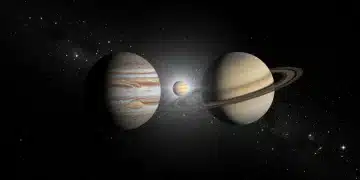
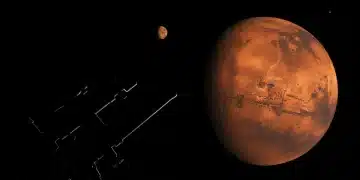
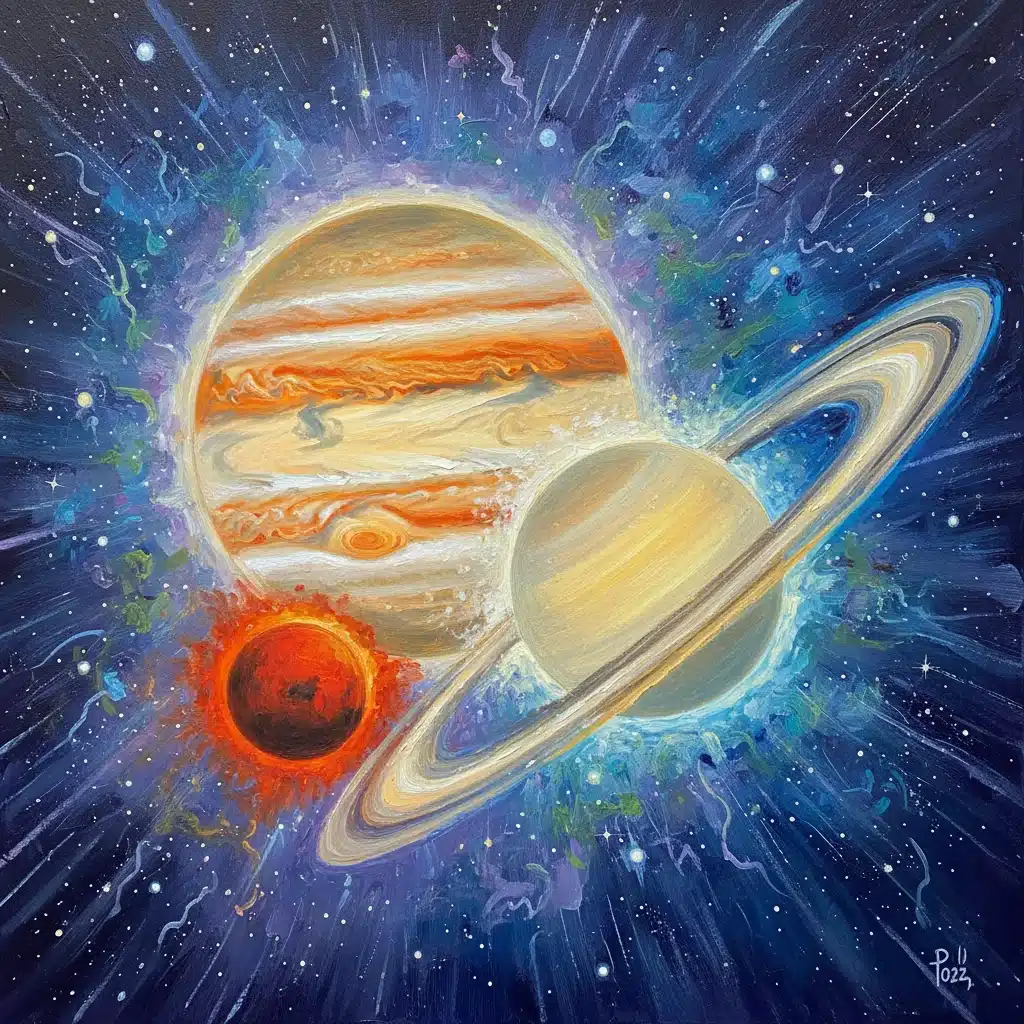
However, the Great Conjunction 2026 takes this a step further by involving Mars, creating a rare triple planetary conjunction. Imagine seeing the gas giant Jupiter, the ringed jewel Saturn, and the fiery red planet Mars all clustered together in a small patch of the night sky! This close gathering of three such prominent planets is not an everyday occurrence, making the Great Conjunction 2026 an event of significant interest for both amateur astronomers and casual sky-watchers alike.
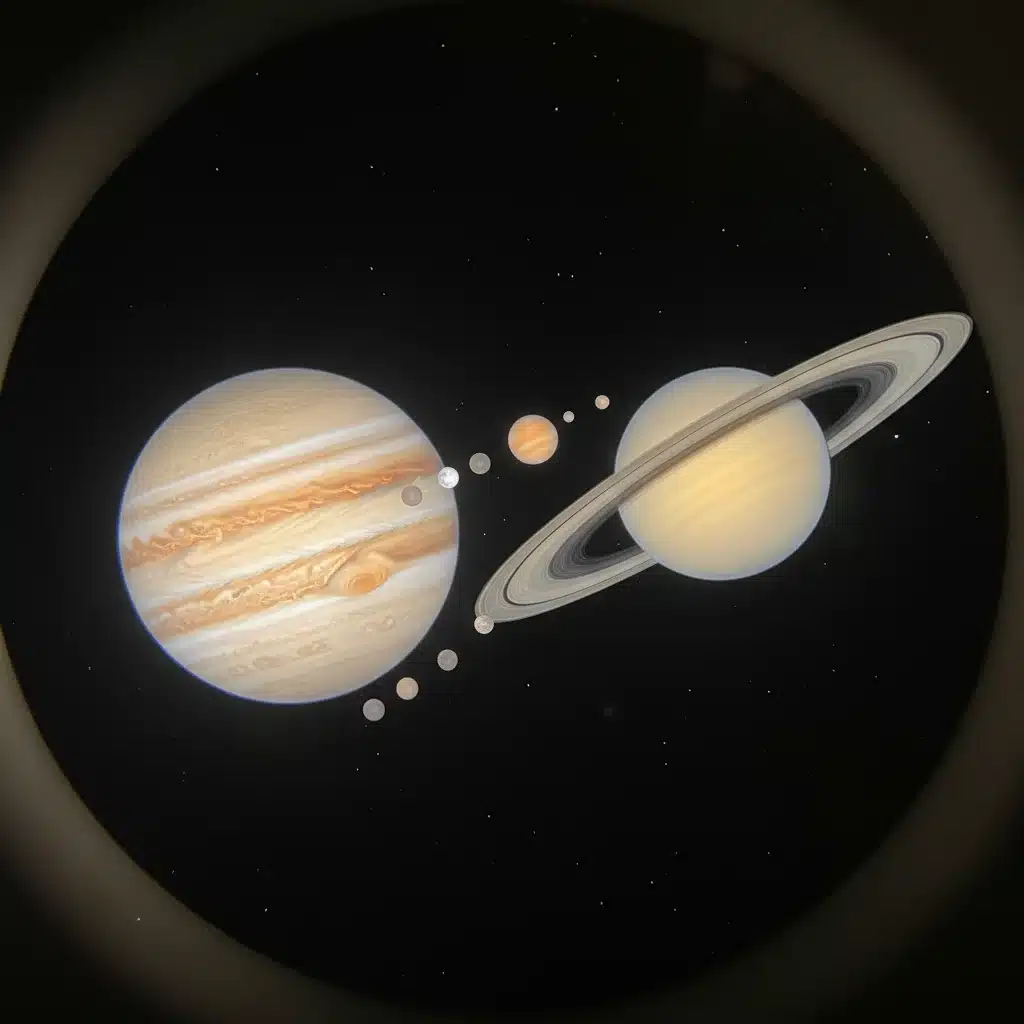
The planets will not physically collide, nor will their gravity significantly impact each other during this alignment. What we are witnessing is a beautiful optical illusion caused by our vantage point on Earth. Their apparent proximity offers a unique opportunity to compare their colors, brightness, and even discern some surface features or moons through binoculars or a small telescope, all within the same field of view. The sheer visual impact of these three celestial titans sharing the same small cosmic stage is what truly defines the Great Conjunction 2026.
Historically, such conjunctions have held cultural and astrological significance across various civilizations. While modern astronomy provides a scientific explanation for these phenomena, the sense of wonder and connection to the cosmos remains. The Great Conjunction 2026 is a chance to reconnect with that ancient sense of awe, armed with contemporary knowledge and tools for observation.
When and Where to Observe the Great Conjunction 2026: Key Dates and Optimal Viewing
Timing is everything when it comes to celestial events, and the Great Conjunction 2026 is no exception. While the planets will be in close proximity for an extended period, there will be specific dates and times when their alignment is at its most spectacular. Mark your calendars for August 2026, as this is when the planets will reach their closest apparent approach.
The exact peak of the conjunction, where Jupiter, Saturn, and Mars form a tight triangular or linear arrangement, is expected to occur around the third week of August 2026. However, it’s important to note that the planets will be visibly close for several days before and after this peak, offering multiple opportunities for observation. The best viewing windows will typically be shortly after sunset in the western sky, or before sunrise in the eastern sky, depending on the specific phase of the conjunction and your geographical location.
To maximize your chances of witnessing the Great Conjunction 2026, here are some key considerations:
- Date Range: While the closest approach is in August 2026, start observing in late July and continue into early September to witness the planets’ graceful dance towards and away from each other.
- Time of Day: For most observers, the optimal viewing will be in the twilight hours, either just after sunset or just before sunrise. The exact timing will depend on the planets’ position relative to the Sun. Consult local astronomical guides or sky-gazing apps closer to the date for precise timings in your area.
- Location: Choose a viewing spot with a clear, unobstructed view of the horizon. Light pollution can significantly diminish the visibility of celestial objects, so if possible, seek out a location away from city lights. Rural areas, parks, or elevated viewpoints are ideal.
- Direction: The planets will likely be visible in the western sky after sunset or the eastern sky before sunrise. Knowing which direction to face will save you time and ensure you’re looking in the right place.
Astronomical software and mobile applications will be invaluable tools for tracking the precise positions of Jupiter, Saturn, and Mars leading up to and during the Great Conjunction 2026. These tools can provide real-time sky maps tailored to your exact location, helping you pinpoint the planets with ease. Remember to check local weather forecasts as well; clear skies are paramount for any successful stargazing endeavor.
Astronomical Significance of the Great Conjunction 2026
Beyond its aesthetic appeal, the Great Conjunction 2026 holds considerable astronomical interest. Conjunctions provide astronomers with opportunities to study planetary motions, refine orbital models, and even engage the public in the wonders of space science. The rarity of a triple conjunction involving Jupiter, Saturn, and Mars makes this event particularly noteworthy.
Jupiter and Saturn, being the largest planets in our solar system, exert significant gravitational influence. While their close apparent proximity during a conjunction doesn’t mean they are physically close enough to significantly perturb each other’s orbits, studying their long-term orbital dynamics is crucial for understanding the stability and evolution of the solar system. The inclusion of Mars, a terrestrial planet with a relatively eccentric orbit, adds another layer of complexity and observational interest to the Great Conjunction 2026.
For educational purposes, such events are invaluable. They serve as powerful teaching moments, illustrating concepts like planetary orbits, apparent motion, and the vastness of space in a tangible and exciting way. Schools, planetariums, and astronomical societies often organize public viewing events around major conjunctions, fostering a deeper appreciation for science and the cosmos among people of all ages. The Great Conjunction 2026 will undoubtedly be a highlight in the astronomical calendar, inspiring a new generation of sky-watchers.
Furthermore, observing multiple planets in the same field of view allows for direct comparison of their characteristics. Jupiter’s immense brightness and visible moons (the Galilean moons Io, Europa, Ganymede, and Callisto), Saturn’s distinct rings, and Mars’s reddish hue will all be on display. This visual juxtaposition provides a unique perspective on the diversity within our own solar system, reinforcing the scientific understanding of each planet’s unique properties. The Great Conjunction 2026 offers a live, dynamic classroom in the sky.
How to Prepare for the Great Conjunction 2026: Essential Tips for Observers
To make the most of the Great Conjunction 2026, a little preparation goes a long way. Whether you’re a seasoned astronomer or a first-time sky gazer, these tips will enhance your viewing experience:
1. Choose Your Viewing Location Wisely
As mentioned earlier, light pollution is your enemy. Seek out dark sky sites if possible. If you’re in an urban area, find a spot with an unobstructed view of the horizon in the direction the planets will appear. Rooftops, open fields, or elevated parks can be good alternatives.
2. Check the Weather Forecast
Clear skies are non-negotiable. Start checking weather forecasts a few days in advance of the peak conjunction dates. Cloudy nights will obscure the view, so be prepared to be flexible if possible and try different nights within the viewing window.
3. Gather Your Equipment
- Naked Eye: The Great Conjunction 2026 will be visible to the naked eye, appearing as three bright “stars” clustered together. This is a perfectly valid and often awe-inspiring way to experience the event.
- Binoculars: A good pair of binoculars (e.g., 7×50 or 10×50) will significantly enhance your view. You’ll be able to resolve Jupiter’s four largest moons and potentially make out Saturn’s rings as a distinct oval shape. Mars will appear as a small, reddish disk. Binoculars are portable and easy to use, making them an excellent choice for casual observers.
- Telescope: For the most detailed views, a telescope is ideal. Even a small amateur telescope will reveal Saturn’s rings clearly and show banding on Jupiter’s surface. You might even catch a glimpse of Mars’s polar ice caps if atmospheric conditions are stable. If you have access to a larger telescope, you’ll be treated to even more intricate details.
- Tripod: If using binoculars or a telescope, a sturdy tripod is highly recommended to eliminate shakiness and provide a steady view, especially for extended observation.
4. Use Sky-Gazing Apps or Star Charts
Download a reliable astronomy app on your smartphone or tablet (e.g., Stellarium, SkyView Lite, Star Walk). These apps use your device’s GPS to show you exactly where the planets are in real-time, making them incredibly useful for locating the Great Conjunction 2026. Traditional star charts can also be helpful if you prefer a non-digital approach.
5. Allow Time for Your Eyes to Adjust
Once you’re at your viewing location, give your eyes at least 15-20 minutes to adapt to the darkness. Avoid looking at bright lights (including your phone screen) during this time, as it will reset your night vision.
6. Dress Appropriately
Even on warm summer nights, temperatures can drop after sunset. Bring layers of clothing, a hat, and perhaps a warm drink to stay comfortable during your observation session.
7. Consider Public Viewing Events
Check with local astronomical societies, science museums, or observatories. Many will host public viewing events for the Great Conjunction 2026, providing access to powerful telescopes and knowledgeable guides who can enhance your experience.
Historical and Future Great Conjunctions: A Cosmic Perspective
The Great Conjunction 2026 is part of a grander celestial narrative. Conjunctions of Jupiter and Saturn occur roughly every 20 years, but triple conjunctions involving Mars are significantly rarer. Understanding the historical context of these events helps us appreciate the unique nature of the upcoming alignment.
One of the most famous Great Conjunctions of Jupiter and Saturn occurred in 1623, just after Galileo Galilei had made groundbreaking telescopic observations. Another notable event was the December 2020 Great Conjunction, which was exceptionally close, making the two planets appear almost as a single bright star. This event garnered immense public attention globally, reminding us of the enduring human fascination with the night sky.
Triple conjunctions, where three planets appear very close, are less frequent. While close approaches of Jupiter, Saturn, and Mars happen periodically, the specific geometry and visibility of the Great Conjunction 2026 make it particularly special. These events are not just visual spectacles; they also serve as benchmarks in our understanding of celestial mechanics and the long-term stability of the solar system.
Looking ahead, while Jupiter and Saturn will continue their 20-year cycle of conjunctions, another triple conjunction involving Mars in such a prominent way won’t happen for some time. This underscores the importance of seizing the opportunity to observe the Great Conjunction 2026. Each conjunction is unique, influenced by the precise orbital positions and inclinations of the planets involved. The specific arrangement of Jupiter, Saturn, and Mars in 2026 will present a distinct visual treat that won’t be replicated in the exact same configuration for many lifetimes.
Studying the patterns of these conjunctions allows astronomers to verify and refine their models of planetary motion, which are based on Kepler’s laws and Newton’s law of universal gravitation. The precision with which we can predict these events today is a testament to centuries of scientific inquiry and technological advancement. The Great Conjunction 2026 is not just an event to observe, but also a moment to reflect on the progress of human understanding of the cosmos.
Photography Tips for the Great Conjunction 2026
Capturing the Great Conjunction 2026 can be a rewarding experience. Here are some tips for photographing this celestial alignment:
1. Equipment Choices
- Smartphone: Modern smartphones with good low-light capabilities can capture decent wide-field shots, especially if mounted on a tripod using a phone adapter. Use night mode settings if available.
- DSLR/Mirrorless Camera: These offer the most flexibility. A wide-angle lens (14-35mm) is great for capturing the conjunction within a landscape. A telephoto lens (200mm+) will bring the planets closer, showing them as distinct points or small disks.
- Telescope with Camera Adapter: For detailed astrophotography, connecting your camera to a telescope (afocal or prime focus) is the way to go. This will allow you to capture details like Jupiter’s moons and Saturn’s rings.
- Tripod: Absolutely essential for any astrophotography to prevent blurry images from camera shake. A remote shutter release or self-timer will also help.
2. Camera Settings (for DSLR/Mirrorless)
- Manual Mode: Take full control of your settings.
- ISO: Start with ISO 800-1600 and adjust as needed. Higher ISOs can introduce noise but are necessary for capturing faint light.
- Aperture: Use the widest aperture your lens allows (lowest f-number) to gather maximum light.
- Shutter Speed: For wide-field shots, use the “500 rule” (500 / focal length = max shutter speed in seconds) to avoid star trails. For example, with a 20mm lens, 500/20 = 25 seconds. For telephoto shots, shorter exposures (e.g., 1-5 seconds) might be needed to prevent blurring due to planetary motion.
- Focus: Manually focus to infinity. Use live view and zoom in on a bright star to achieve critical focus.
- White Balance: Set to Kelvin (around 3500-4500K) or Tungsten for a more natural sky color.
3. Composition
Consider including foreground elements like trees, buildings, or interesting landscapes to add context and create a more compelling photograph of the Great Conjunction 2026. Plan your shot during the day to scout for interesting compositions.
4. Post-Processing
Raw files offer the most flexibility for post-processing. Adjust exposure, contrast, white balance, and noise reduction in software like Adobe Lightroom or Photoshop to bring out the best in your images.
Remember, practice makes perfect. Try practicing astrophotography before the Great Conjunction 2026 to get familiar with your equipment and settings. The result will be a stunning visual record of this rare celestial event.
The Cultural Impact and Public Engagement of the Great Conjunction 2026
Beyond the purely scientific and observational aspects, the Great Conjunction 2026 holds significant cultural weight and offers a unique opportunity for public engagement with astronomy. Throughout history, celestial alignments have often been imbued with profound meaning, influencing art, literature, mythology, and even societal beliefs.
In ancient civilizations, the movements of planets were closely observed and often associated with deities, prophecies, or significant earthly events. While modern science has demystified these phenomena, the sense of wonder they inspire remains. The Great Conjunction 2026 provides a bridge between this ancient fascination and contemporary scientific understanding, allowing us to appreciate the beauty of the cosmos from both historical and scientific perspectives.
For many, witnessing such a rare event can be a deeply personal and inspiring experience. It offers a moment to pause, look up, and contemplate our place in the vast universe. This shared experience can foster a sense of global community, as people from all corners of the world gaze upon the same celestial spectacle. The Great Conjunction 2026 can serve as a powerful reminder of how interconnected we all are under the same sky.
Educational institutions and public outreach programs will undoubtedly leverage the Great Conjunction 2026 to promote scientific literacy and engagement. Planetariums will host special shows, schools will incorporate the event into their curricula, and astronomy clubs will organize public viewing parties. These initiatives are crucial for inspiring future generations of scientists, engineers, and curious minds. By making astronomy accessible and exciting, events like the Great Conjunction 2026 play a vital role in popularizing science and encouraging critical thinking.
Furthermore, the media attention surrounding the Great Conjunction 2026 will bring astronomy into mainstream conversations, sparking curiosity and providing a platform for experts to share knowledge. This widespread interest contributes to a more scientifically informed public and highlights the ongoing discoveries and mysteries of space. Ultimately, the cultural impact of the Great Conjunction 2026 extends far beyond its astronomical data, touching upon our shared human experience and our timeless quest to understand the universe.
Conclusion: A Celestial Rendezvous Awaits
The Great Conjunction 2026 is shaping up to be one of the most anticipated astronomical events of the decade. The rare alignment of Jupiter, Saturn, and Mars offers a unique opportunity for observers worldwide to witness a truly spectacular celestial ballet. From the naked eye to powerful telescopes, there will be multiple ways to appreciate the beauty and significance of this cosmic gathering.
By understanding what a conjunction is, knowing when and where to look, and preparing with the right equipment and knowledge, you can ensure an unforgettable viewing experience. This event is not just a visual treat; it’s a testament to the predictable yet awe-inspiring mechanics of our solar system, a moment for scientific education, and a source of profound wonder. The Great Conjunction 2026 reminds us of the grandeur of the universe and our privileged position to observe its unfolding marvels.
So, as 2026 approaches, keep your eyes on the skies. Whether you’re a seasoned astronomer or simply someone who appreciates the beauty of the night, the Great Conjunction 2026 promises a celestial rendezvous that will inspire and amaze. Don’t miss this rare chance to witness Jupiter, Saturn, and Mars dance in close proximity, a cosmic spectacle that will be remembered for years to come.