Cosmic Ray Flux 2026: Updates, Impacts, and Future Projections
The year 2026 is rapidly approaching, and for those attuned to the rhythms of our solar system and its profound influence on Earth, the topic of Cosmic Ray Flux 2026 is gaining significant traction. Cosmic rays, these enigmatic high-energy particles originating from deep space and our own Sun, play a crucial role in various terrestrial phenomena, from technological disruptions to potential health risks for astronauts. Understanding the anticipated flux in 2026 requires a deep dive into solar activity, geomagnetic conditions, and the cutting-edge research that monitors these invisible yet powerful forces.
Our planet is constantly bombarded by cosmic rays, but their intensity isn’t uniform. It fluctuates significantly, primarily influenced by the Sun’s 11-year activity cycle. As we approach 2026, the solar cycle is progressing, and with it, the expectations for how much shielding our star will provide against galactic cosmic rays (GCRs) – the most energetic and pervasive type. This article aims to provide an insider’s look into the recent updates, the science behind cosmic ray variations, and their multifaceted impacts on our world, both in the near term and for future planning.
The concept of Cosmic Ray Flux 2026 is more than just an academic curiosity; it has tangible implications for industries ranging from aviation and space travel to telecommunications and even climate science. As our technological reliance grows, so does our vulnerability to space weather events, of which cosmic ray variations are a significant component. Therefore, staying informed about the projected flux and its potential consequences is paramount for preparedness and mitigation.
Understanding Cosmic Rays: The Basics
Before delving into the specifics of Cosmic Ray Flux 2026, it’s essential to grasp what cosmic rays are and where they come from. Cosmic rays are not ‘rays’ in the traditional sense, like light, but rather high-energy particles, primarily atomic nuclei (mostly protons, but also heavier elements) that travel through space at nearly the speed of light. They are broadly categorized into two main types:
- Galactic Cosmic Rays (GCRs): These originate from outside our solar system, primarily from supernova remnants and other violent astrophysical events within our Milky Way galaxy. They are extremely energetic and pose a constant background radiation threat.
- Solar Energetic Particles (SEPs): These are emitted by the Sun during solar flares and coronal mass ejections (CMEs). While generally less energetic than GCRs, SEPs can be highly intense during major solar events and pose a more immediate and localized radiation hazard.
The Earth’s atmosphere and magnetic field act as natural shields, protecting us from the vast majority of these particles. However, some still penetrate, especially at higher altitudes and closer to the poles, where the magnetic field lines converge. The intensity of this bombardment, or flux, is what concerns scientists and engineers.
The Solar Cycle’s Influence on Cosmic Ray Flux
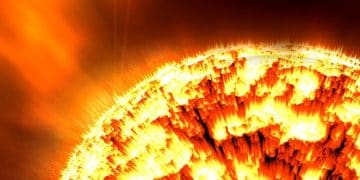
The Sun is not a static entity; it undergoes an approximately 11-year cycle of activity, characterized by fluctuations in sunspots, solar flares, and coronal mass ejections. This solar cycle is the primary modulator of GCRs reaching Earth. During solar maximum, when the Sun is most active, its increased magnetic field and solar wind create a more effective shield, deflecting GCRs away from the inner solar system, including Earth. Conversely, during solar minimum, when the Sun is less active, this shielding effect diminishes, allowing more GCRs to penetrate.
The current solar cycle, Solar Cycle 25, began in December 2019. Predictions suggest it will peak around 2025-2026. This means that as we head into 2026, we are likely to be at or near the solar maximum. This has significant implications for Cosmic Ray Flux 2026. While increased solar activity means a higher likelihood of SEPs, it also implies a stronger solar wind and magnetic field, which should, in theory, reduce the influx of GCRs. However, the interplay is complex, and the exact balance is what scientists are actively monitoring.
Recent Updates and Predictions for Cosmic Ray Flux 2026
Forecasting Cosmic Ray Flux 2026 is a complex endeavor, relying on a network of ground-based observatories, space-based instruments, and sophisticated computational models. Recent data from missions like the Advanced Composition Explorer (ACE), the Voyager probes (now in interstellar space, providing baseline GCR measurements), and various other satellites offer crucial insights.
Scientists are observing Solar Cycle 25 to be more active than initially predicted by some models. This increased activity suggests that the solar magnetic field will be more robust, potentially leading to a lower overall GCR flux than might have been expected during a weaker solar cycle. However, this also carries the caveat of a higher probability of intense SEP events, which can be highly localized and sudden.
Key Indicators and Monitoring Techniques
Several key indicators are used to predict and monitor Cosmic Ray Flux 2026:
- Neutron Monitors: Ground-based neutron monitors detect secondary particles produced when cosmic rays interact with Earth’s atmosphere. These provide a long-term record of GCR variations.
- Space-based Detectors: Satellites equipped with particle detectors directly measure cosmic ray fluxes in space, providing real-time data on both GCRs and SEPs.
- Solar Activity Indices: Sunspot numbers, solar flare frequency, and coronal mass ejection observations are critical for understanding the Sun’s shielding capabilities and the likelihood of SEP events.
- Heliospheric Models: Sophisticated computer models simulate the solar wind and magnetic field’s propagation through the heliosphere, allowing scientists to predict how cosmic rays will be modulated.
The consensus among space weather experts is that while the overall GCR flux might be suppressed due to a strong Solar Cycle 25, the risk of significant SEP events will be elevated in 2026. This dynamic makes precise predictions challenging but highlights the need for continuous monitoring and adaptive strategies.
Earthly Impacts of Cosmic Ray Flux 2026
The variations in Cosmic Ray Flux 2026, particularly during a period of heightened solar activity, have a range of potential impacts on Earth and human activities.
Impact on Technology and Infrastructure
One of the most immediate concerns is the impact on technology. High-energy cosmic rays can cause:
- Satellite Malfunctions: Satellites are particularly vulnerable. Cosmic rays can induce ‘single-event upsets’ (SEUs) in electronic components, leading to data corruption, memory errors, or even permanent damage. This can affect communication satellites, GPS systems, and weather monitoring spacecraft.
- Power Grids: While less direct, intense geomagnetic storms (often linked to solar activity that also produces SEPs) can induce currents in long power transmission lines, leading to transformer damage and widespread power outages.
- Aviation Electronics: Avionics systems in aircraft, especially at high altitudes and polar routes, are susceptible to cosmic ray interference, potentially affecting navigation and communication systems.
- Computer Systems: While less common, cosmic rays can cause errors in ground-based computer systems, particularly in sensitive data centers or critical infrastructure.
The increased likelihood of strong SEP events in conjunction with the anticipated Cosmic Ray Flux 2026 means that robust shielding and error-correction protocols for critical electronics will be more important than ever.
Health Risks for Astronauts and Air Travelers
Radiation exposure is a significant concern for space travelers and, to a lesser extent, for frequent air travelers. Cosmic rays contribute substantially to this exposure.
- Astronauts: For astronauts on the International Space Station (ISS) or future missions to the Moon and Mars, cosmic ray exposure is a chronic and acute health hazard. GCRs can cause DNA damage, increasing the risk of cancer, cataracts, and central nervous system damage over long durations. SEPs, though short-lived, can deliver very high doses of radiation in a brief period, posing an immediate threat of acute radiation sickness. The heightened SEP risk in 2026 demands careful mission planning and robust radiation shielding for any extravehicular activities.
- Air Travelers: Passengers and crew on commercial flights, particularly on long-haul routes at high altitudes and over the poles, receive elevated doses of cosmic radiation compared to those at sea level. While generally within acceptable limits for typical travel, frequent flyers, especially pilots and flight attendants, accumulate higher doses. Understanding Cosmic Ray Flux 2026 helps in assessing these occupational exposures and informing regulatory guidelines.
Potential Climate Connections
The relationship between cosmic rays and Earth’s climate is a subject of ongoing scientific debate. One hypothesis suggests that cosmic rays can influence cloud formation. When cosmic rays enter the atmosphere, they ionize air molecules, which can act as condensation nuclei for water vapor, potentially leading to increased cloud cover. More clouds could reflect more sunlight back into space, thereby having a cooling effect.
While this hypothesis is still under investigation and the magnitude of any such effect is uncertain, changes in Cosmic Ray Flux 2026 could, in theory, contribute to subtle shifts in atmospheric processes. However, the prevailing scientific consensus is that solar activity and cosmic rays play a minor role compared to anthropogenic greenhouse gases in driving current climate change.
Mitigation and Preparedness for Cosmic Ray Flux 2026
Given the potential impacts, significant effort is being directed toward mitigating the risks associated with Cosmic Ray Flux 2026 and beyond.
Technological Solutions
- Radiation-Hardened Electronics: Developing and deploying electronics designed to withstand higher levels of radiation is crucial for satellites and critical ground infrastructure. This involves using specialized materials, redundant systems, and error-correcting codes.
- Shielding: For spacecraft and future habitats, advanced shielding materials are being researched, including hydrogen-rich compounds and even magnetic fields, to deflect cosmic rays.
- Predictive Models and Warning Systems: Improved space weather forecasting models allow for better prediction of SEP events, providing crucial lead time for operators to take protective measures, such as putting satellites into safe mode or rerouting aircraft.
- Autonomous Systems: Developing autonomous systems that can detect radiation spikes and take protective actions without human intervention is another area of research.
Operational Adjustments
- Space Mission Planning: Future deep-space missions are being designed with radiation hazards in mind, including mission profiles that avoid periods of high SEP activity and incorporating sufficient shielding for crew modules.
- Aviation Route Optimization: Airlines can use real-time space weather data to optimize flight paths, avoiding regions of higher radiation exposure during significant solar events.
- Astronaut Protection Protocols: Onboard the ISS, astronauts have designated shielded areas they can retreat to during major solar flares. Future spacecraft will need similar, if not more robust, protection.
The Future of Cosmic Ray Research and Monitoring Post-2026
The insights gained from monitoring Cosmic Ray Flux 2026 will undoubtedly shape future research and operational strategies. As humanity ventures further into space, understanding and mitigating cosmic radiation will become even more critical. Projects like NASA’s Artemis program, aiming for a sustained human presence on the Moon, and eventual missions to Mars, place radiation protection at the forefront of engineering challenges.
Future research will focus on:
- Advanced Shielding Materials: Exploring novel materials and active shielding technologies that can more effectively protect against the broad spectrum of cosmic ray energies.
- Biological Responses to Radiation: Deeper understanding of how cosmic radiation affects human biology over long durations, and the development of countermeasures, including pharmaceuticals.
- Improved Prediction Models: Enhancing the accuracy and lead time of space weather forecasts, particularly for sudden and intense SEP events.
- Interstellar Cosmic Ray Studies: Continued monitoring by missions like Voyager and future interstellar probes will provide invaluable data on GCRs from beyond our solar system, offering a baseline against which to measure solar modulation.
The study of cosmic rays also extends beyond immediate human safety and technological concerns. These particles carry information about the most extreme environments in the universe – supernovae, black holes, and distant galaxies. By studying their composition, energy, and direction, scientists can unlock secrets about the origin and evolution of the cosmos itself.
Conclusion: Navigating the Cosmic Ray Landscape of 2026
As we look towards Cosmic Ray Flux 2026, it’s clear that we are entering a dynamic period in the solar cycle. The anticipated solar maximum will bring both challenges and opportunities. While the Sun’s increased activity might offer a stronger shield against galactic cosmic rays, it also heightens the risk of powerful solar energetic particle events. These events have real-world implications for our advanced technological infrastructure, the safety of space travelers, and even, potentially, subtle atmospheric processes.
The continuous efforts in scientific research, technological innovation, and international collaboration are paramount in navigating this complex cosmic landscape. By understanding the science, monitoring the indicators, and implementing robust mitigation strategies, we can minimize the risks and continue to push the boundaries of exploration and technological advancement, both on Earth and in the vast expanse of space. The year 2026 will serve as an important benchmark, providing invaluable data and experience to refine our understanding and preparedness for the cosmic forces that constantly shape our environment.
Staying informed about space weather, especially the intricacies of Cosmic Ray Flux 2026, is not merely a task for scientists and engineers. It’s a collective responsibility that underpins the resilience and security of our increasingly interconnected and space-dependent society. The insights gained will not only protect us but also deepen our appreciation for the intricate dance between our home planet and the powerful, distant forces of the cosmos.