Perseid Meteor Shower 2025: 100+ Meteors Per Hour Guide
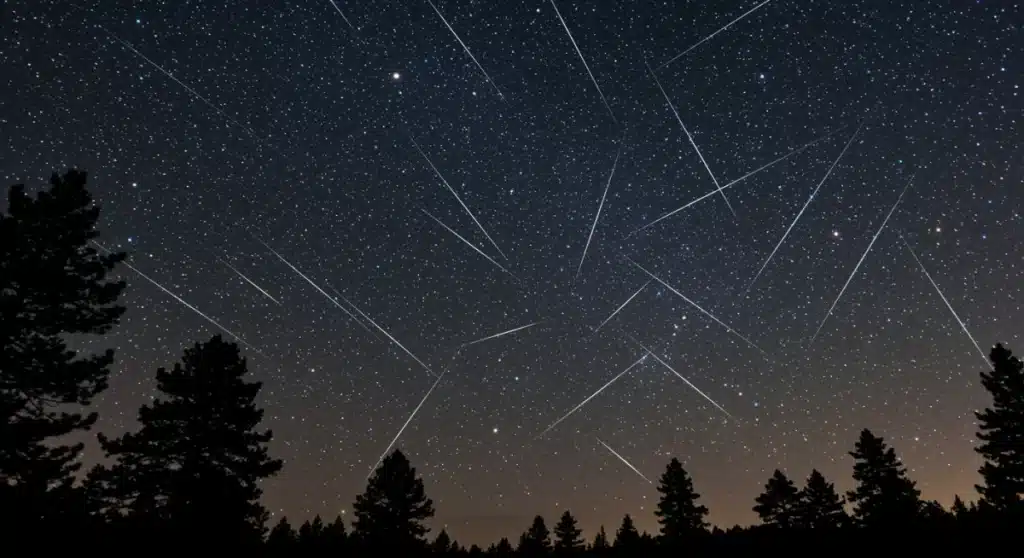
The Perseid Meteor Shower 2025 offers a breathtaking celestial spectacle, potentially delivering over 100 visible meteors per hour, making it a prime event for skywatchers globally.
Get ready for an extraordinary celestial event as we delve into Decoding the Perseid Meteor Shower 2025: Insider Tips for Identifying 100+ Meteors Per Hour. This annual display is renowned for its brilliance and reliability, often delivering a spectacular show for observers around the globe. Understanding the science behind this cosmic ballet and preparing adequately can significantly enhance your viewing experience, transforming a simple night out into an unforgettable astronomical adventure.
Understanding the Perseids: The Cosmic Debris Trail
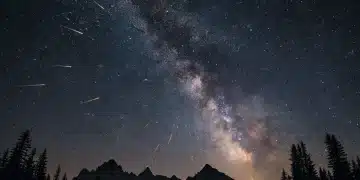
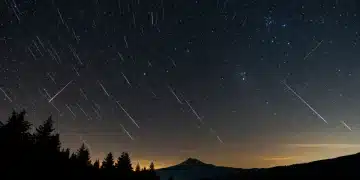
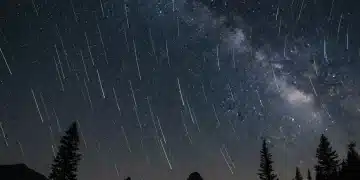
The Perseid meteor shower is one of the most anticipated annual astronomical events, known for its consistent and often prolific display. It occurs when Earth passes through the trail of debris left by Comet Swift-Tuttle. These tiny particles, often no larger than a grain of sand, burn up upon entering Earth’s atmosphere, creating the luminous streaks we call meteors or ‘shooting stars’.
The comet itself, Swift-Tuttle, is a large periodic comet with a nucleus approximately 16 miles (26 kilometers) across. Its orbit takes it around the Sun every 133 years. Each time it swings through the inner solar system, it leaves behind a fresh trail of cosmic dust and grit. Over millennia, these trails accumulate, forming a broad stream of particles through which our planet periodically journeys.
The Comet’s Legacy: Swift-Tuttle’s Influence
Comet Swift-Tuttle is the parent body of the Perseid meteor shower. First formally identified in 1862 by American astronomers Lewis Swift and Horace Parnell Tuttle, its regular return ensures the annual meteor shower. The comet’s last perihelion (closest approach to the Sun) was in 1992, and it won’t return until 2126. However, the debris it has shed over countless orbits remains, waiting for Earth to intersect its path.
- Comet Swift-Tuttle: The parent comet responsible for the Perseid meteor shower.
- Debris Trail: Consists of dust and small particles shed by the comet over centuries.
- Earth’s Orbit: Intersects this debris trail annually, leading to the meteor shower.
- Meteoroids to Meteors: Debris particles become visible meteors as they burn in the atmosphere.
Each year, as Earth crosses through this cloud of celestial litter, the interaction provides us with the stunning visual spectacle of the Perseids. The radiant point, where the meteors appear to originate, is in the constellation Perseus, giving the shower its name. This deep understanding of its origins helps us appreciate the scale and history behind each fleeting streak of light.
Optimal Viewing Conditions for 2025: Timing and Location
Maximizing your chances of witnessing over 100 meteors per hour during the Perseid Meteor Shower 2025 hinges critically on timing and location. The shower is active for several weeks, but its peak activity is narrow, and the moon’s phase can significantly impact visibility.
For 2025, preliminary predictions suggest the Perseids will peak around August 12th and 13th. Unlike some years where a bright moon washes out fainter meteors, 2025 offers a favorable lunar phase. The moon will likely be a waning crescent or near new moon during the peak, meaning minimal lunar interference. This is excellent news for observers, promising darker skies and a higher chance of seeing the fainter, more numerous meteors.
Finding Your Perfect Stargazing Spot
Location is paramount for meteor shower viewing. Light pollution is the archenemy of stargazers. The ideal location is far away from city lights, offering a wide, unobstructed view of the night sky. Rural areas, national parks, or designated dark-sky preserves are perfect choices.
When selecting your spot, consider:
- Distance from City Lights: The further you are from urban glow, the better. Use light pollution maps to find truly dark areas.
- Unobstructed Horizon: Ensure you have a clear view of the entire sky, free from tall buildings, trees, or mountains.
- Safety: Choose a safe, accessible location. Inform someone of your plans if you’re venturing into a remote area.
- Comfort: Bring a reclining chair or blanket to lie down on. Staring up for extended periods can be tiring.
Even if you cannot escape all light pollution, facing away from the brightest sources can still improve your viewing. Allow your eyes at least 20-30 minutes to adapt to the dark; this process is crucial for seeing fainter meteors. Optimal viewing for the Perseids is typically after midnight, leading up to dawn, as the Earth turns into the stream of debris.
Essential Gear and Preparation for a Memorable Night
A successful Perseid viewing experience goes beyond just being in the right place at the right time; it also involves thoughtful preparation and the right gear. While the beauty of a meteor shower is its simplicity – no telescopes or binoculars are needed – a few essentials can make your night significantly more comfortable and productive.
First and foremost, dress warmly. Even on summer nights, temperatures can drop significantly after sunset, especially in open, rural areas. Layers are key, allowing you to adjust to changing conditions. Bring a comfortable reclining chair or a thick blanket to lie on. Stargazing involves a lot of looking up, and being comfortable will allow you to do so for longer periods without discomfort.
Packing Your Stargazing Kit
Preparing a small kit can enhance your experience considerably. Consider these items:
- Red-Light Flashlight: Preserves your night vision. White light will ruin your dark adaptation.
- Warm Beverages: A thermos of coffee, tea, or hot chocolate can be a welcome companion on a cool night.
- Snacks: Energy bars or other easy-to-eat snacks can keep you fueled during long observing sessions.
- Insect Repellent: Especially important in humid, outdoor environments.
- Star Chart or Astronomy App: While not strictly necessary for meteors, it can enhance your overall night sky knowledge.
- Camera (Optional): For those interested in astrophotography, a camera with manual settings and a wide-angle lens can capture stunning meteor trails.
Remember to check the local weather forecast before heading out. Clear skies are, of course, essential. Overcast conditions or heavy cloud cover will obscure the view. Having a plan B in case of bad weather, like an alternative date or location, is always a good idea. With these preparations, you’ll be well-equipped to enjoy the celestial spectacle.
Identifying 100+ Meteors Per Hour: Tips and Tricks
The prospect of seeing over 100 meteors per hour during the Perseid Meteor Shower 2025 is thrilling, but it requires a strategic approach. While the peak offers the highest rates, maximizing your count involves more than just looking up. Understanding meteor shower dynamics and employing effective viewing techniques can significantly increase your tally.
First, patience is your greatest ally. Meteors appear sporadically, with bursts of activity followed by lulls. Avoid looking directly at the radiant point (the constellation Perseus) all the time. While meteors appear to originate from there, those seen further away from the radiant will have longer, more spectacular trails. Scan a wide area of the sky, about 30 to 45 degrees away from Perseus, for the best views.
Enhancing Your Meteor Count
Several strategies can help you identify more meteors:
- Dark Adaptation: Spend at least 20-30 minutes in complete darkness before you start observing. Avoid looking at phone screens or flashlights (unless they are red-light).
- Wide Field of View: Lie down and look straight up, allowing your peripheral vision to catch meteors across a broad expanse of sky.
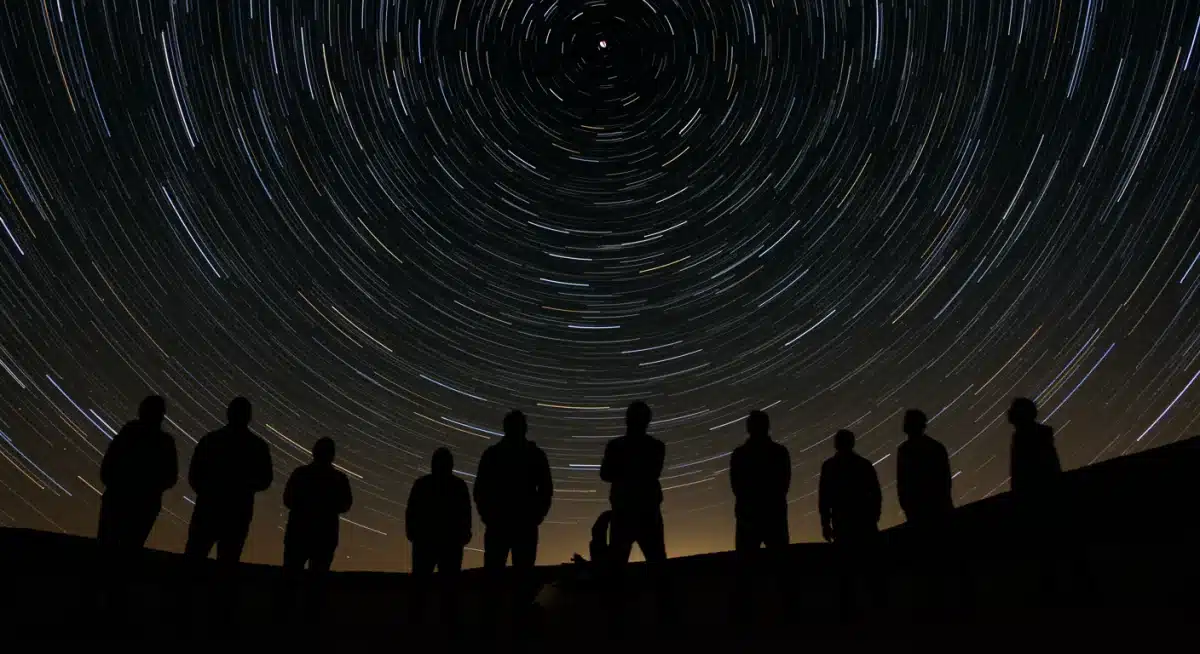
- Group Observation: Observing with friends can be beneficial. Each person can watch a different section of the sky and call out sightings, adding to the collective count and excitement.
- Stay Hydrated and Rested: Fatigue can diminish your focus. Ensure you’re well-rested and hydrated for optimal alertness.
Don’t be discouraged if you don’t instantly see a meteor. Some are faint, while others are incredibly bright fireballs. The Perseids are known for their fireballs, which are exceptionally bright meteors that often leave persistent trails. These are the ones that truly capture the imagination. With a little practice and adherence to these tips, you’ll be well on your way to a high meteor count.
Beyond the Meteors: Other Celestial Wonders to Spot
While the Perseid Meteor Shower is the main attraction, the dark skies ideal for meteor viewing also present an incredible opportunity to observe other celestial wonders. Many of these objects are visible to the naked eye or with simple binoculars, adding another layer of magic to your night under the stars.
As you wait for meteors, take some time to explore the constellations. Perseus itself is a fascinating constellation, but nearby, you can easily spot Andromeda, Pegasus, and Cassiopeia. Andromeda is particularly noteworthy as it hosts the Andromeda Galaxy (M31), the closest spiral galaxy to our own Milky Way. Under dark skies, it appears as a faint, fuzzy patch, a distant island of billions of stars.
Exploring the Summer Triangle and Milky Way
The summer months are perfect for viewing the Summer Triangle, an asterism formed by three bright stars from three different constellations:
- Vega (in Lyra): A brilliant blue-white star, one of the brightest in the night sky.
- Deneb (in Cygnus): Marks the tail of the swan.
- Altair (in Aquila): The brightest star in the eagle constellation.
This prominent triangle is a fantastic guide to locating parts of the Milky Way, our home galaxy. Under truly dark conditions, the Milky Way will appear as a faint, luminous band stretching across the sky, a breathtaking testament to the vastness of space. Binoculars can reveal clusters of stars and nebulae within its dusty arms.
Don’t forget to look for planets if they are visible during the Perseid peak. Planets like Jupiter and Saturn, if above the horizon, can be dazzling to the naked eye and even more impressive through binoculars, revealing their moons or rings. The Perseid Meteor Shower provides a gateway to exploring the broader tapestry of the night sky, making your stargazing session a richer, more comprehensive astronomical journey.
Capturing the Cosmic Show: Photography Tips
For many, witnessing the Perseid Meteor Shower is enough, but for those with a passion for photography, capturing these fleeting streaks of light can be an incredibly rewarding challenge. While it requires some specialized gear and knowledge, even beginners can achieve impressive results with the right approach.
The key to meteor photography is long exposures. You’ll need a camera that allows manual control over settings, particularly shutter speed, aperture, and ISO. A wide-angle lens is highly recommended as it covers a larger portion of the sky, increasing your chances of catching a meteor within the frame. A sturdy tripod is absolutely essential to keep your camera perfectly still during long exposures.
Essential Camera Settings for Meteors
Here are some recommended starting points for your camera settings:
- Aperture: Set your lens to its widest aperture (smallest f-number, e.g., f/2.8 or f/4). This allows the maximum amount of light to enter the sensor.
- ISO: Start with a high ISO, such as 1600 or 3200. This makes your sensor more sensitive to light, but be mindful of noise at very high ISOs.
- Shutter Speed: Aim for exposures between 15 to 30 seconds. Longer exposures will create star trails due to Earth’s rotation, which can be a desired effect but might blur fainter meteors.
- Focus: Manually focus your lens to infinity. It’s often helpful to focus on a bright star or distant light source and then check your focus using your camera’s live view.
- Intervalometer (Optional but Recommended): This device or built-in camera function allows you to take continuous long-exposure shots automatically, saving you from constantly pressing the shutter button.
Take multiple exposures! Meteors are unpredictable, so the more photos you take, the higher your chances of capturing a brilliant streak. Review your images periodically to adjust settings as needed. Post-processing software can help enhance meteor trails and reduce noise. With patience and practice, you can create stunning photographic memories of the Perseid Meteor Shower 2025.
| Key Aspect | Brief Description |
|---|---|
| Peak Viewing | August 12th-13th, 2025 (after midnight to dawn). |
| Lunar Conditions | Favorable waning crescent/new moon, minimal light interference. |
| Best Location | Away from city lights, clear, unobstructed view of the sky. |
| Viewing Strategy | Dark adaptation, wide sky scanning, patience, and comfort. |
Frequently Asked Questions About the Perseid Meteor Shower
The Perseid Meteor Shower is caused by Earth passing through the trail of cosmic debris left by Comet Swift-Tuttle. These small particles, no bigger than a grain of sand, burn up when they enter Earth’s atmosphere at high speeds, creating the luminous streaks we observe as meteors or ‘shooting stars’.
For 2025, the Perseid Meteor Shower is expected to peak on the nights of August 12th and 13th. The optimal viewing period is typically after midnight, leading up to the pre-dawn hours, as the Earth rotates into the densest part of the comet’s debris stream.
No, you do not need any special equipment like telescopes or binoculars to enjoy the Perseid Meteor Shower. It is a naked-eye event. The most important ‘equipment’ is a dark viewing location, a comfortable chair, and patience to allow your eyes to adapt to the darkness.
The radiant is the point in the sky from which meteors appear to originate. For the Perseids, this point is located within the constellation Perseus. While meteors seem to ‘radiate’ from this spot, it’s best to look about 30-45 degrees away from it to see longer and more spectacular trails.
The Perseids are highly regarded for several reasons: their reliability, often high meteor rates (up to 100+ per hour during peak), the frequent appearance of bright fireballs, and occurring during warm summer nights in the Northern Hemisphere, making viewing more comfortable for many observers.
Conclusion
The Perseid Meteor Shower 2025 offers a remarkable opportunity to connect with the cosmos, promising a dazzling display of over 100 meteors per hour under favorable lunar conditions. By understanding its origins, selecting an optimal dark-sky location, and preparing with essential gear, you can transform a simple night into an unforgettable celestial adventure. Patience, dark adaptation, and scanning a wide area of the sky are key to maximizing your meteor count. Beyond the meteors, the dark summer sky reveals a treasure trove of other wonders, from the Andromeda Galaxy to the luminous band of the Milky Way, enriching the experience for any stargazer. Whether you’re a seasoned astronomer or a curious newcomer, the Perseids provide a powerful reminder of the universe’s incredible beauty and the simple joy of looking up.