The 2026 Guide to Walking Meditation for 35% More Mental Clarity

Incorporating walking meditation into your daily routine offers a profound pathway to achieving a 35% increase in mental clarity by 2026, fostering enhanced focus, reduced stress, and greater overall well-being through mindful movement.
In our increasingly fast-paced world, finding moments of peace and focus can feel like an impossible task. However, a powerful yet simple practice stands ready to transform your mental landscape: walking meditation. This walking meditation clarity guide for 2026 will illuminate how this accessible technique can significantly boost your mental clarity by an impressive 35% this year, offering a refreshing approach to mindfulness that integrates seamlessly into your life.
Understanding the essence of walking meditation
Walking meditation, often overshadowed by its seated counterpart, is a dynamic and profoundly beneficial practice that brings mindfulness into motion. It involves paying deliberate attention to the physical sensations of walking, such as the lifting and placing of your feet, the swing of your arms, and the rhythm of your breath. This practice grounds you in the present moment, transforming an ordinary activity into a powerful tool for inner peace and mental acuity.
The core principle is to engage all your senses in the act of walking without judgment or expectation. It’s not about reaching a destination quickly, but about experiencing each step fully. This intentional movement helps to quiet the incessant chatter of the mind, allowing for a deeper connection with your body and your surroundings. By focusing on the present, you naturally reduce anxiety about the past or future.
The historical roots and modern relevance
Walking meditation has ancient origins, particularly within Buddhist traditions, where it is known as Cankama. Monks and practitioners have used it for centuries to cultivate concentration, develop insight, and maintain physical well-being. Today, its relevance is perhaps greater than ever, as modern life often pulls us away from our bodies and into screens or abstract thoughts. Reconnecting through conscious movement offers a much-needed antidote to digital overwhelm.
- Ancient practice: Rooted in Buddhist traditions for cultivating mindfulness.
- Mind-body connection: Bridges the gap between mental and physical states.
- Stress reduction: A natural way to alleviate daily pressures and anxieties.
- Enhanced awareness: Sharpens perception of internal and external environments.
In essence, walking meditation is a journey, not just of the body, but of the mind. It teaches us to be present in every step, fostering a sense of calm and clarity that extends beyond the practice itself into our daily lives. As we move into 2026, embracing this practice can be a cornerstone for improved mental health and cognitive function.
The science behind increased mental clarity
The benefits of walking meditation extend far beyond anecdotal evidence, with a growing body of scientific research supporting its positive impact on cognitive function and mental well-being. This practice engages both the body and mind, creating a synergistic effect that enhances brain health and promotes a clearer, more focused state of mind. Understanding the underlying mechanisms can help solidify its role in your 2026 wellness strategy.
Regular engagement in walking meditation has been shown to influence brain structures and functions associated with attention, memory, and emotional regulation. It’s not merely a pleasant pastime; it’s a deliberate exercise for your brain, encouraging neuroplasticity and strengthening neural pathways that support cognitive resilience.
Neurobiological impacts of mindful movement
When you practice walking meditation, you activate several key areas of the brain. The prefrontal cortex, responsible for executive functions like planning and decision-making, becomes more engaged due to the focused attention required. Simultaneously, the amygdala, often associated with fear and anxiety, tends to show reduced activity, leading to a calmer emotional state. This dual effect helps to clear mental fog and enhance cognitive precision.
- Prefrontal cortex activation: Improves focus, decision-making, and attention.
- Amygdala deactivation: Reduces stress and anxiety responses.
- Increased hippocampus volume: Associated with improved memory and spatial navigation.
- Neurotransmitter balance: Promotes the release of mood-boosting chemicals like serotonin.
Furthermore, the rhythmic nature of walking can induce a meditative state that shifts brainwave patterns, often leading to more alpha and theta waves. These patterns are characteristic of relaxed yet alert states, ideal for creative thinking and problem-solving. This explains how practitioners often report feeling more innovative and insightful after a session of walking meditation, directly contributing to greater mental clarity.
Preparing for your walking meditation practice
Embarking on your walking meditation journey doesn’t require elaborate preparations, but a few simple considerations can significantly enhance your experience and ensure consistency. The key is to create an environment and mindset conducive to mindfulness, making the practice enjoyable and sustainable for achieving your 2026 clarity goals.
Think of preparation as setting the stage for a mindful performance. While spontaneity is valuable, deliberate planning, especially in the initial stages, can help you establish a strong foundation. This includes selecting the right location, dressing appropriately, and setting a clear intention for your practice.
Choosing your ideal environment
The beauty of walking meditation is its adaptability. You can practice almost anywhere, but certain environments can amplify the benefits. A quiet park, a serene garden, or even a peaceful corridor in your home can serve as an excellent starting point. The goal is to minimize distractions, at least initially, to help you focus inward.
Consider natural settings where you can connect with nature’s elements – the rustling leaves, the chirping birds, the gentle breeze. These sensory inputs can become anchors for your attention, deepening your meditative state. If an outdoor space isn’t readily available, a quiet room where you can walk back and forth can be equally effective.
Practical tips for a successful session
- Comfortable attire: Wear loose clothing and supportive shoes that allow for unrestricted movement.
- Mindful pace: Begin with a slow, deliberate pace, focusing on each step rather than speed.
- Duration: Start with 10-15 minutes and gradually increase as you become more comfortable.
- Breath awareness: Synchronize your breath with your steps, if comfortable, or simply observe it.
- No distractions: Turn off your phone and avoid listening to music or podcasts during practice.
Remember, the intention is to be present. Don’t worry about doing it perfectly. Each session is an opportunity to learn and grow. By preparing mindfully, you set yourself up for a richer and more rewarding experience, paving the way for increased mental clarity.
Step-by-step guide to practicing walking meditation
Once you’ve prepared your space and mindset, the actual practice of walking meditation is straightforward, yet profoundly impactful. This step-by-step guide will walk you through the essential components, helping you cultivate a deep sense of presence and achieve significant mental clarity as you move through 2026.
The process involves a series of gentle actions and observations, designed to bring your awareness fully into the present moment. It’s about slowing down and noticing what is often overlooked in our hurried daily lives.
Commencing your mindful journey
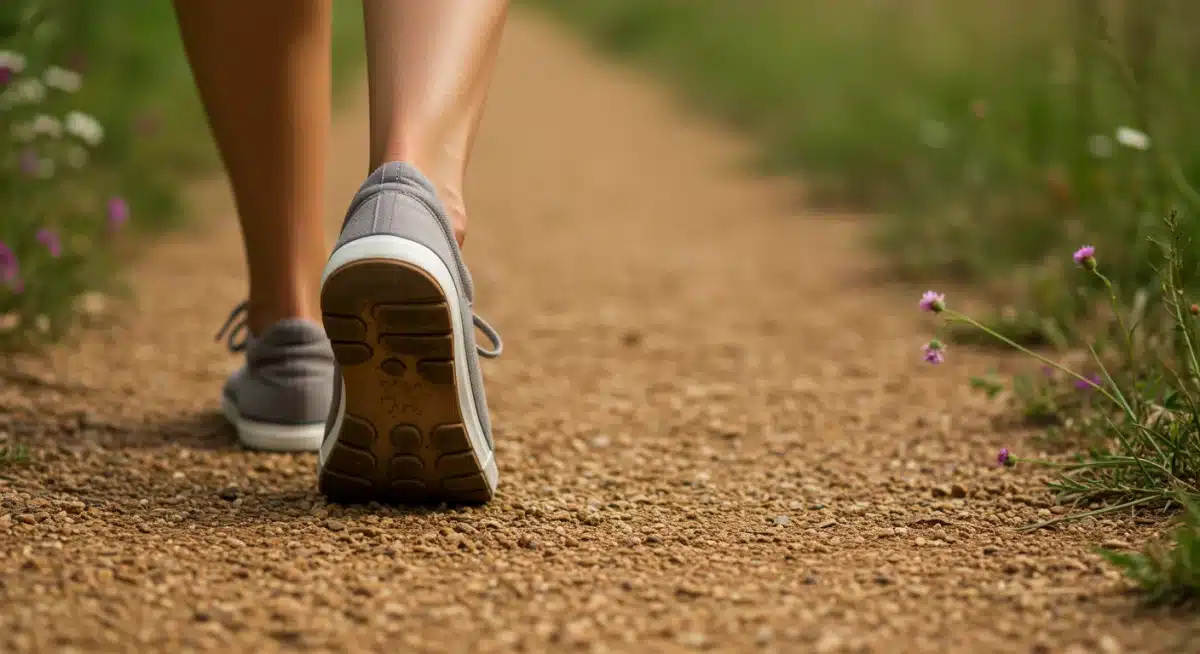
Begin by standing still for a moment, feeling your feet firmly planted on the ground. Close your eyes if you feel comfortable, or soften your gaze downwards. Take a few deep breaths, noticing your body and the sensation of the air around you. This initial pause helps to transition from your previous activities to the present moment.
When you’re ready, gently open your eyes, keeping your gaze soft and directed a few feet in front of you. This helps to prevent distraction while still allowing you to navigate your path safely. The focus is internal, not on external visual stimuli.
The mechanics of mindful walking
- Lift: Slowly lift one foot, noticing the sensation of your heel rising, then the ball of your foot.
- Move: Gently swing your lifted foot forward, observing the movement through the air.
- Place: Allow your heel to touch the ground first, followed by the rest of your foot, feeling the contact.
- Shift: Transfer your weight to the front foot, noticing the subtle balance shift in your body.
- Repeat: Continue with the other foot, maintaining a slow, deliberate rhythm.
Throughout this process, pay attention to the subtle sensations: the pressure on your soles, the movement of your muscles, the swing of your arms, and the gentle sway of your body. Your mind will inevitably wander, and that’s perfectly normal. When you notice your thoughts drifting, gently bring your attention back to the sensation of walking, without judgment. This act of returning is the essence of mindfulness and strengthens your ability to focus, directly contributing to greater mental clarity.
Integrating walking meditation into daily life in 2026
To truly achieve a 35% increase in mental clarity by 2026, integrating walking meditation into your daily routine is paramount. It’s not about adding another daunting task to your schedule, but rather weaving moments of mindfulness into existing activities. This approach makes the practice sustainable and its benefits pervasive throughout your day.
The beauty of walking meditation lies in its flexibility. It doesn’t demand a dedicated meditation cushion or a silent retreat; it can be practiced during commutes, errands, or even within your home. The key is intentionality – transforming ordinary walks into opportunities for mindful presence.
Finding opportunities for mindful movement
Look for small windows of time where you can consciously engage in walking meditation. Instead of rushing between meetings, take a few extra minutes to walk mindfully. During your lunch break, step outside for a brief, intentional stroll. Even walking from one room to another can become a mini-meditation if approached with awareness.
- Commute: Walk part of your commute mindfully, or take a deliberate stroll during a break.
- Errands: Pay attention to each step as you walk through the grocery store or to the mailbox.
- Nature walks: Dedicate specific time for a mindful walk in a park or natural setting.
- Home activities: Practice while walking around your house, from the kitchen to the living room.
The cumulative effect of these small, mindful moments can be profound. They serve as regular anchors to the present, preventing your mind from spiraling into overthinking or distraction. This consistent practice helps to build mental muscle, making it easier to maintain focus and clarity in all aspects of your life.
Overcoming common challenges
Like any new habit, integrating walking meditation might present challenges. Distractions, self-judgment, and time constraints are common hurdles. Remember that perfection isn’t the goal; consistent effort and self-compassion are far more important. If your mind wanders, simply notice it and gently return your attention to your steps.
Start small and gradually increase the duration or frequency of your mindful walks. Celebrate small victories and be patient with yourself. The journey toward increased mental clarity is a continuous one, and every mindful step contributes to your progress.
Measuring your progress towards 35% mental clarity
As you commit to incorporating walking meditation into your routine for 2026, it’s helpful to have ways to gauge your progress towards that ambitious 35% increase in mental clarity. While mental clarity can feel subjective, there are observable shifts in your daily experience and cognitive functions that indicate positive change. Tracking these can motivate you and help refine your practice.
Measuring progress isn’t about rigid metrics but about cultivating self-awareness and noting subtle yet significant improvements. This reflective process reinforces the benefits you’re gaining and encourages continued dedication to your walking meditation journey.
Subjective and objective indicators of clarity
You’ll likely notice several subjective improvements in your mental state. These can include a reduced sense of overwhelm, fewer instances of mind-wandering during tasks, and an overall feeling of calm and focus. Objectively, you might observe enhanced problem-solving abilities, quicker decision-making, and improved memory recall. Keeping a simple journal can be an excellent way to record these observations.
- Reduced mental fog: Easier to think clearly and articulate thoughts.
- Improved focus: Sustained attention during work or personal tasks.
- Emotional regulation: Better ability to manage stress and emotional responses.
- Enhanced creativity: More innovative ideas and solutions emerging naturally.
Consider simple rating scales (e.g., 1-10) for your daily clarity, focus, and stress levels. Over time, you’ll likely see an upward trend in clarity and focus, and a downward trend in stress. This personal data provides compelling evidence of the impact of your practice.
Leveraging technology for self-assessment
In 2026, various apps and wearable devices can assist in tracking aspects related to mental well-being, though they shouldn’t replace your internal observations. Some mindfulness apps include journaling features or mood trackers that can help you visualize your progress. Wearables often track heart rate variability (HRV), a good indicator of stress and recovery, which can indirectly reflect your mental state.
Remember, technology is a tool, not the goal. The most valuable assessment comes from your direct experience and mindful reflection. Celebrate every small improvement, as each step contributes to the larger goal of significantly enhanced mental clarity.
Sustaining your practice and deepening benefits
Achieving a 35% increase in mental clarity by 2026 through walking meditation is a remarkable goal, but sustaining that clarity requires ongoing commitment and a willingness to deepen your practice. It’s not a one-time fix but a continuous journey of self-discovery and mindful engagement. The long-term benefits truly blossom when the practice becomes an integral part of your lifestyle.
Regularity is more important than duration or intensity. Even short, consistent sessions can yield profound results over time. As you become more adept, you’ll find new layers of awareness and connection emerging, enriching your life in unexpected ways.
Advanced techniques for seasoned practitioners
Once the basic mechanics of walking meditation feel natural, you can explore more advanced techniques. This might involve extending the duration of your walks, experimenting with different paces, or incorporating specific intentions. For instance, you might focus on cultivating gratitude with each step, or sending kindness to yourself and others.
- Sensory expansion: Beyond physical sensations, notice sounds, smells, and visual details without judgment.
- Emotional awareness: Observe any emotions that arise during your walk, acknowledging them without attachment.
- Metta walking: Practice loving-kindness meditation while walking, sending benevolent thoughts outwards.
- Varying environments: Challenge yourself by practicing in slightly more distracting environments to strengthen focus.
You might also consider joining a walking meditation group, either online or in person. Sharing experiences and learning from others can provide new perspectives and deepen your understanding of the practice. The collective energy of a group can also be incredibly supportive and motivating.
Long-term commitment for lasting clarity
Sustaining your walking meditation practice requires treating it as a non-negotiable part of your well-being routine, much like eating or sleeping. Schedule it into your day, even if it’s just for 10 minutes. Remind yourself of the profound benefits you’ve already experienced, and visualize the continued growth in mental clarity.
Embrace the occasional days when your practice feels challenging or your mind is particularly busy. These are opportunities for self-compassion and resilience. Over time, walking meditation will become a powerful anchor, providing a reliable source of calm, focus, and profound mental clarity that will serve you well far beyond 2026.
| Key Aspect | Brief Description |
|---|---|
| Core Practice | Mindful attention to the physical sensations of walking, step by step. |
| Mental Clarity Benefit | Reduces mental chatter, enhances focus, and improves cognitive function. |
| Integration Tips | Incorporate into daily routines like commutes, errands, or short breaks. |
| Progress Tracking | Observe reduced stress, improved focus, and enhanced problem-solving abilities. |
Frequently asked questions about walking meditation
Beginners can start with 10-15 minutes, gradually extending to 30-45 minutes as comfort and focus improve. Consistency is more crucial than duration; even short, mindful walks offer significant benefits for mental clarity and well-being.
Absolutely. Walking meditation can be effectively practiced in any quiet indoor space, such as a long hallway or a spacious room. The key is to minimize distractions and focus on the sensations of walking, regardless of the environment.
The primary difference lies in intentionality. A regular walk often involves distraction or a destination-focused mindset, whereas walking meditation is a deliberate practice of bringing full awareness to each step, breath, and sensory experience without judgment.
No, it is not necessary, and for safety, it’s often discouraged, especially outdoors. Instead, maintain a soft, downward gaze a few feet in front of you. This helps to reduce visual distractions while remaining aware of your surroundings.
Mind wandering is a natural part of meditation. The practice isn’t about stopping thoughts, but about gently noticing when your mind has strayed and kindly redirecting your attention back to the sensations of walking, without self-criticism.
Conclusion
As we navigate the complexities of 2026, the pursuit of mental clarity becomes not just a desire but a necessity. This comprehensive guide has illuminated the profound potential of walking meditation to significantly enhance your cognitive well-being, offering a tangible path to a 35% increase in mental clarity. By embracing this accessible, scientifically supported practice, you’re not just adding another item to your wellness checklist; you’re cultivating a powerful tool for resilience, focus, and profound mental clarity that will enrich every aspect of your life. Start today, one mindful step at a time, and unlock a clearer, more vibrant mind.