Mastering Breathwork: A 3-Step Guide to Reducing Stress by 25% in 2026 for U.S. Professionals

Mastering Breathwork: A 3-Step Guide to Reducing Stress by 25% in 2026 for U.S. Professionals
In the relentless pace of modern professional life in the U.S., stress isn’t just an occasional inconvenience; it’s a pervasive challenge impacting productivity, well-being, and overall quality of life. The demands of careers, the constant connectivity of the digital age, and the pressure to perform can leave even the most resilient professionals feeling overwhelmed. But what if there was a simple, accessible, and scientifically backed method to significantly mitigate this stress? Enter breathwork – the conscious control of breathing for therapeutic benefits. This guide is specifically designed for U.S. professionals aiming to master breathwork stress reduction and achieve a remarkable 25% reduction in their stress levels by 2026.
The concept of breathwork might sound deceptively simple. After all, we breathe instinctively every moment of our lives. However, conscious, controlled breathing goes far beyond mere survival. It’s a powerful tool that directly influences our autonomic nervous system, shifting us from the ‘fight or flight’ sympathetic response to the ‘rest and digest’ parasympathetic state. This shift is crucial for managing stress, improving focus, enhancing emotional regulation, and even boosting physical health.
For professionals, the benefits are particularly salient. Imagine approaching a high-stakes presentation with a calm, clear mind, or navigating a challenging negotiation without feeling your heart race. Picture yourself ending a busy workday feeling energized rather than utterly drained. This isn’t just wishful thinking; it’s the tangible outcome of integrating effective breathwork practices into your daily routine. Our 3-step guide is structured to provide a clear, progressive path to harness these benefits, making breathwork an indispensable asset in your professional toolkit.
The Science Behind Breathwork Stress Reduction
Before diving into the practical steps, it’s essential to understand why breathwork is so effective for stress reduction. Our breathing patterns are intimately linked to our emotional and physiological states. When we’re stressed, anxious, or fearful, our breathing becomes shallow, rapid, and often originates from the chest. This signals to our brain that we’re in danger, perpetuating the stress response.
Conversely, slow, deep, diaphragmatic breathing activates the vagus nerve, a key component of the parasympathetic nervous system. This activation sends signals to the brain that we are safe, calm, and in control. The result is a cascade of positive physiological changes: a lowered heart rate, reduced blood pressure, decreased muscle tension, and a significant drop in cortisol, the body’s primary stress hormone. Furthermore, controlled breathing increases oxygen flow to the brain, enhancing cognitive function, clarity, and decision-making abilities – all critical for U.S. professionals.
Studies have consistently shown the profound impact of conscious breathing. Research published in journals like Frontiers in Psychology and Psychophysiology highlights how specific breathing techniques can reduce anxiety, improve mood, and even enhance resilience to stress. For professionals facing demanding schedules and high-pressure environments, incorporating breathwork stress reduction isn’t just a wellness trend; it’s a strategic advantage.
Step 1: The Foundation – Diaphragmatic Breathing (Belly Breathing)
The first and most fundamental step in mastering breathwork stress reduction is learning to breathe correctly – from your diaphragm, not your chest. Most adults, especially under stress, tend to be shallow chest breathers. Diaphragmatic breathing, also known as belly breathing, is the cornerstone of all effective breathwork practices because it directly engages the vagus nerve and promotes relaxation.
How to Practice Diaphragmatic Breathing:
- Find a Comfortable Position: Lie on your back with your knees bent, or sit comfortably in a chair with your feet flat on the floor. Place one hand on your chest and the other on your abdomen, just below your rib cage.
- Inhale Deeply: Inhale slowly and deeply through your nose, allowing your abdomen to rise. The hand on your chest should remain relatively still, while the hand on your belly should rise noticeably. Focus on expanding your belly, not your chest.
- Exhale Slowly: Exhale slowly through your mouth (or nose, if preferred), gently contracting your abdominal muscles. The hand on your belly should lower as your belly flattens. Try to make your exhalation longer than your inhalation.
- Repeat: Continue this process for 5-10 minutes. Focus on the sensation of your belly rising and falling, and the gentle rhythm of your breath.
Goal for U.S. Professionals: Practice diaphragmatic breathing for 5-10 minutes, twice a day (e.g., morning and evening), for at least two weeks. This builds the fundamental muscle memory for proper breathing, making it easier to engage in stressful situations.
Why it’s Crucial: This foundational step re-educates your body on how to breathe efficiently and calmly. Once you master diaphragmatic breathing, you’ll find that other breathwork techniques become much more effective. It’s like learning to walk before you run – essential for long-term breathwork stress reduction.

Step 2: The Regulator – 4-7-8 Breathing Technique
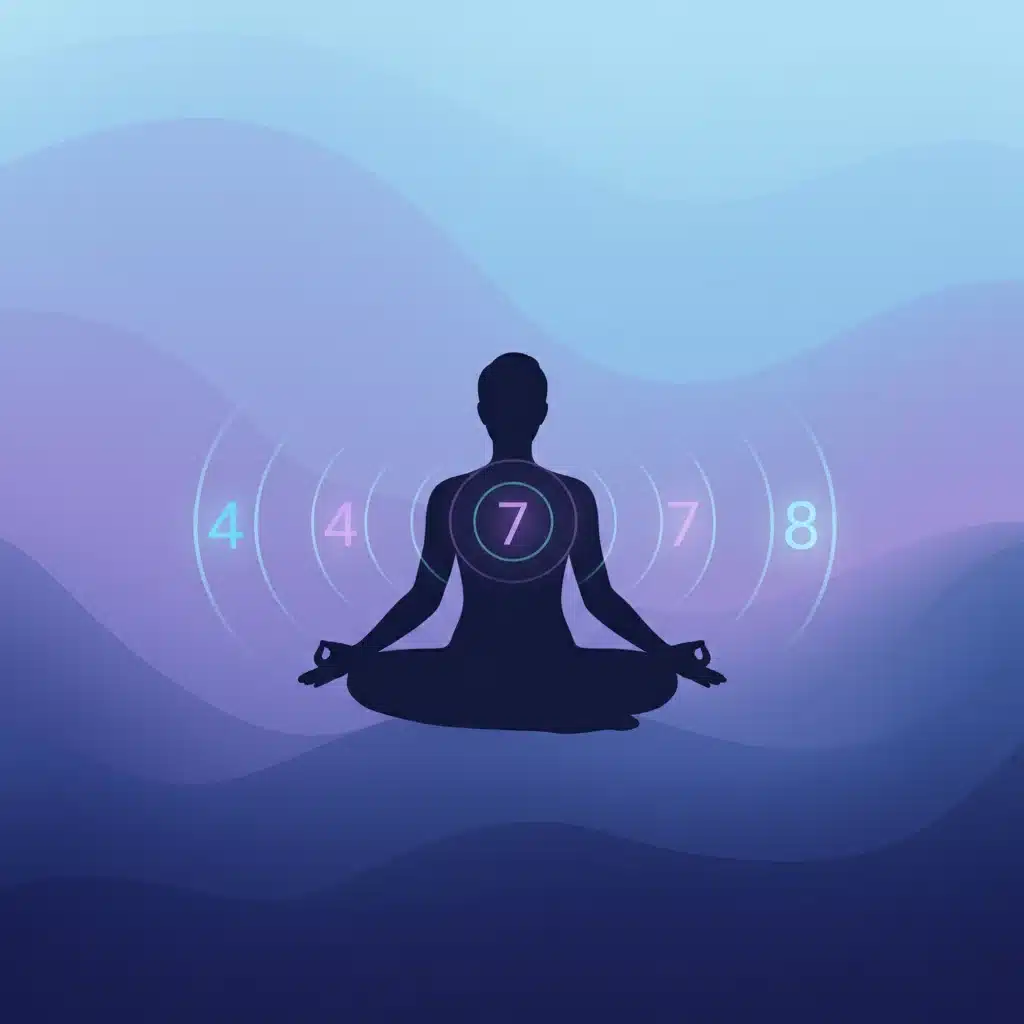
Once you’ve established a solid foundation with diaphragmatic breathing, the 4-7-8 breathing technique, popularized by Dr. Andrew Weil, is your next powerful tool for breathwork stress reduction. This technique acts as a natural tranquilizer for the nervous system, helping you quickly calm down in moments of acute stress or anxiety, and even aiding in sleep.
How to Practice 4-7-8 Breathing:
- Preparation: Sit or lie comfortably. Place the tip of your tongue against the ridge of tissue just behind your upper front teeth, and keep it there throughout the entire breathing exercise.
- Exhale Completely: Exhale completely through your mouth, making a gentle ‘whoosh’ sound.
- Inhale (4 Counts): Close your mouth and inhale quietly through your nose to a mental count of four.
- Hold Breath (7 Counts): Hold your breath for a count of seven.
- Exhale (8 Counts): Exhale completely through your mouth, making that ‘whoosh’ sound again, for a count of eight.
- Repeat: This completes one breath. Inhale again and repeat the cycle three more times for a total of four breaths.
Goal for U.S. Professionals: Incorporate 4-7-8 breathing whenever you feel a surge of stress, before important meetings, during breaks, or before bedtime. Aim to practice 2-3 cycles (total of 8-12 breaths) as needed, gradually increasing frequency as you become more comfortable. Consistency will significantly enhance your breathwork stress reduction capabilities.
Why it’s Crucial: The specific counts in 4-7-8 breathing are designed to optimize oxygen intake, slow the heart rate, and release carbon dioxide more efficiently, which further calms the nervous system. The holding of the breath allows oxygen to fully permeate the bloodstream, while the longer exhalation helps to expel more carbon dioxide, promoting a deeper state of relaxation. This technique is remarkably effective for professionals who need an ‘on-demand’ method to manage stress and regain composure quickly.
Step 3: The Enhancer – Box Breathing (Tactical Breathing)
Box breathing, also known as tactical breathing, is a technique favored by Navy SEALs and other high-performance individuals for its ability to enhance focus, reduce anxiety, and improve performance under pressure. It’s the perfect complement to diaphragmatic and 4-7-8 breathing, allowing U.S. professionals to not only reduce stress but also sharpen their cognitive edge.
How to Practice Box Breathing:
- Preparation: Sit upright in a comfortable position, or stand if you prefer.
- Exhale Completely: Exhale all the air from your lungs, counting slowly to four.
- Hold Empty Lungs: Hold your breath with empty lungs for a slow count of four.
- Inhale (4 Counts): Inhale slowly through your nose, filling your lungs, to a count of four.
- Hold Full Lungs: Hold your breath with full lungs for a slow count of four.
- Repeat: Repeat the cycle. Each side of the ‘box’ (inhale, hold, exhale, hold) is four counts. Continue for 5 minutes or as long as needed.
Goal for U.S. Professionals: Integrate box breathing into your routine before critical tasks, during periods of intense focus, or whenever you need to clear your mind and concentrate. Aim for 5-10 minutes of practice before starting a complex project or after a stressful meeting. This actively contributes to your breathwork stress reduction and cognitive enhancement.
Why it’s Crucial: Box breathing creates a balanced rhythm for your body and mind. The equal segments of inhalation, retention, exhalation, and retention help to reset the nervous system, reduce hyperventilation often associated with stress, and bring a sense of mental clarity and control. For professionals who need to maintain peak performance and decision-making capabilities under pressure, box breathing is an invaluable technique for breathwork stress reduction and cognitive resilience.
Integrating Breathwork into Your Professional Life by 2026
Achieving a 25% reduction in stress by 2026 is an ambitious yet entirely attainable goal for U.S. professionals who commit to regular breathwork practice. The key is consistency and integration into your daily routine. Here are some strategies:
- Morning Ritual: Start your day with 5-10 minutes of diaphragmatic breathing to set a calm tone.
- Desk Breaks: Instead of mindlessly scrolling during short breaks, dedicate 2-3 minutes to 4-7-8 breathing or box breathing.
- Before Meetings: A quick round of 4-7-8 breathing (4 breaths) can ground you and improve focus before a critical meeting.
- During Commute: Use your commute time (if not driving) to practice any of the three techniques.
- Evening Wind-Down: End your day with diaphragmatic breathing or 4-7-8 breathing to facilitate better sleep and process the day’s stressors.
- Stress Triggers: Identify your personal stress triggers and proactively use breathwork techniques when you anticipate or encounter them.
Remember, breathwork is a skill that improves with practice. Don’t get discouraged if you don’t feel profound changes immediately. The cumulative effect of consistent practice is where the true power of breathwork stress reduction lies. Think of it as training a muscle – the more you use it, the stronger it becomes.
Measuring Your Progress and Achieving Your 25% Stress Reduction Goal
How do you quantify a 25% reduction in stress? While stress is subjective, there are several ways U.S. professionals can track their progress:
- Subjective Stress Scales: Use a simple 1-10 scale to rate your stress levels at different points throughout the day (morning, midday, evening). Keep a journal and note trends over weeks and months.
- Symptom Tracking: Monitor physical symptoms of stress (e.g., headaches, muscle tension, digestive issues) and emotional symptoms (e.g., irritability, anxiety, fatigue). Observe if these decrease in frequency or intensity.
- Sleep Quality: Track your sleep patterns. Improved sleep is a strong indicator of reduced stress.
- Productivity and Focus: Notice improvements in your ability to concentrate, stay productive, and manage demanding tasks without feeling overwhelmed.
- Feedback from Others: Sometimes, colleagues or family members may notice positive changes in your demeanor before you do.
Set realistic mini-goals. Perhaps aim for a 5% reduction in stress every six months. By 2026, with diligent practice of these breathwork stress reduction techniques, a 25% reduction is well within reach, leading to a more balanced, productive, and fulfilling professional life.
Beyond the 3 Steps: Advanced Breathwork and Resources
While this 3-step guide provides a robust foundation for breathwork stress reduction for U.S. professionals, the world of breathwork is vast. As you become more proficient, you might explore:
- Holotropic Breathwork: A more intense, guided practice often done in group settings, aimed at self-exploration and healing.
- Wim Hof Method: Combines breath retention with cold exposure and commitment to enhance physical and mental health.
- Pranayama: Ancient yogic breathing techniques with various specific benefits, from energizing to calming.
There are also numerous apps (e.g., Calm, Headspace, Insight Timer), online courses, and local workshops that can provide further guidance and support on your breathwork journey. Consider consulting with a certified breathwork facilitator if you wish to delve deeper or address specific challenges.
The Long-Term Impact of Breathwork Stress Reduction
The journey to mastering breathwork is an investment in your long-term health and professional success. By consistently practicing these 3 simple yet profound techniques, U.S. professionals can expect to:
- Enhance Resilience: Better cope with professional setbacks and personal challenges.
- Improve Emotional Intelligence: Gain greater control over emotional responses, fostering better relationships.
- Boost Cognitive Performance: Experience improved focus, clarity, and decision-making.
- Elevate Physical Health: Reduce the physical toll of chronic stress, leading to better immunity and overall well-being.
- Increase Job Satisfaction: A calmer, more focused mind can lead to greater enjoyment and engagement in your work.
The year 2026 is not just a date; it’s a milestone. It’s the point by which you, as a dedicated U.S. professional, can look back and recognize a significant transformation in how you manage stress and approach your life. Breathwork stress reduction is not a magic bullet, but it is a powerful, accessible, and sustainable practice that puts the power of change directly into your hands.
Conclusion: Breathe Your Way to a Calmer, More Productive Future
In a world that constantly demands more from U.S. professionals, the ability to effectively manage stress is no longer a luxury but a necessity. This 3-step guide to mastering breathwork stress reduction offers a clear, actionable path to achieve a tangible reduction in your stress levels by 2026. By dedicating just a few minutes each day to diaphragmatic breathing, 4-7-8 breathing, and box breathing, you can unlock a profound sense of calm, enhance your focus, and cultivate a more resilient mindset.
Start today. Choose one technique and commit to practicing it for a week. Then gradually integrate the others. Observe the subtle shifts, celebrate the small victories, and trust in the inherent power of your own breath. Your journey towards a less stressful, more productive, and ultimately more fulfilling professional life begins with a single, conscious breath. Make 2026 the year you truly master your inner peace and thrive amidst the demands of your career.