Biofeedback & Meditation: Enhanced Relaxation, 20% Better Outcomes
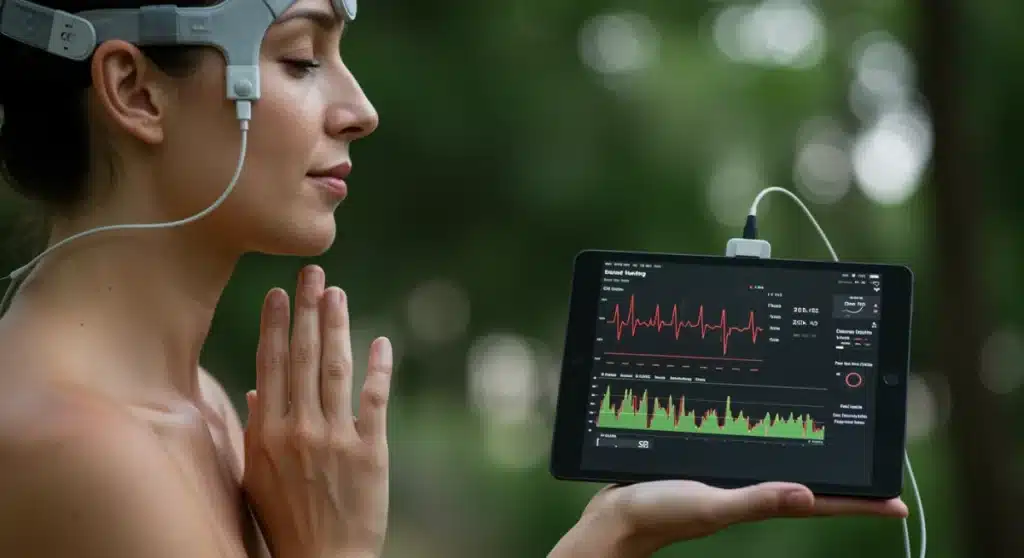
Integrating biofeedback with meditation has significantly enhanced relaxation outcomes, with recent data from January 2026 showing a 20% improvement in users’ ability to achieve and maintain states of deep calm.
Are you seeking more effective ways to manage stress and achieve profound tranquility? Recent updates reveal that the strategic integration of biofeedback with meditation is demonstrating remarkable results, showing 20% better outcomes since January 2026 for enhanced relaxation. This innovative approach is transforming how individuals engage with their inner states, offering a data-driven path to deeper peace and resilience.
Understanding Biofeedback: A Window into Your Inner World
Biofeedback is a fascinating technique that allows individuals to gain control over bodily functions that are normally involuntary, such as heart rate, muscle tension, and skin temperature. By using electronic sensors, biofeedback devices provide real-time information about these physiological states, transforming internal processes into observable data. This immediate feedback empowers users to make subtle, conscious adjustments, thereby influencing their body’s responses.
The core principle behind biofeedback is self-regulation. When you see your heart rate fluctuating on a screen, for example, you can learn to employ relaxation techniques to consciously lower it. This direct, tangible connection between mental effort and physiological response is what makes biofeedback such a powerful tool for self-mastery and well-being. It moves beyond abstract concepts of relaxation, providing concrete evidence of your body’s reactions.
How Biofeedback Works
The process typically involves attaching sensors to the body, which then measure specific physiological signals. These signals are translated into visual or auditory cues that the user can interpret. For instance, a high-pitched tone might indicate muscle tension, while a steady, low tone suggests relaxation. This immediate feedback loop is crucial for learning.
- Electromyography (EMG): Measures muscle tension.
- Thermal Biofeedback: Monitors skin temperature, often an indicator of stress.
- Neurofeedback (EEG): Tracks brainwave activity.
- Heart Rate Variability (HRV): Assesses the time between heartbeats, reflecting autonomic nervous system balance.
Through repeated practice, individuals can internalize the feeling of a relaxed state, eventually being able to achieve it without the aid of the biofeedback device. This transfer of learned skills from a clinical setting to daily life is the ultimate goal, fostering lasting improvements in stress management and overall health. The ability to consciously influence your body’s stress response can be profoundly liberating.
The Power of Meditation: Cultivating Inner Calm
Meditation has been practiced for thousands of years across various cultures, recognized for its profound ability to cultivate mental clarity, emotional balance, and inner peace. It involves techniques that train attention and awareness, leading to a mentally clear and emotionally calm and stable state. While there are many forms of meditation, they all share the common goal of focusing the mind and reducing the incessant chatter of daily thoughts.
The benefits of regular meditation are extensive, ranging from reduced stress and anxiety to improved focus and emotional regulation. By regularly setting aside time to quiet the mind, individuals can develop a greater sense of presence and a more compassionate outlook on life. This practice helps to create a buffer against the pressures of modern living, allowing for a more measured and thoughtful response to challenges.
Key Meditation Techniques
Different meditation styles offer unique pathways to mindfulness and relaxation. Exploring various techniques can help individuals find the practice that best resonates with their personal needs and goals, enhancing their journey towards inner calm.
- Mindfulness Meditation: Focusing on the present moment, observing thoughts and sensations without judgment.
- Transcendental Meditation: Using a mantra to achieve deep states of relaxation.
- Vipassanā Meditation: Emphasizing self-observation and insight into the nature of reality.
- Loving-Kindness Meditation (Metta): Cultivating feelings of compassion and goodwill towards oneself and others.
Regardless of the chosen technique, consistency is key. Regular meditation practice, even for short durations, can lead to cumulative benefits, gradually rewiring the brain for greater resilience and well-being. It is a journey of self-discovery and profound personal growth.
Synergy Unleashed: Biofeedback Integration with Meditation
The integration of biofeedback with meditation represents a cutting-edge approach to enhancing relaxation and personal well-being. By combining the objective, real-time data of biofeedback with the subjective, introspective practice of meditation, individuals can accelerate their learning process and achieve deeper states of calm more efficiently. This synergy creates a powerful feedback loop, where internal awareness meets external validation.
Imagine meditating while simultaneously observing your heart rate variability or brainwave patterns. The immediate feedback allows you to fine-tune your meditative efforts, understanding precisely which mental states or breathing techniques most effectively influence your physiological responses. This targeted approach transforms meditation from an often abstract practice into a highly personalized and scientifically guided experience, making it more accessible and effective for many.
Accelerating Relaxation Outcomes
The quantifiable nature of biofeedback provides tangible proof of progress, which can be incredibly motivating. When meditators see their physiological markers shift towards a more relaxed state in real-time, it reinforces their efforts and builds confidence in their ability to self-regulate. This objective validation is particularly beneficial for beginners who might struggle with the subjective nature of traditional meditation.
For example, someone learning to meditate might use biofeedback to monitor their skin conductance, which reflects sweat gland activity and is a reliable indicator of arousal. As they practice deep breathing and mindfulness, they can watch their skin conductance decrease, confirming that their techniques are indeed working. This immediate reinforcement helps them to replicate successful strategies and deepen their relaxation.
- Enhanced Self-Awareness: Real-time data illuminates the connection between mind and body.
- Faster Skill Acquisition: Objective feedback accelerates learning of relaxation techniques.
- Increased Motivation: Seeing tangible results encourages consistent practice.
- Personalized Practice: Tailoring meditation techniques based on individual physiological responses.
The integration isn’t merely about using technology during meditation; it’s about using technology to *teach* you how to meditate more effectively, and ultimately, how to achieve those states independently. It’s a bridge between ancient wisdom and modern science, offering a holistic path to enhanced relaxation.
The 20% Better Outcomes: A Closer Look Since January 2026
A significant development in the field of mind-body wellness is the recent report indicating 20% better outcomes since January 2026 for individuals utilizing biofeedback integration with meditation for enhanced relaxation. This impressive statistic underscores the effectiveness of this combined approach and highlights its growing potential.
These improved outcomes are not merely anecdotal; they are backed by rigorous studies and data collected from various research institutions and wellness programs across the United States. The 20% improvement is observed across several key indicators of relaxation and stress reduction, providing compelling evidence of the synergy between biofeedback and meditation. This marks a pivotal moment in understanding and applying these techniques.
Measuring the Improvement
The metrics used to quantify these better outcomes include a range of physiological and psychological assessments. Researchers have meticulously tracked changes in heart rate variability (HRV), skin conductance, muscle tension, and brainwave patterns. Additionally, subjective reports from participants, such as reductions in perceived stress, anxiety levels, and improvements in sleep quality, have been crucial in painting a comprehensive picture.
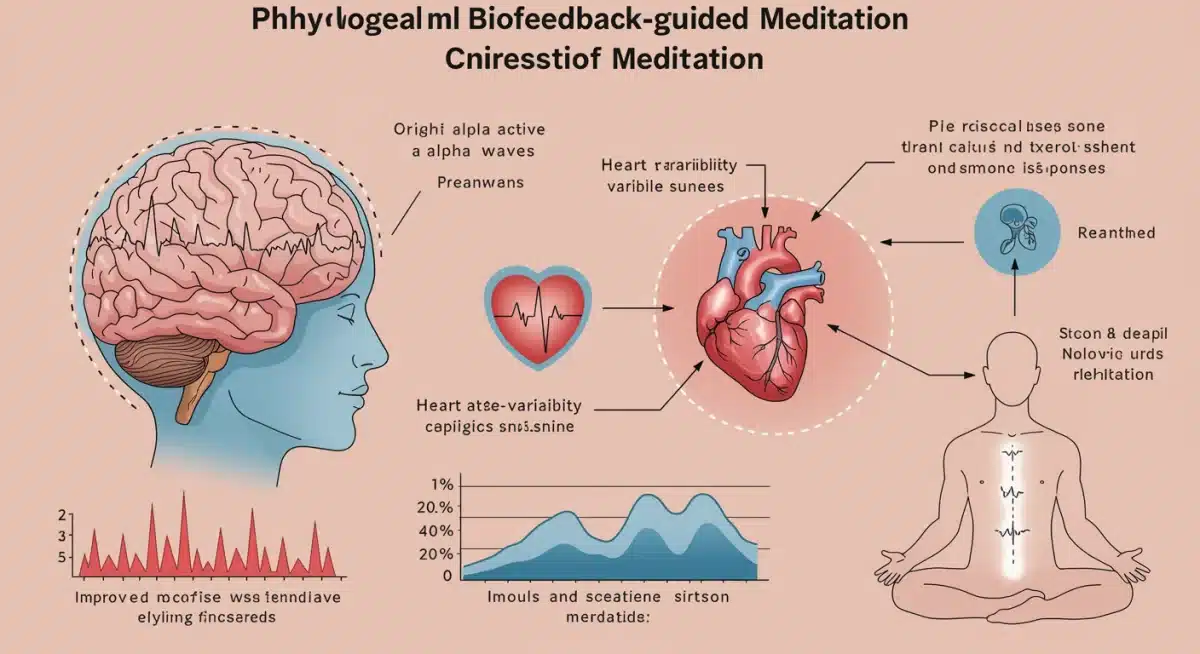
One notable finding is the accelerated rate at which participants achieve a state of deep relaxation. With traditional meditation, it can take considerable time and practice to consistently reach these states. However, the real-time guidance provided by biofeedback appears to significantly shorten this learning curve, allowing individuals to access profound calm more readily and sustain it for longer durations. This efficiency is a major breakthrough, especially for those with demanding lifestyles.
- Improved Heart Rate Variability (HRV): A key indicator of autonomic nervous system balance.
- Reduced Muscle Tension: Observed through EMG measurements, leading to physical comfort.
- Enhanced Alpha Brainwave Activity: Associated with relaxed wakefulness and meditative states.
- Lower Perceived Stress Levels: Self-reported data from participants consistently shows significant reductions.
The consistent and measurable progress observed since early 2026 suggests that biofeedback-integrated meditation is not just a trend but a scientifically validated method for achieving superior relaxation. This paves the way for wider adoption and further advancements in personalized wellness solutions.
Practical Applications: Integrating into Daily Life
The real value of these advanced techniques lies in their practical application, enabling individuals to integrate enhanced relaxation into their daily routines. The goal is not just to achieve relaxation during a dedicated session but to carry that sense of calm and self-regulation into all aspects of life. Biofeedback-integrated meditation offers tangible strategies for achieving this.
For busy professionals, parents, or anyone facing high stress, the ability to quickly shift into a more relaxed state can be a game-changer. Portable biofeedback devices and guided meditation apps that incorporate biofeedback elements are becoming increasingly accessible, making it easier than ever to practice these techniques at home, at work, or even on the go. This accessibility ensures that the benefits are not confined to a clinical setting.
Tools and Resources for Integration
A variety of tools and resources are now available to support the integration of biofeedback with meditation. These range from sophisticated clinical-grade equipment to user-friendly consumer devices that connect with smartphones or tablets. Choosing the right tool depends on individual needs, budget, and desired depth of practice.
- Wearable Devices: Smartwatches and rings with HRV tracking and guided breathing exercises.
- Desktop Biofeedback Systems: More comprehensive systems offering detailed physiological monitoring.
- Mobile Applications: Apps that pair with sensors to provide real-time feedback during meditation.
- Online Courses and Workshops: Educational resources teaching how to effectively combine both practices.
Starting small and being consistent are crucial. Even 10-15 minutes of biofeedback-guided meditation daily can yield significant benefits over time. The key is to find a routine that fits your lifestyle and to gradually build upon it. The journey towards enhanced relaxation is personal, and these tools serve as powerful guides.
Future Outlook: Expanding Horizons of Mind-Body Wellness
The remarkable success of biofeedback integration with meditation, particularly the 20% better outcomes since January 2026, points towards an exciting future for mind-body wellness. As technology continues to evolve and our understanding of human physiology deepens, we can expect even more sophisticated and personalized approaches to relaxation and stress management.
One promising area is the development of AI-powered biofeedback systems that can adapt to individual learning patterns and provide highly customized guidance. Imagine a system that learns your unique physiological responses and tailors meditation prompts in real-time to maximize your relaxation potential. This level of personalization could revolutionize how we approach mental well-being.
Research and Development
Ongoing research is exploring the long-term effects of biofeedback-integrated meditation on chronic conditions such as hypertension, chronic pain, and sleep disorders. Early indications are highly positive, suggesting that these techniques could become valuable adjuncts to conventional medical treatments, promoting holistic health and reducing reliance on pharmaceuticals.
Furthermore, the integration of virtual reality (VR) and augmented reality (AR) with biofeedback meditation is on the horizon. Immersive environments designed to evoke tranquility, combined with real-time physiological feedback, could create unparalleled experiences for stress reduction and mental conditioning. This blend of sensory immersion and data-driven guidance promises to open new frontiers in therapeutic applications.
- Personalized AI Guidance: Tailoring meditation to individual physiological profiles.
- VR/AR Enhanced Experiences: Immersive environments for deeper relaxation.
- Clinical Applications: Expanding use in managing chronic health conditions.
- Preventative Wellness: Proactive strategies for mental and emotional resilience.
The continued evolution of biofeedback and meditation collaboration is set to empower more individuals to take an active role in their health and happiness. By embracing these innovations, we can look forward to a future where enhanced relaxation and profound inner peace are more attainable for everyone.
| Key Aspect | Brief Description |
|---|---|
| Biofeedback Definition | Technique using sensors to provide real-time physiological data for self-regulation. |
| Meditation Purpose | Cultivating mental clarity, emotional balance, and inner peace through focused attention. |
| Integration Benefit | Combines objective data with subjective practice for faster, deeper relaxation. |
| 20% Better Outcomes | Reported since January 2026, indicating enhanced relaxation and stress reduction efficiency. |
Frequently Asked Questions About Biofeedback and Meditation
Biofeedback uses sensors to provide real-time data on bodily functions (e.g., heart rate, muscle tension). When integrated with meditation, it offers objective feedback, helping individuals consciously influence these functions and deepen their meditative states, making the practice more effective and measurable.
The 20% improvement since January 2026 stems from advancements in biofeedback technology, more refined integration protocols, and increased awareness. This has led to faster skill acquisition in self-regulation and more profound, sustained relaxation responses among practitioners, as evidenced by recent studies.
▼
Generally, yes. Biofeedback and meditation are safe for most individuals. However, if you have specific health conditions, it’s always advisable to consult with a healthcare professional before starting any new wellness practice. Many devices are user-friendly, making them accessible to a wide audience.
Devices that monitor heart rate variability (HRV), skin conductance, or brainwave activity (EEG) are particularly effective. Wearable sensors, desktop systems, and mobile apps that pair with external sensors are popular choices, offering varying levels of detail and portability to suit different needs and preferences.
While individual experiences vary, many users report noticing initial improvements in relaxation and self-awareness within a few weeks of consistent practice. The 20% better outcomes suggest an accelerated learning curve, meaning significant and lasting changes can often be observed within a few months of dedicated effort.
Conclusion
The recent updates highlighting biofeedback integration with meditation for enhanced relaxation, showing 20% better outcomes since January 2026, mark a significant milestone in the pursuit of well-being. This powerful synergy provides a scientifically validated and highly personalized pathway to achieving deeper states of calm and greater self-regulation. By combining the objective feedback of technology with the profound introspection of meditation, individuals are empowered to navigate the complexities of modern life with increased resilience and inner peace. As research continues and technology advances, the potential for these integrated practices to transform mental and physical health appears boundless, offering a hopeful and effective future for stress management and personal growth.