Mastering Agile Project Management: A Comprehensive Guide for Success

In today’s fast-paced business landscape, the ability to adapt quickly and deliver value consistently is paramount. Traditional project management methodologies, with their rigid structures and long planning cycles, often fall short in meeting these demands. This is where Agile Project Management emerges as a transformative force, offering a flexible, iterative, and highly collaborative approach to project execution. But what exactly is Agile, and how can it revolutionize your projects and teams?
This comprehensive guide will delve deep into the world of Agile Project Management, exploring its core principles, popular frameworks, and the myriad benefits it offers. Whether you’re a seasoned project manager looking to transition to Agile, a team member seeking to understand your role better, or a business leader aiming to enhance organizational agility, this article will provide you with the insights and tools you need to succeed.
Understanding the Core Principles of Agile Project Management
At its heart, Agile Project Management is not just a methodology; it’s a mindset. It’s guided by the values and principles articulated in the Agile Manifesto, a seminal document created in 2001 by seventeen independent-minded software practitioners. These principles prioritize flexibility, collaboration, and continuous improvement over strict adherence to a plan. Let’s break down these foundational tenets:
Individuals and Interactions Over Processes and Tools
While processes and tools are important, Agile emphasizes the power of human connection and effective communication. Successful projects are built on the collaboration of empowered individuals who can interact directly, share ideas, and solve problems together. This means fostering an environment where team members feel comfortable communicating openly and frequently, reducing reliance on cumbersome documentation and bureaucratic procedures.
Working Software Over Comprehensive Documentation
In Agile, the ultimate measure of progress is working software (or a functional product/service in other industries), not exhaustive documentation. While some documentation is necessary, the focus is on delivering tangible value to the customer as quickly as possible. This allows for early feedback, continuous refinement, and ensures that the product evolves in line with user needs, rather than being built to a potentially outdated specification.
Customer Collaboration Over Contract Negotiation
Agile champions continuous customer involvement throughout the project lifecycle. Instead of a one-time contract negotiation, Agile teams work closely with customers, seeking their input, feedback, and validation at every stage. This collaborative approach ensures that the product truly meets customer expectations and adapts to changing requirements, fostering stronger relationships and higher satisfaction.
Responding to Change Over Following a Plan
The business world is unpredictable, and requirements can shift rapidly. Agile embraces this reality, prioritizing adaptability over rigid adherence to a predefined plan. Instead of resisting change, Agile teams anticipate it and build mechanisms to respond effectively. This iterative approach allows projects to pivot when necessary, ensuring that the final product remains relevant and valuable in a dynamic environment.
The Benefits of Embracing Agile Project Management
Adopting Agile Project Management can bring a multitude of advantages to organizations across various sectors. These benefits extend beyond just project delivery, impacting team morale, customer satisfaction, and overall business agility. Here are some of the key benefits:
Increased Flexibility and Adaptability
One of the most significant advantages of Agile is its inherent flexibility. Projects are broken down into smaller, manageable iterations (sprints), allowing teams to respond quickly to new information, changing requirements, and unforeseen challenges. This adaptability minimizes risk and ensures that the project remains aligned with evolving business goals.
Faster Time to Market
By focusing on delivering working increments of a product frequently, Agile methodologies enable organizations to get valuable features into the hands of users much faster. This not only provides an early return on investment but also allows for quicker feedback loops, leading to a more refined and customer-centric product.
Enhanced Customer Satisfaction
The continuous involvement of customers in the development process ensures that their needs are consistently met and often exceeded. Regular feedback sessions and the ability to course-correct based on their input lead to a product that truly resonates with the target audience, resulting in higher customer satisfaction and loyalty.
Improved Team Collaboration and Morale
Agile fosters a collaborative environment where team members are empowered to make decisions and take ownership of their work. Daily stand-ups, frequent communication, and shared responsibility build stronger teams, improve communication, and boost morale. When teams feel valued and have a clear understanding of their impact, productivity naturally increases.
Higher Quality Products
The iterative nature of Agile allows for continuous testing and quality assurance throughout the development cycle. Defects are identified and addressed early, reducing the cost and effort of fixing them later. This focus on quality at every stage leads to a more robust and reliable final product.
Greater Project Visibility and Transparency
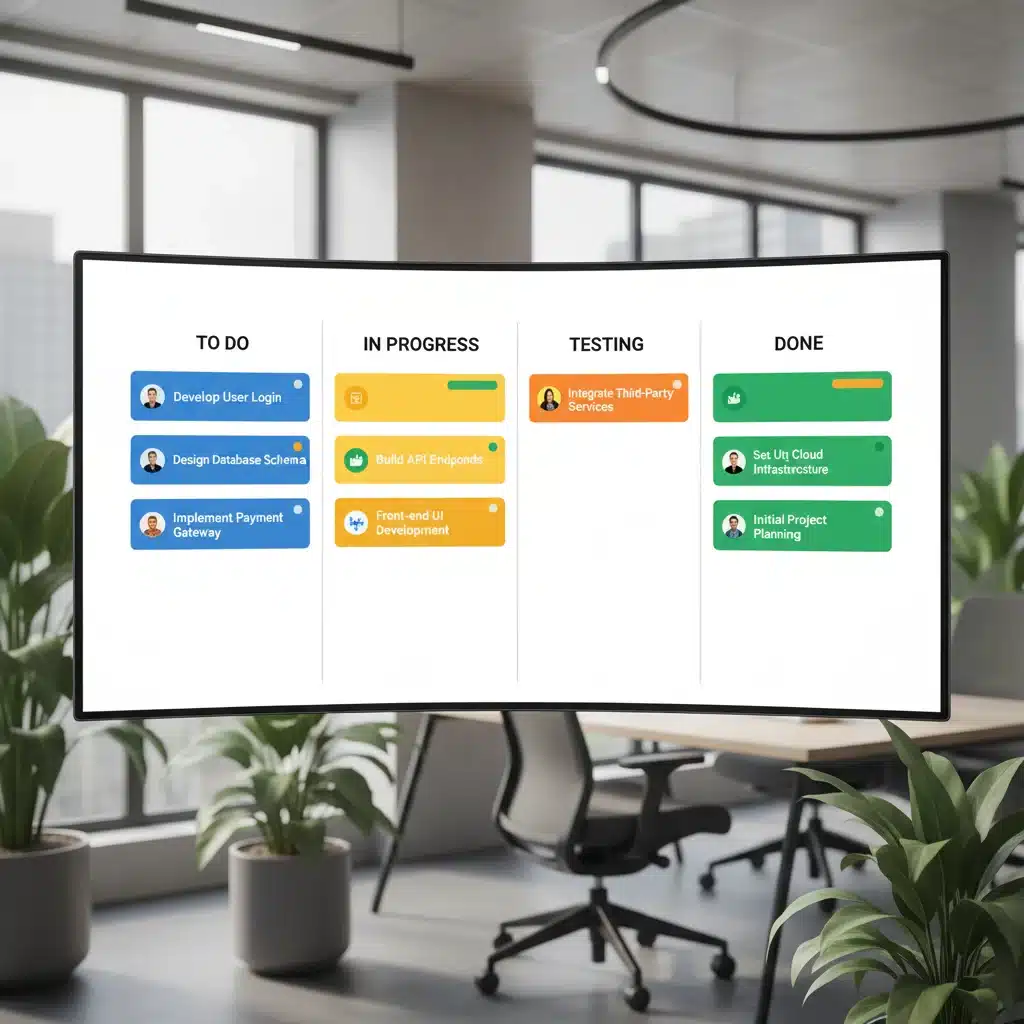
Agile frameworks often utilize visual tools like Kanban boards and burndown charts that provide clear, real-time visibility into project progress. This transparency allows stakeholders to understand the project status, identify potential roadblocks, and make informed decisions, fostering trust and accountability.
Popular Agile Project Management Frameworks
While Agile is a philosophy, several frameworks provide specific guidelines and practices for implementing its principles. The two most widely adopted are Scrum and Kanban, but others like Lean and DevOps also play crucial roles. Understanding these frameworks is key to successfully applying Agile Project Management.
Scrum: The Iterative Powerhouse
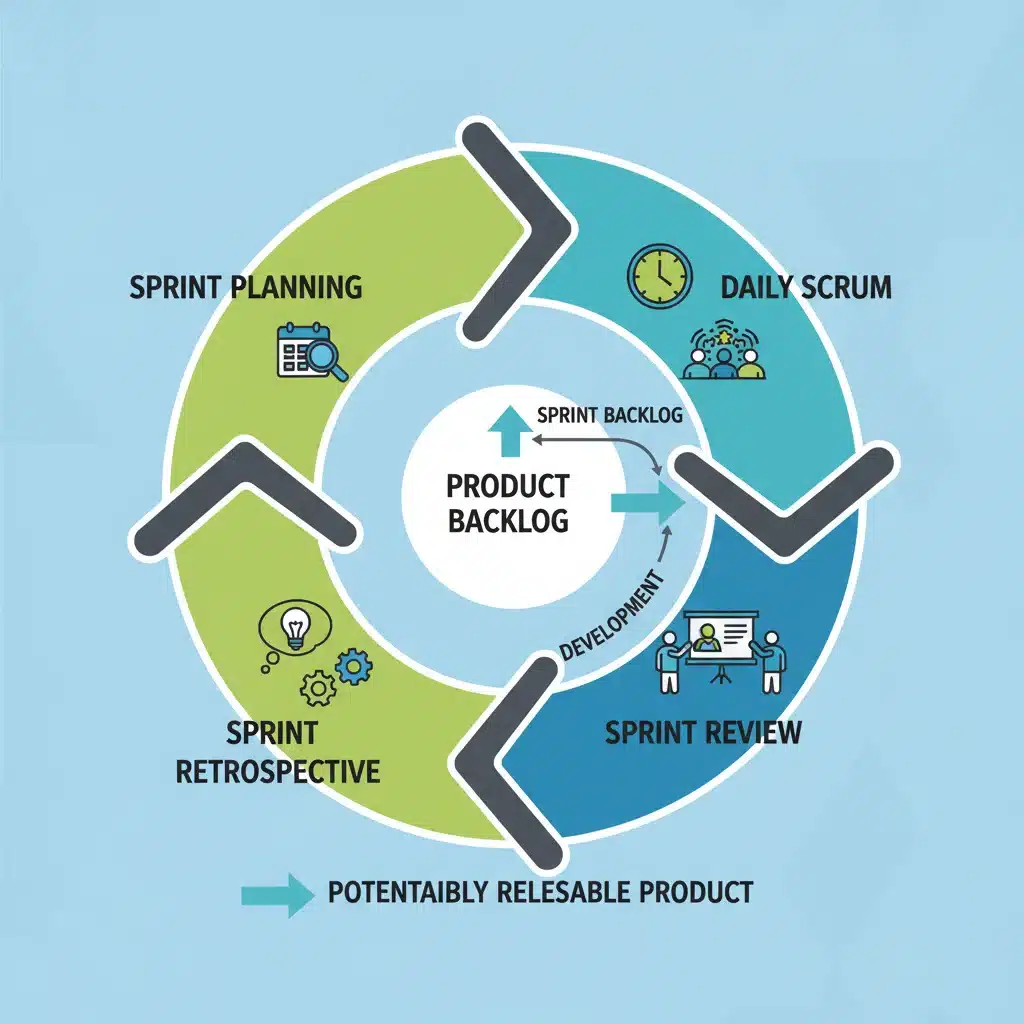
Scrum is arguably the most popular Agile framework, known for its iterative and incremental approach. It organizes work into short, time-boxed periods called ‘sprints,’ typically lasting 1-4 weeks. Each sprint aims to deliver a potentially shippable increment of the product. Scrum defines specific roles, events, and artifacts:
Scrum Roles:
- Product Owner: Represents the voice of the customer and stakeholders, responsible for defining and prioritizing the product backlog.
- Scrum Master: Facilitates the Scrum process, removes impediments, and coaches the team on Agile principles.
- Development Team: A self-organizing, cross-functional group responsible for delivering the product increment.
Scrum Events:
- Sprint Planning: The team plans the work to be done in the upcoming sprint.
- Daily Scrum (Stand-up): A short daily meeting for the team to synchronize activities and plan for the next 24 hours.
- Sprint Review: The team demonstrates the completed work to stakeholders and gathers feedback.
- Sprint Retrospective: The team reflects on the past sprint and identifies areas for improvement.
Scrum Artifacts:
- Product Backlog: A prioritized list of features, functions, requirements, enhancements, and fixes that constitute the changes to be made to the product.
- Sprint Backlog: A subset of the product backlog items selected for a particular sprint.
- Increment: The sum of all product backlog items completed during a sprint and all previous sprints, ready for potential release.
Scrum’s structured yet flexible nature makes it ideal for complex projects where requirements are likely to evolve.
Kanban: The Visual Flow Manager
Kanban, originating from Japanese manufacturing, is another powerful Agile framework focused on visualizing workflow, limiting work in progress (WIP), and maximizing efficiency. Unlike Scrum’s time-boxed sprints, Kanban is a continuous flow system. Its core practices include:
- Visualize the Workflow: Using a Kanban board (physical or digital) with columns representing different stages of work (e.g., ‘To Do,’ ‘In Progress,’ ‘Done’).
- Limit Work in Progress (WIP): Setting explicit limits on the number of items in each workflow stage to prevent bottlenecks and ensure focus.
- Manage Flow: Continuously monitoring and improving the movement of work items through the system.
- Make Process Policies Explicit: Clearly defining how work moves through the system, including entry and exit criteria for each stage.
- Implement Feedback Loops: Regularly reviewing the process to identify areas for improvement.
- Improve Collaboratively, Evolve Experimentally: Encouraging continuous, data-driven improvement.
Kanban is particularly effective for maintenance, support, and continuous delivery projects where new work can arrive at any time and a steady flow is crucial.
Lean Software Development: Eliminating Waste
Inspired by the Lean manufacturing principles of Toyota, Lean Software Development focuses on maximizing customer value while minimizing waste. Its seven core principles are:
- Eliminate Waste: Identify and remove anything that doesn’t add value to the customer (e.g., unnecessary features, waiting times, defects).
- Amplify Learning: Foster a culture of continuous learning and knowledge sharing.
- Decide as Late as Possible: Defer irreversible decisions until the last responsible moment to allow for more data and better choices.
- Deliver as Fast as Possible: Focus on rapid delivery of value to the customer.
- Empower the Team: Trust and empower team members to make decisions and solve problems.
- Build Integrity In: Ensure quality is built into the product from the start, rather than being an afterthought.
- See the Whole: Understand the entire value stream and optimize the system as a whole, not just individual parts.
Lean principles often complement Scrum and Kanban, providing a philosophical underpinning for efficient Agile practices.
DevOps: Bridging Development and Operations
While not strictly a project management framework, DevOps is a set of practices that combines software development (Dev) and IT operations (Ops) to shorten the systems development life cycle and provide continuous delivery with high software quality. It promotes automation, collaboration, and integration between development and operations teams, often leveraging Agile principles to achieve its goals. DevOps practices include:
- Continuous Integration (CI): Regularly merging code changes into a central repository.
- Continuous Delivery (CD): Automating the entire software release process.
- Infrastructure as Code (IaC): Managing and provisioning infrastructure through code.
- Monitoring and Logging: Continuously monitoring application and infrastructure performance.
DevOps is crucial for organizations looking to achieve true end-to-end agility and rapid deployment capabilities.
Implementing Agile Project Management in Your Organization
Transitioning to Agile Project Management can be a significant undertaking, but with careful planning and a commitment to its principles, the rewards are substantial. Here’s a step-by-step guide to help you implement Agile effectively:
1. Start Small and Scale Gradually
Don’t try to transform your entire organization overnight. Begin with a pilot project or a single team. This ‘inspect and adapt’ approach allows you to learn from your initial experiences, identify what works and what doesn’t, and refine your Agile practices before scaling them across the organization. Success in a small setting builds confidence and provides valuable case studies for broader adoption.
2. Secure Leadership Buy-in and Support
Agile transformation requires a cultural shift, and this shift must be championed from the top. Senior leadership needs to understand the benefits of Agile, actively support its implementation, and be willing to invest in the necessary training, tools, and cultural changes. Without strong leadership buy-in, resistance to change can quickly derail even the most well-intentioned efforts.
3. Invest in Training and Coaching
Agile methodologies come with new roles, processes, and a different way of thinking. Provide comprehensive training for all team members, including product owners, Scrum masters, and development teams. Consider bringing in experienced Agile coaches to guide your teams through the initial stages, helping them overcome challenges and embed Agile practices effectively.
4. Build Cross-Functional, Self-Organizing Teams
Agile teams are most effective when they are cross-functional, meaning they possess all the skills necessary to complete a project without external dependencies. They should also be self-organizing, empowered to decide how best to accomplish their work. Foster an environment of trust and autonomy, allowing teams to take ownership and innovate.
5. Embrace Transparency and Communication
Open and frequent communication is the lifeblood of Agile. Utilize visual tools like Kanban boards or Scrum boards to make work transparent to everyone. Encourage daily stand-ups, regular feedback sessions, and open dialogue among team members, stakeholders, and customers. The more visible the work and the more open the communication, the smoother the project flow.
6. Prioritize Ruthlessly and Manage Expectations
The Product Owner’s role in Agile is crucial for defining and prioritizing the product backlog. This involves making tough decisions about what features are most important to deliver value to the customer. Clear communication about priorities and realistic expectations with stakeholders is essential to avoid scope creep and ensure timely delivery of valuable increments.
7. Foster a Culture of Continuous Improvement
Agile is all about continuous learning and adaptation. Regularly conduct retrospectives to reflect on what went well, what could be improved, and what actions to take in the next iteration. Encourage experimentation and a ‘fail fast’ mentality, where mistakes are seen as opportunities for learning rather than failures to be punished. This iterative improvement cycle is what makes Agile so powerful.
8. Choose the Right Tools
While Agile emphasizes individuals and interactions over tools, the right tools can significantly enhance your Agile implementation. Project management software like Jira, Trello, Asana, or Azure DevOps can help with backlog management, sprint planning, task tracking, and reporting. Select tools that align with your chosen framework and team needs.
Common Challenges and How to Overcome Them
While the benefits of Agile Project Management are compelling, organizations often encounter challenges during implementation. Recognizing these hurdles and preparing strategies to overcome them is crucial for a successful Agile transformation.
Resistance to Change
Challenge: People are naturally resistant to new ways of working, especially if they are comfortable with traditional methods. This can manifest as reluctance to participate, skepticism, or even active opposition.
Solution: Emphasize the ‘why’ behind the Agile transition. Communicate the benefits clearly and consistently. Provide thorough training and support. Involve team members in the decision-making process where possible. Celebrate small wins to build momentum and demonstrate success.
Lack of Understanding or Misconceptions About Agile
Challenge: Agile can be misunderstood as a lack of planning, an excuse for chaos, or just ‘doing Scrum’ without embracing the underlying principles.
Solution: Invest in comprehensive education for all levels of the organization, from leadership to individual contributors. Clarify what Agile is and isn’t. Use real-world examples and case studies to illustrate its effectiveness. Highlight the discipline and structure inherent in Agile frameworks.
Difficulty in Prioritizing and Managing the Backlog
Challenge: Product Owners may struggle with effectively prioritizing features, leading to an ever-growing backlog that doesn’t clearly reflect customer value.
Solution: Provide dedicated training for Product Owners on backlog refinement, user story writing, and value-based prioritization techniques (e.g., MoSCoW, Weighted Shortest Job First). Establish clear communication channels between the Product Owner, development team, and stakeholders to ensure alignment on priorities.
Organizational Silos and Lack of Cross-Functional Collaboration
Challenge: Traditional organizational structures often create silos between departments, hindering the cross-functional collaboration essential for Agile teams.
Solution: Actively break down organizational barriers. Encourage co-location or virtual collaboration tools that mimic co-location. Promote shared goals and metrics across departments. Leadership should model collaborative behavior and reward cross-functional teamwork.
Inconsistent Application of Agile Practices
Challenge: Different teams or departments may implement Agile practices inconsistently, leading to fragmentation and inefficiencies.
Solution: Establish an ‘Agile Center of Excellence’ or a similar body to define best practices, provide guidance, and ensure consistency across the organization. Regular reviews and internal coaching can help standardize practices while allowing for team-specific adaptations where necessary.
Measuring Success in an Agile Environment
Challenge: Traditional project metrics may not fully capture the value delivered in an Agile context, leading to difficulty in demonstrating ROI.
Solution: Shift focus from traditional metrics (e.g., budget adherence, schedule adherence to a fixed plan) to Agile-specific metrics such as velocity, lead time, cycle time, defect density, and most importantly, business value delivered. Regularly communicate these metrics to stakeholders to showcase progress and impact.
The Future of Agile Project Management
Agile Project Management is not a fleeting trend; it’s a fundamental shift in how organizations approach work in a complex and uncertain world. As technology continues to evolve at an unprecedented pace and customer expectations grow, the demand for agility will only intensify. We can expect to see several key trends shaping the future of Agile:
- Increased Adoption Beyond Software Development: Agile principles are already being successfully applied in marketing, HR, finance, and other non-IT departments. This trend will continue as more organizations recognize the benefits of flexibility and iterative delivery across all business functions.
- Scaling Agile for the Enterprise: Frameworks like SAFe (Scaled Agile Framework), LeSS (Large-Scale Scrum), and Nexus will become even more critical as large enterprises seek to apply Agile principles to complex, multi-team, and multi-project environments.
- AI and Machine Learning Integration: AI and ML will play an increasing role in enhancing Agile processes, from automating routine tasks and improving backlog prioritization to providing predictive analytics for project risks and performance.
- Focus on Business Agility: The emphasis will shift from just ‘project agility’ to ‘business agility,’ where the entire organization is capable of sensing and responding to market changes rapidly. This involves aligning strategy, culture, and operational processes with Agile principles.
- Hybrid Approaches: While purist Agile has its merits, many organizations will continue to adopt hybrid approaches, blending Agile with elements of traditional project management where it makes sense. The key will be intelligent integration tailored to specific project needs.
- Emphasis on People and Culture: As Agile becomes more widespread, the importance of leadership, psychological safety, continuous learning, and a supportive organizational culture will be even more recognized as critical success factors.
Conclusion: Embracing Agility for Sustained Success
In conclusion, Agile Project Management offers a powerful paradigm for navigating the complexities of modern business. By prioritizing individuals and interactions, working software, customer collaboration, and responsiveness to change, organizations can achieve greater flexibility, faster delivery, higher quality products, and increased customer and team satisfaction.
While the journey to becoming truly Agile may present its challenges, the rewards of improved adaptability and sustained innovation are well worth the effort. By understanding its core principles, leveraging effective frameworks like Scrum and Kanban, and committing to continuous improvement, you can harness the full potential of Agile to drive project success and build a more resilient, responsive, and ultimately, more successful organization. The future belongs to the agile, and by embracing these practices, you are positioning your team and your business for enduring excellence.