Comet Sightings 2026: Your Essential Guide to the Next 3 Visible Comets from the US
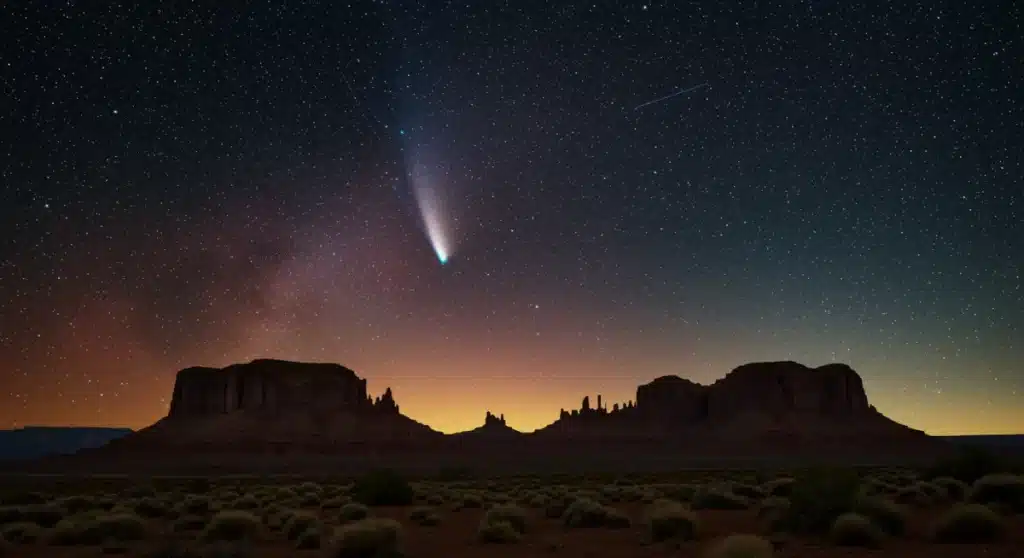
The cosmos is a stage for an endless ballet of celestial bodies, and among the most captivating performers are comets. These ‘dirty snowballs’ from the outer reaches of our solar system occasionally grace our skies with their luminous tails, offering breathtaking views that have inspired awe and wonder for millennia. For stargazers in the United States, 2026 promises to be a particularly exciting year, with several potential comet sightings 2026 on the horizon. While predicting the exact brightness and visibility of comets can be notoriously challenging, astronomical projections point to at least three comets that could offer memorable viewing experiences.
This comprehensive guide will delve into the anticipated comet sightings 2026, providing you with all the essential information to prepare for these unique astronomical events. We’ll explore where and when to look, what to expect, and offer practical tips to maximize your chances of witnessing these fleeting cosmic visitors. Whether you’re a seasoned astronomer or a curious novice, getting ready for the comet sightings 2026 will undoubtedly be an enriching experience.
Understanding Comets: A Brief Primer on Cosmic Wanderers
Before we dive into the specifics of the comet sightings 2026, let’s briefly understand what comets are and why they captivate us. Comets are icy, small solar system bodies that, when passing close to the Sun, warm and begin to outgas, displaying a visible atmosphere or coma, and sometimes also a tail. These phenomena are due to the effects of solar radiation and the solar wind acting upon the comet’s nucleus.
Comets are thought to originate from two main regions: the Kuiper Belt, a disc-shaped region beyond Neptune, and the Oort Cloud, a spherical shell of icy objects surrounding our solar system. As these icy bodies are perturbed from their orbits, they sometimes fall inward towards the Sun, becoming the spectacular objects we admire.
The visibility of a comet depends on several factors: its size, its composition, how close it gets to the Sun, and how close it approaches Earth. The closer it gets to the Sun, the more material it outgases, leading to a brighter coma and tail. The closer it gets to Earth, the larger and brighter it appears in our sky. Predicting these factors precisely years in advance is difficult, which is why comet predictions often come with a degree of uncertainty. However, based on current orbital data, several comets show promise for significant comet sightings 2026.
The Anticipated Comet Sightings 2026: A Closer Look
While the astronomical community is constantly tracking countless celestial objects, three comets, in particular, are generating excitement for potential naked-eye or binocular visibility during 2026 from the United States. These are Comet C/2023 A3 (Tsuchinshan–ATLAS), Comet 12P/Pons-Brooks, and a potential, yet-to-be-confirmed long-period comet. Keep in mind that these are projections, and the actual brightness can vary significantly.
Comet C/2023 A3 (Tsuchinshan–ATLAS): The Star of 2026?
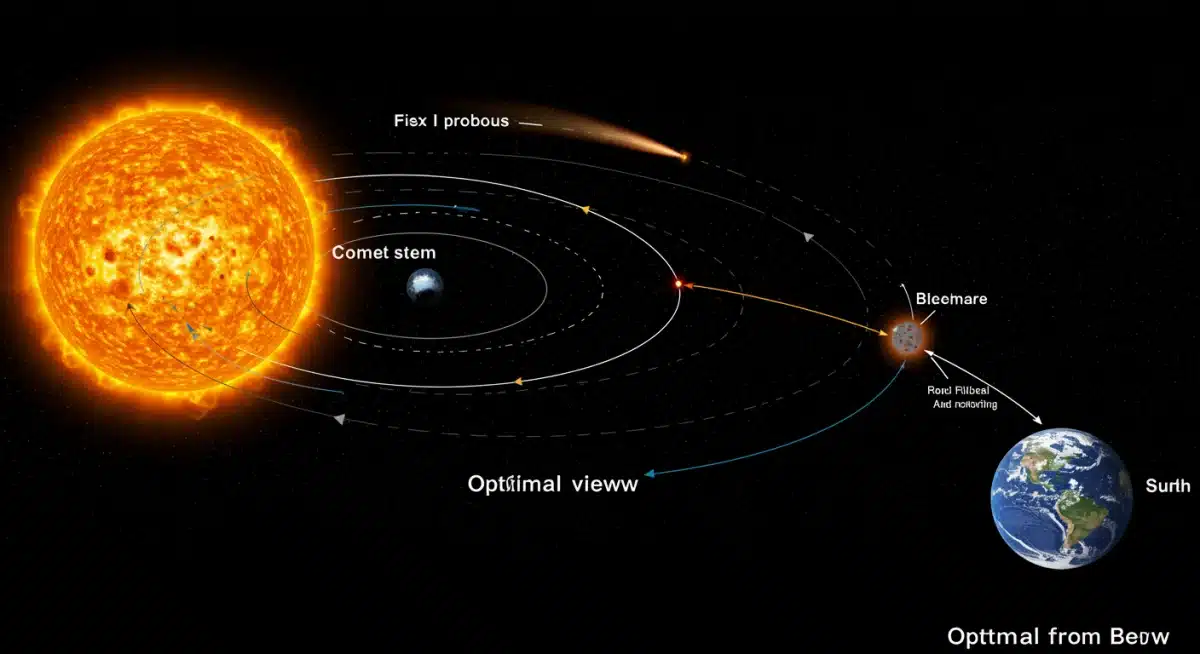
First discovered in January 2023 by the Purple Mountain Observatory in China and later confirmed by the ATLAS survey in South Africa, Comet C/2023 A3 (Tsuchinshan–ATLAS) is shaping up to be one of the most promising comet sightings 2026. This long-period comet is expected to reach perihelion (its closest approach to the Sun) in late September 2026 and its closest approach to Earth in mid-October 2026.
- Expected Peak Visibility: October 2026
- Potential Brightness: Current estimates suggest it could reach naked-eye visibility, possibly even becoming exceptionally bright, though these forecasts are highly speculative and subject to change. Some optimistic predictions place it as bright as magnitude 0 or even negative magnitudes, which would make it an incredibly prominent object in the night sky.
- Viewing from the US: Due to its orbital path, Comet C/2023 A3 is expected to be well-placed for observers in the Northern Hemisphere, including the United States, particularly during its closest approach to Earth. It will likely be visible in the evening sky after sunset initially, then transition to the morning sky before sunrise.
- Key Characteristics: Being a new comet to the inner solar system, it might have a fresh supply of volatiles, potentially leading to a spectacular outburst of gas and dust as it heats up. This is what makes it such an exciting prospect for comet sightings 2026.
Astronomers are closely monitoring this comet, and as 2026 approaches, more refined predictions will become available. However, its trajectory and initial brightness observations suggest it has the potential to be a truly spectacular event, perhaps even a ‘great comet.’
Comet 12P/Pons-Brooks: The ‘Devil Comet’ Returns
Comet 12P/Pons-Brooks is a periodic comet with an orbital period of approximately 71 years, making it a Halley-type comet. It’s known for its occasional outbursts, sometimes described as having ‘horns’ or ‘notches,’ leading to its nickname, the ‘Devil Comet.’ While its last perihelion was in April 2024, it will still be a noteworthy object in the early part of 2026, especially for those with binoculars or small telescopes, as it recedes from the inner solar system.
- Expected Visibility: Early 2026 (January-March)
- Potential Brightness: By early 2026, it will be significantly fainter than its 2024 peak, likely requiring binoculars or a small telescope to observe. It might range from magnitude +8 to +10.
- Viewing from the US: It will be visible in the Northern Hemisphere, gradually moving further into the southern sky as the year progresses. Early 2026 will offer the best chance for US observers to catch it before it becomes too faint or too low on the horizon.
- Key Characteristics: Its history of unpredictable outbursts makes it an intriguing target, even as it fades. While not a naked-eye spectacle for comet sightings 2026, it’s a fantastic target for amateur astrophotographers and those with optical aid.
Observing 12P/Pons-Brooks in 2026 will be a testament to its long journey back to the outer solar system, offering a different kind of appreciation compared to its brighter 2024 appearance.
A Potential Long-Period Comet: The Element of Surprise
The beauty of comet observing lies not only in predictable returns but also in the thrilling prospect of a new discovery. While no specific, newly discovered long-period comet is currently projected to be a major naked-eye object in 2026, the possibility always exists. Long-period comets, originating from the Oort Cloud, can take thousands or even millions of years to complete an orbit around the Sun. Many are only discovered when they are already well on their way into the inner solar system.
- Expected Visibility: Highly uncertain, but typically would be in the latter half of the year if discovered in early 2026.
- Potential Brightness: Could range from faint, binocular-only objects to potentially very bright, depending on its size, composition, and trajectory.
- Viewing from the US: Depends entirely on its orbital path and discovery circumstances.
- Key Characteristics: These comets are often the most spectacular because they are making their first or one of their first passes through the inner solar system, meaning their icy volatiles are largely intact. This ‘fresh’ material can lead to incredibly bright and dynamic displays.
To stay informed about potential new comet sightings 2026, it’s crucial to follow reputable astronomical news sources, observatories, and comet-tracking websites. The discovery of a new bright comet could happen at any time, adding an unexpected but welcome addition to the celestial calendar.
Maximizing Your Comet Viewing Experience in 2026
Successfully observing a comet requires a bit of planning and preparation. Here are some essential tips to enhance your comet sightings 2026 experience:
1. Find a Dark Sky Location
Light pollution is the biggest enemy of stargazing. To see fainter comets, or even to fully appreciate brighter ones, you need to get away from city lights. Seek out rural areas, national parks, or designated dark sky preserves. The darker the sky, the more prominent the comet’s coma and tail will appear. Even a bright comet benefits from a dark sky, revealing more intricate details of its structure.
2. Use Binoculars or a Telescope
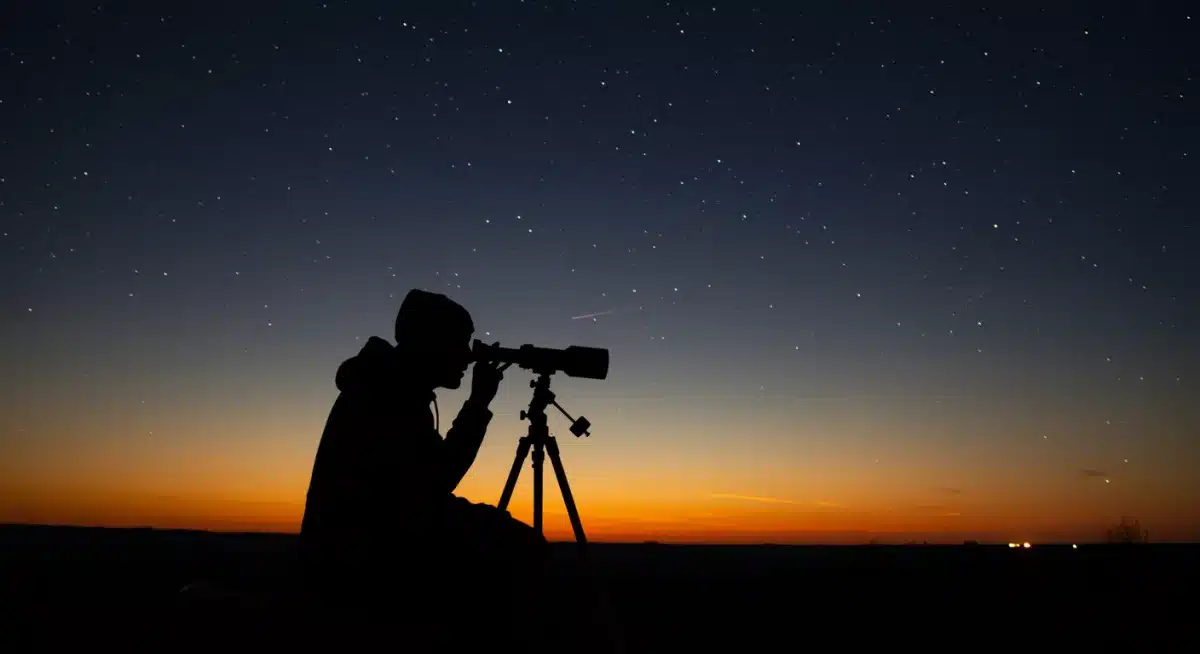
While some comets can be visible to the naked eye, binoculars are often the best tool for comet viewing. They offer a wider field of view than most telescopes, making it easier to locate the comet and appreciate its full extent, especially its tail. A good pair of 7×50 or 10×50 binoculars will make a significant difference. If you have a telescope, even a small one, it will allow you to see more detail in the comet’s nucleus and coma.
3. Know When and Where to Look
Accurate ephemeris data (the comet’s position in the sky over time) is crucial. Websites like Sky & Telescope, SpaceWeather.com, and various astronomy forums will provide updated charts and coordinates as 2026 approaches. Planetarium software and mobile apps can also help you pinpoint the comet’s location in real-time. Pay attention to the moon phase; a bright moon can wash out fainter comets.
4. Allow Your Eyes to Adapt to the Dark
It takes about 20-30 minutes for your eyes to fully adapt to low light conditions. Avoid looking at bright screens (like your phone) during this time. Use a red-light flashlight if you need to consult charts or move around, as red light has less impact on night vision.
5. Dress Appropriately and Be Patient
Even on clear nights, temperatures can drop significantly. Dress in layers, bring a warm drink, and be prepared to spend some time under the stars. Comet viewing often requires patience, as you might need to scan the sky or wait for the comet to rise higher above the horizon.
6. Consider Astrophotography
If you’re an aspiring astrophotographer, comets offer fantastic subjects. Even a basic DSLR camera on a tripod with a wide-angle lens can capture stunning images of brighter comets. Longer exposures will reveal more detail in the tail. Experiment with different settings and don’t be afraid to try!
The Science Behind the Spectacle: What Comets Tell Us
Beyond their visual appeal, comets are invaluable scientific treasures. They are essentially time capsules from the early solar system, preserving primordial material that dates back to its formation 4.6 billion years ago. Studying the composition of comets helps scientists understand the conditions and materials that existed when our Sun and planets were first forming.
For instance, the presence of various organic molecules in comets has led to theories that comets might have seeded early Earth with the building blocks of life. Each new comet, like those expected for comet sightings 2026, provides a unique opportunity for researchers to gather more data, refine models, and deepen our understanding of cosmic evolution.
Furthermore, the study of comet tails and their interaction with the solar wind provides insights into space weather and the dynamics of our solar system’s environment. The subtle changes in a comet’s tail, its brightness fluctuations, and its outbursts are all pieces of a larger scientific puzzle.
Historical Context of Comet Viewing
Throughout human history, comets have held a special place in culture and mythology. Ancient civilizations often viewed them as omens, harbingers of change, or even divine messengers. From the Bayeux Tapestry depicting Halley’s Comet in 1066 to modern scientific missions like Rosetta, our fascination with these celestial nomads has endured.
The comet sightings 2026 continue this long tradition. While we now understand the scientific mechanisms behind their appearance, the sense of wonder they evoke remains undiminished. They serve as a powerful reminder of our place in a vast and dynamic universe, encouraging us to look up and explore the unknown.
Staying Updated on Comet Sightings 2026
As mentioned, comet predictions can change. It’s crucial to stay updated with the latest information from reliable astronomical sources. Here are some resources to keep an eye on:
- NASA and ESA Websites: Official space agency sites often publish updates on significant celestial events.
- Astronomical Magazines: Publications like ‘Sky & Telescope’ and ‘Astronomy’ provide detailed articles, star charts, and viewing guides.
- Amateur Astronomy Clubs: Joining a local astronomy club can provide access to shared knowledge, viewing events, and equipment.
- Online Forums and Social Media: Dedicated astronomy communities online are excellent places to get real-time updates and share observations.
By staying informed, you can adjust your viewing plans to catch the best possible glimpse of these celestial visitors during the comet sightings 2026.
Conclusion: A Year of Cosmic Wonders Awaits
The year 2026 holds immense promise for skywatchers in the United States, with Comet C/2023 A3 (Tsuchinshan–ATLAS) potentially leading a spectacular lineup of visible comets. Coupled with the fainter but still intriguing 12P/Pons-Brooks and the ever-present possibility of a new discovery, the opportunities for memorable comet sightings 2026 are abundant.
Preparing for these events is part of the fun. By finding dark skies, using appropriate optical aids, and staying informed, you can transform a casual glance at the night sky into an unforgettable encounter with one of nature’s most magnificent spectacles. These celestial travelers offer not just beauty but also a profound connection to the origins of our solar system and the ongoing dance of the cosmos.
Mark your calendars, dust off your binoculars, and get ready to witness the magic of the universe. The comet sightings 2026 are an invitation to step outside, look up, and be inspired by the wonders that lie far beyond our earthly abode. Don’t miss your chance to be a part of these time-sensitive astronomical events!