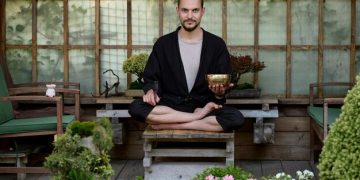
Zazen vs. TM: Faster Results for US Professionals by 2026?
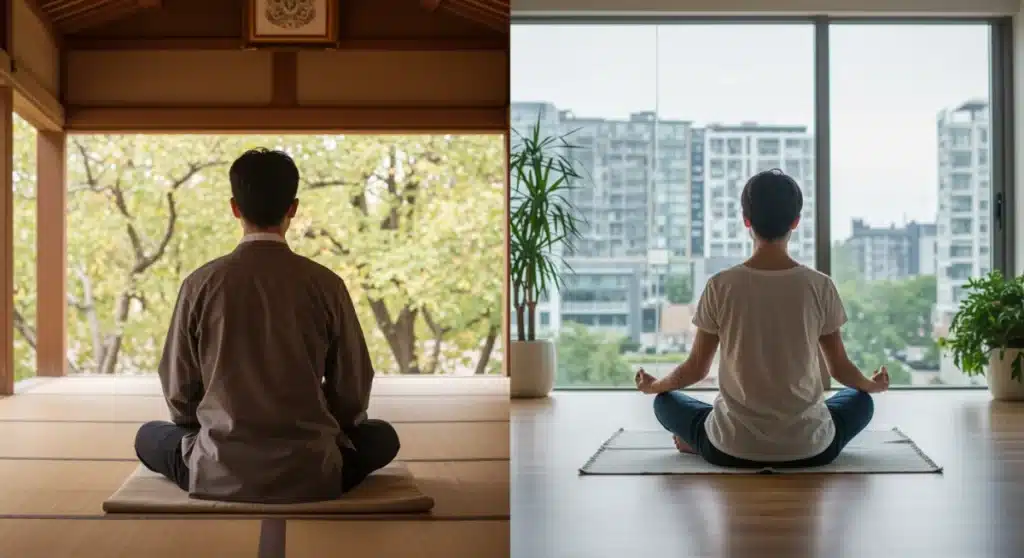
For US professionals seeking rapid mental clarity and stress reduction, understanding the distinct benefits and learning curves of Zazen and Transcendental Meditation is crucial for choosing the most effective practice by 2026.
In the relentless pursuit of peak performance and well-being, US professionals are increasingly turning to meditation. But with a myriad of techniques available, how does one choose? This article delves into a crucial comparison: Zazen vs. Transcendental Meditation – Which Technique Offers Faster Results for US Professionals by 2026? We aim to dissect the core tenets, practical applications, and potential timelines for tangible benefits from these two distinct yet powerful meditative paths, providing clarity for those navigating demanding careers.
Understanding Zazen: The Path of Seated Meditation
Zazen, meaning ‘seated meditation,’ is the foundational practice of Zen Buddhism. It’s a discipline rooted in direct experience and self-inquiry, emphasizing posture, breath, and the observation of thoughts without judgment. For US professionals, Zazen offers a rigorous yet profoundly rewarding path to mental clarity and emotional resilience.
The practice typically involves sitting upright, often on a cushion (zafu), with a straight spine, and focusing on the breath or simply observing the mind’s activity. The goal isn’t to achieve a specific state but to cultivate present-moment awareness and insight into the nature of existence.
The Zazen technique and its demands
Zazen requires a commitment to a specific posture and a sustained period of quiet introspection. It’s not about emptying the mind, but rather observing thoughts as they arise and pass without attachment. This can be challenging for beginners, especially those accustomed to constant mental stimulation.
- Posture and breath: Maintaining a stable, upright posture and focusing on the natural rhythm of the breath are central to Zazen.
- Mindfulness of thoughts: Practitioners learn to acknowledge thoughts without getting entangled in them, allowing them to dissipate naturally.
- Regularity: Consistent daily practice, even for short durations, is emphasized for cultivating deeper awareness.
For a US professional, the initial learning curve of Zazen might feel steep. It demands patience and a willingness to confront inner distractions head-on. However, many find that the discipline cultivated through Zazen translates directly into enhanced focus and composure in high-pressure work environments.
Expected results and timeline for Zazen practitioners
While Zazen does not promise instant gratification, its benefits are profound and tend to deepen over time. Initial results for busy professionals might include improved concentration and a greater sense of calm amidst daily chaos.
Within a few weeks of consistent practice, individuals often report a reduction in stress and anxiety, alongside improved emotional regulation. Long-term benefits, typically seen after several months to a year, include enhanced self-awareness, greater empathy, and a more stable, centered disposition, making it a powerful tool for holistic professional development.
Exploring Transcendental Meditation: Effortless Mantra-Based Practice
Transcendental Meditation (TM) is a specific, mantra-based meditation technique founded by Maharishi Mahesh Yogi. It differs significantly from Zazen in its approach, emphasizing an effortless and natural process that allows the mind to settle inward to experience quieter levels of thought.
TM is typically practiced for 15-20 minutes twice a day, sitting comfortably with eyes closed. Practitioners are given a specific mantra, a sound without meaning, which they gently repeat to facilitate the mind’s journey to deeper states of rest and relaxation. This technique is often marketed for its simplicity and the speed at which practitioners can experience benefits.
The TM technique and its accessibility
Unlike Zazen’s emphasis on disciplined observation, TM is taught as a technique that requires no concentration or effort. The mantra is not meant to be focused on but rather used as a vehicle for the mind to transcend ordinary thinking. This ease of practice is a significant draw for busy professionals looking for a straightforward entry into meditation.
- Personalized mantra: Each practitioner receives a specific mantra from a certified TM teacher.
- Effortless practice: The technique emphasizes allowing the mind to settle naturally, without force or control.
- Structured learning: TM is taught through a standardized seven-step course, ensuring consistency in instruction.
The structured learning process and the promise of effortless practice make TM highly accessible. Many US professionals find its non-strenuous nature appealing, as it doesn’t add another layer of ‘work’ to their already demanding schedules.
Expected results and timeline for TM practitioners
Transcendental Meditation is often lauded for its ability to produce rapid results in terms of stress reduction and improved well-being. Many studies and anecdotal reports suggest that practitioners experience significant benefits within weeks of beginning the practice.
Commonly reported short-term benefits include deep relaxation, reduced anxiety, improved sleep quality, and increased energy levels. Over time, practitioners often note enhanced creativity, improved cognitive function, and a greater sense of inner peace. For professionals seeking quick and noticeable improvements in their daily lives, TM can appear to offer a faster track to these outcomes.
Key Differences in Approach and Philosophy
While both Zazen and Transcendental Meditation aim for inner peace and mental clarity, their fundamental approaches and philosophical underpinnings diverge significantly. Understanding these differences is crucial for a US professional to determine which method aligns better with their personal temperament and desired outcomes.
Zazen, rooted in Zen Buddhism, is a path of self-discovery through direct, often rigorous, introspection and the cultivation of present-moment awareness. It encourages a direct confrontation with the mind’s activities and a disciplined approach to non-attachment. TM, on the other hand, is a technique designed to effortlessly transcend the thinking process, providing deep rest and activating the body’s natural healing mechanisms.
Discipline vs. effortlessness
One of the most apparent distinctions lies in the level of ‘effort’ required. Zazen demands a certain discipline in maintaining posture, focusing on breath, and observing thoughts without judgment. It’s an active, albeit subtle, engagement with the present moment.
TM, conversely, is taught as an entirely effortless practice. The mantra is used gently, allowing the mind to naturally settle. This difference can be a deciding factor for professionals: some may prefer the structured discipline of Zazen, while others might gravitate towards the ease and perceived simplicity of TM.
Open awareness vs. mantra focus
Zazen cultivates an open, non-judgmental awareness of whatever arises in the mind, whether it be thoughts, sensations, or emotions. It’s about seeing things as they are. TM uses a specific mantra to guide the mind inward, aiming to transcend the active thinking process and reach a state of ‘pure consciousness.’ The focus is internal and guided, rather than openly observant.
Measuring Results: What Do US Professionals Value?
When considering which meditation technique offers faster results, it’s essential to define what ‘results’ mean for a US professional. For many, tangible benefits often translate into improved productivity, reduced stress, enhanced decision-making, and better overall well-being in a demanding work environment.
The fast-paced nature of professional life in the US means that time is a premium, and techniques that offer noticeable improvements without extensive training are often highly sought after. However, the depth and sustainability of these results are equally important, as fleeting benefits offer little long-term value.
Short-term vs. long-term benefits
Short-term benefits might include immediate stress reduction, improved focus for a few hours, or a temporary boost in mood. Long-term benefits, however, encompass sustained emotional regulation, significant reductions in chronic stress, enhanced cognitive function over time, and a deeper sense of inner peace and resilience.
- Immediate stress relief: Both techniques can offer this, but TM often promotes a quicker, deeper relaxation response due to its effortless nature.
- Sustained focus: Zazen’s disciplined approach can build sustained focus and attention over time, which is invaluable for complex professional tasks.
- Emotional resilience: Both practices contribute, but Zazen’s direct engagement with the mind can foster a more robust capacity to handle emotional challenges.
For US professionals, the balance between rapid, impactful results and the development of sustainable, deep-seated changes is often key. It’s not just about speed, but also about the quality and lasting nature of the improvements.
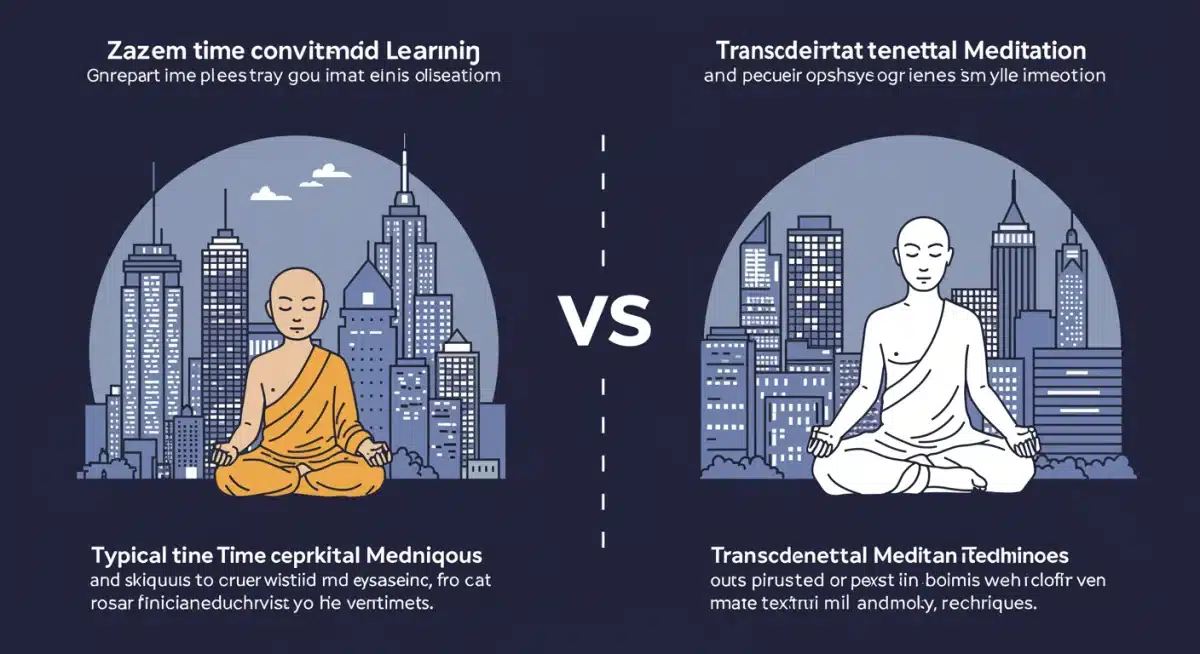
Which Technique Offers Faster Results for US Professionals by 2026?
The question of which technique offers faster results is nuanced and depends heavily on individual preferences, learning styles, and what one defines as ‘fast.’ For many US professionals, the urgency of mitigating stress and enhancing cognitive function means a quicker path to tangible benefits is highly desirable.
Transcendental Meditation often boasts a faster initial impact. Its effortless nature and structured learning can lead to rapid experiences of deep relaxation and stress reduction within the first few weeks. This immediate sense of calm and mental clarity can be incredibly appealing to professionals seeking quick relief from daily pressures.
Considering the learning curve and time commitment
TM’s standardized teaching method and promise of effortlessness contribute to a relatively quick assimilation of the technique. The 15-20 minute twice-daily sessions are also easily integrated into a busy schedule, making it a practical choice for professionals.
Zazen, while profound, typically has a steeper learning curve. The discipline required to maintain posture and observe thoughts without judgment can be challenging initially. While benefits accrue, the process might feel slower in its early stages as practitioners build foundational skills. However, the depth of insight and self-awareness cultivated through Zazen can lead to highly robust and sustainable long-term results.
The ‘faster’ metric: initial relief vs. profound transformation
If ‘faster results’ primarily means quick relief from stress and an immediate sense of calm, TM often has an edge. Its direct method for inducing deep rest can yield these benefits relatively quickly. However, if ‘faster results’ also encompasses a more profound and sustained transformation of one’s relationship with thoughts, emotions, and overall awareness, Zazen’s disciplined approach might lead to a more deeply integrated and lasting change over a slightly longer initial period.
Ultimately, the ‘faster’ technique depends on the professional’s specific goals. For immediate, surface-level stress reduction, TM might be the quicker route. For deep, transformative insight that builds resilience from within, Zazen, while requiring more initial effort, can provide profound and enduring benefits.
Integrating Meditation into a Professional Lifestyle
Regardless of the chosen technique, the real challenge for US professionals lies in consistently integrating meditation into their demanding daily routines. Both Zazen and Transcendental Meditation, despite their differences, require commitment and consistency to yield their full benefits. The key is to find a practice that resonates and can be maintained even during periods of high stress.
Successful integration often involves scheduling dedicated time, creating a conducive environment, and understanding that meditation is not a luxury but a vital tool for sustained professional efficacy and personal well-being. It’s about making it a non-negotiable part of one’s daily regimen, much like exercise or healthy eating.
Practical tips for busy professionals
- Schedule it: Treat meditation like any other important meeting on your calendar.
- Start small: Even 5-10 minutes a day can make a difference, gradually increasing duration as comfort grows.
- Find a quiet space: Designate a specific area, even a small corner, as your meditation spot.
- Seek community: Joining a local group or online community can provide support and accountability.
For TM, the twice-daily 20-minute sessions are prescriptive and become a structured part of the day. For Zazen, while flexibility exists, many practitioners benefit from joining a Zen center or practicing with a group to reinforce discipline and deepen their understanding of the practice.
Sustaining the practice for long-term gains
The true power of meditation, whether Zazen or TM, lies in its cumulative effects. Short-term bursts of practice might offer temporary relief, but sustained, consistent engagement leads to deeper neurological and psychological changes. These changes manifest as increased emotional intelligence, improved decision-making under pressure, and a greater capacity for creativity and innovation – all critical assets for the modern professional.
The choice between Zazen and TM for US professionals by 2026 isn’t just about speed, but also about finding a practice that can be integrated meaningfully and sustained over time to unlock its full potential for personal and professional growth.
| Key Aspect | Brief Description |
|---|---|
| Technique Foundation | Zazen focuses on seated posture, breath, and thought observation; TM uses a personalized mantra for effortless transcendence. |
| Learning Curve | Zazen typically has a steeper initial learning curve due to its disciplined nature; TM is taught as an effortless, natural process. |
| Speed of Results | TM often provides faster initial stress reduction and relaxation; Zazen offers profound, sustained benefits over a longer period. |
| Professional Fit | TM’s ease suits busy schedules for quick relief; Zazen’s discipline builds deep resilience and focus for complex roles. |
Frequently asked questions about Zazen and TM
Transcendental Meditation (TM) often provides faster initial results for stress reduction due to its effortless technique, which quickly induces a deep state of rest. Many professionals report significant stress relief within the first few weeks of consistent TM practice.
TM typically requires two 15-20 minute sessions per day, making it easy to integrate into a busy schedule. Zazen practice can vary, but consistent daily sessions, often 20-40 minutes, are recommended for developing deeper awareness and discipline.
Transcendental Meditation is generally considered easier for beginners due to its effortless, mantra-based approach and structured teaching. Zazen, while accessible, can have a steeper learning curve as it demands more discipline in posture and thought observation.
Both techniques can significantly improve focus and decision-making. Zazen cultivates sustained attention and clarity through disciplined observation. TM enhances cognitive function by providing deep rest, leading to improved mental alertness and reduced mental fatigue.
Predicting popularity is challenging, but TM’s accessibility and rapid initial stress relief may appeal to a broader professional audience. However, Zazen’s profound depth and emphasis on resilience could gain traction among those seeking deeper, transformative growth amidst increasing professional demands.
Conclusion
The choice between Zazen and Transcendental Meditation for US professionals seeking faster results by 2026 is not a one-size-fits-all answer. If immediate stress reduction and deep relaxation are the primary goals, TM’s effortless, mantra-based approach often delivers quicker initial benefits. Its structured learning and manageable time commitment make it highly appealing for those with demanding schedules. Conversely, Zazen, with its emphasis on disciplined posture, breath, and non-judgmental observation, offers a path to profound self-awareness and sustained emotional resilience, though its initial learning curve might feel more challenging. Ultimately, the ‘faster’ technique depends on individual needs, the definition of ‘results,’ and the willingness to commit. Both practices, when integrated consistently, provide invaluable tools for navigating the complexities of modern professional life, fostering well-being and enhanced performance.